US Market News
1月前
US Market News
1月前
SAP and Cyberwave Deploy Fully Autonomous AI-Powered Robots in Live SAP Logistics WarehouseMay 11, 2026 12:19 PM
PR Newswire (US) WALLDORF, Germany, May 11, 2026 /PRNewswire/ -- SAP SE (NYSE: SAP), the global leader in enterprise application software, and Cyberwave, an AI robotics software company, today announced the successful deployment of fully autonomous, AI-powered robots in an active SAP logistics warehouse. Building on SAP's strategic expansion of Physical AI capabilities announced last year, this initiative marks a major milestone: SAP is now operationalizing advanced robotics within its own facilities. The deployment at SAP's warehouse in St. Leon-Rot, Germany-operated on SAP Logistics Management (LGM), SAP's cloud-native logistics execution solution-demonstrates that Physical AI is no longer a research concept. It is delivering measurable throughput improvements today, with robots performing box folding, packaging, and shipping fulfillment tasks fully autonomously.About the IntegrationSAP LGM's lean, API-first architecture-which drew significant attention at LogiMAT 2026 for its rapid implementation and standardized processes-provides the ideal foundation for robotic automation. Tasks are translated into precise robot commands through the SAP Embodied AI Service, enabling end-to-end integration via SAP Business Technology Platform (BTP) and the Cyberwave platform in a matter of minutes."By integrating AI-powered robotics directly into our live warehouse operations, we are proving that Physical AI is no longer a concept—it's delivering real value today. At our St. Leon-Rot warehouse, SAP LGM provides the digital backbone that allows robots to be deployed quickly, operate reliably, and scale with our processes. This is a decisive step toward more resilient and efficient logistics operations." - Tim Kuebler, Head of Warehouse & Shipping, SAPWhy Logistics Robotics Is Hard-and How Cyberwave Solves ItLogistics environments are among the most challenging settings for robotics. Robots must handle diverse and irregularly shaped objects, fold and pack boxes, move packages, apply labels, and process shipping orders-tasks that vary constantly in objects, layouts, and conditions. Traditional robotic systems require painstaking hand-coding for each task variation and often break down when real-world conditions shift.Cyberwave has developed the first platform purpose-built to solve this challenge end-to-end. At its core, Cyberwave enables operators to:Collect training data rapidly using intuitive demonstration interfaces, capturing the task variability that exists in real warehouse environmentsFine-tune Vision-Language-Action (VLA) and Reinforcement Learning (RL) models on that data, producing robot policies that generalize across object types, orientations, and workflow variations-not just memorize scripted motionsDeploy and run those models on physical robots with real-time feedback loops that allow continuous refinement as conditions evolveThe result: robots that can actually perform high-variability tasks in dynamic environments. Whereas conventional systems require weeks of engineering per task, Cyberwave's approach reduces training time from weeks to hours. Non-expert operators can teach robots new tasks through simple demonstrations, and the system automatically adapts to variations in objects, environments, and workflows."Partnering with SAP on a live warehouse deployment is a defining moment-not just for Cyberwave, but for what AI-powered robotics can actually deliver in enterprise logistics today. What makes this possible is the combination of SAP LGM's robust digital backbone and Cyberwave's ability to collect real-world training data and fine-tune VLA and RL models that generalize across the variability you find in any real warehouse. Robots no longer need to be painstakingly programmed for every object or scenario-they learn, adapt, and keep improving. That's the shift we've been building toward." - Simone Di Somma, Co-Founder and CEO, CyberwaveResultsAt SAP's St. Leon-Rot warehouse, robots trained and deployed on the Cyberwave platform are now performing box folding, packaging, and in-house shipping fulfillment fully autonomously-freeing human workers from repetitive, physically demanding tasks and increasing warehouse throughput. The entire integration, from robot training to live operation, was completed using SAP BTP and the Cyberwave platform.SAP continues to advance its Embodied AI capabilities, delivering value to customers while optimizing its own operations as a reference implementation.About SAP SAP's strategy is to help every business run as an intelligent, sustainable enterprise. As a market leader in enterprise application software, SAP helps companies of all sizes and in all industries run at their best. For more information, visit www.sap.com.About Cyberwave Cyberwave is an AI robotics software company building the platform that makes it fast and easy to train, fine-tune, and deploy robots capable of performing high-variability tasks in real-world environments. By combining intuitive data collection tools with state-of-the-art VLA and RL model training, Cyberwave enables any organization to deploy capable, adaptive robots-without requiring deep robotics expertise. For more information, visit www.cyberwave.com .Media Contact: Vittorio Banfi, vbanfi@cyberewave.comPhoto - https://mma.prnewswire.com/media/2976635/Cyberwave_SAP.jpg
Logo - https://mma.prnewswire.com/media/2976634/Cyberwave_Logo.jpgSources:https://www.igz.com/en/newsroom/news/news-2026/logimat-2026-review/https://news.sap.com/2025/11/sap-physical-ai-partnerships-new-robotics-pilots/ View original content:https://www.prnewswire.co.uk/news-releases/sap-and-cyberwave-deploy-fully-autonomous-ai-powered-robots-in-live-sap-logistics-warehouse-302768404.html Original: SAP and Cyberwave Deploy Fully Autonomous AI-Powered Robots in Live SAP Logistics Warehouse
US Market News
1月前
SAP and Cyberwave Deploy Fully Autonomous AI-Powered Robots in Live SAP Logistics WarehouseMay 11, 2026 12:12 PM
PR Newswire (US) WALLDORF, Germany, May 11, 2026 /PRNewswire/ -- SAP SE (NYSE: SAP), the global leader in enterprise application software, and Cyberwave, an AI robotics software company, today announced the successful deployment of fully autonomous, AI-powered robots in an active SAP logistics warehouse. Building on SAP's strategic expansion of Physical AI capabilities announced last year, this initiative marks a major milestone: SAP is now operationalizing advanced robotics within its own facilities. The deployment at SAP's warehouse in St. Leon-Rot, Germany-operated on SAP Logistics Management (LGM), SAP's cloud-native logistics execution solution-demonstrates that Physical AI is no longer a research concept. It is delivering measurable throughput improvements today, with robots performing box folding, packaging, and shipping fulfillment tasks fully autonomously.About the IntegrationSAP LGM's lean, API-first architecture-which drew significant attention at LogiMAT 2026 for its rapid implementation and standardized processes-provides the ideal foundation for robotic automation. Tasks are translated into precise robot commands through the SAP Embodied AI Service, enabling end-to-end integration via SAP Business Technology Platform (BTP) and the Cyberwave platform in a matter of minutes."By integrating AI-powered robotics directly into our live warehouse operations, we are proving that Physical AI is no longer a concept—it's delivering real value today. At our St. Leon-Rot warehouse, SAP LGM provides the digital backbone that allows robots to be deployed quickly, operate reliably, and scale with our processes. This is a decisive step toward more resilient and efficient logistics operations." - Tim Kuebler, Head of Warehouse & Shipping, SAPWhy Logistics Robotics Is Hard-and How Cyberwave Solves ItLogistics environments are among the most challenging settings for robotics. Robots must handle diverse and irregularly shaped objects, fold and pack boxes, move packages, apply labels, and process shipping orders-tasks that vary constantly in objects, layouts, and conditions. Traditional robotic systems require painstaking hand-coding for each task variation and often break down when real-world conditions shift.Cyberwave has developed the first platform purpose-built to solve this challenge end-to-end. At its core, Cyberwave enables operators to:Collect training data rapidly using intuitive demonstration interfaces, capturing the task variability that exists in real warehouse environmentsFine-tune Vision-Language-Action (VLA) and Reinforcement Learning (RL) models on that data, producing robot policies that generalize across object types, orientations, and workflow variations-not just memorize scripted motionsDeploy and run those models on physical robots with real-time feedback loops that allow continuous refinement as conditions evolveThe result: robots that can actually perform high-variability tasks in dynamic environments. Whereas conventional systems require weeks of engineering per task, Cyberwave's approach reduces training time from weeks to hours. Non-expert operators can teach robots new tasks through simple demonstrations, and the system automatically adapts to variations in objects, environments, and workflows."Partnering with SAP on a live warehouse deployment is a defining moment-not just for Cyberwave, but for what AI-powered robotics can actually deliver in enterprise logistics today. What makes this possible is the combination of SAP LGM's robust digital backbone and Cyberwave's ability to collect real-world training data and fine-tune VLA and RL models that generalize across the variability you find in any real warehouse. Robots no longer need to be painstakingly programmed for every object or scenario-they learn, adapt, and keep improving. That's the shift we've been building toward."- Simone Di Somma, Co-Founder and CEO, CyberwaveResultsAt SAP's St. Leon-Rot warehouse, robots trained and deployed on the Cyberwave platform are now performing box folding, packaging, and in-house shipping fulfillment fully autonomously-freeing human workers from repetitive, physically demanding tasks and increasing warehouse throughput. The entire integration, from robot training to live operation, was completed using SAP BTP and the Cyberwave platform.SAP continues to advance its Embodied AI capabilities, delivering value to customers while optimizing its own operations as a reference implementation.About SAP SAP's strategy is to help every business run as an intelligent, sustainable enterprise. As a market leader in enterprise application software, SAP helps companies of all sizes and in all industries run at their best. For more information, visit www.sap.com.About Cyberwave Cyberwave is an AI robotics software company building the platform that makes it fast and easy to train, fine-tune, and deploy robots capable of performing high-variability tasks in real-world environments. By combining intuitive data collection tools with state-of-the-art VLA and RL model training, Cyberwave enables any organization to deploy capable, adaptive robots-without requiring deep robotics expertise. For more information, visit www.cyberwave.com .Media Contact: Vittorio Banfi, vbanfi@cyberewave.comPhoto - https://mma.prnewswire.com/media/2976635/Cyberwave_SAP.jpg
Logo - https://mma.prnewswire.com/media/2976634/Cyberwave_Logo.jpgSources:https://www.igz.com/en/newsroom/news/news-2026/logimat-2026-review/https://news.sap.com/2025/11/sap-physical-ai-partnerships-new-robotics-pilots/ View original content to download multimedia:https://www.prnewswire.com/news-releases/sap-and-cyberwave-deploy-fully-autonomous-ai-powered-robots-in-live-sap-logistics-warehouse-302768400.htmlSOURCE Cyberwave Original: SAP and Cyberwave Deploy Fully Autonomous AI-Powered Robots in Live SAP Logistics Warehouse
US Market News
2月前
SAP to Acquire Dremio to Unify SAP and Non-SAP Data to Power Agentic AIMay 4, 2026 7:17 AM
PR Newswire (US)
WALLDORF, Germany and AUSTIN, Texas, May 4, 2026 /PRNewswire/ -- SAP SE (NYSE: SAP) and Dremio today announced that SAP has agreed to acquire Dremio, an open, high-performance data lakehouse platform built to accelerate agentic AI and expand SAP Business Data Cloud's ability to combine SAP and non-SAP data to more effectively run analytical and AI workloads in real time. Terms of the deal were not disclosed. The transaction is still pending regulatory approval.
Most enterprise AI projects fail to deliver value not because of the AI itself, but because the underlying data is fragmented, locked in proprietary formats and stripped of the business context that makes it meaningful. The result is a familiar and costly pattern: pilots that cannot scale, slow integration of new data sources, duplicated engineering work and compliance risk when organizations cannot explain how an AI-driven decision was reached. Dremio helps eliminate that data fragmentation and integration friction. The acquisition will complement the SAP Business Data Cloud and SAP HANA Cloud offerings to ensure seamless data integration across SAP and non-SAP data with high performance and low cost to accelerate AI-ready context and time-to-value for AI."Enterprise AI doesn't stall because the models aren't good enough; it stalls because the data isn't ready for AI agents," said Philipp Herzig, CTO, SAP SE. " Dremio eliminates that bottleneck. Combined with SAP Business Data Cloud, we can now take customers from raw, fragmented data to governed, AI-ready intelligence on a single open platform."With Dremio, SAP Business Data Cloud will become an Apache Iceberg-native enterprise lakehouse that unifies SAP and non-SAP data to power agentic AI at enterprise scale. Apache Iceberg is the industry-standard open table format, and SAP Business Data Cloud will natively support it as its foundation. This means no data movement or format conversion will be necessary. SAP and non-SAP data can coexist on the same open foundation, with federated analytical reach across every enterprise data source, combined with SAP HANA Cloud's in-memory engine for real-time transactions and operational performance.The Dremio lakehouse platform is set to vastly improve the economics of enterprise analytics. It is serverless and elastic, scaling up automatically when demand spikes and scaling back down when it subsides, meaning no fixed capacity to provision and no performance ceiling when it matters most.With Dremio, SAP will deliver a universal, open catalog built on Apache Polaris and the open Apache Iceberg REST Catalog API. It serves as both the discovery and semantic layer of SAP Business Data Cloud, giving every connected engine – SAP or non-SAP – a single point of access to unified business context: meaning, relationships, access rights and data lineage. This catalog will form the foundation of the SAP Knowledge Graph, embedding business relationships, organizational hierarchies, regulatory classifications and cross-system lineage as native properties.Dremio has been a leading steward of open-source projects at the heart of its platform: Apache Iceberg, Apache Polaris and Apache Arrow,– and SAP is fully committed to continuing to invest in and prioritize these contributions.The transaction is expected to close in Q3 of 2026, subject to customary closing conditions, including regulatory approvals.Visit the SAP News Center. Get SAP news via LinkedIn and Bluesky.About Dremio
Dremio is the Agentic Lakehouse: the only Iceberg-native data platform built for agents and managed by agents. Every knowledge worker and AI agent gets instant, governed access to enterprise data through any LLM or tool of their choice. Federated queries reach any source without ETL pipelines. An AI Semantic layer adds business context so every agent draws from the same source of truth. The lakehouse manages itself, running clustering, optimization, and compaction autonomously. The result: trusted insights that drive better business outcomes, without the infrastructure complexity or overhead.A lead contributor to Apache Iceberg and co-creator of Apache Arrow and Apache Polaris. Trusted by Shell, TD Bank, Michelin, and thousands of organizations worldwide. https://www.dremio.com/About SAP
As a global leader in enterprise applications and business AI, SAP (NYSE: SAP) stands at the nexus of business and technology. For over 50 years, organizations have trusted SAP to bring out their best by uniting business-critical operations spanning finance, procurement, HR, supply chain, and customer experience. For more information, visit www.sap.com.This document contains forward-looking statements, which are predictions, projections, or other statements about future events. These statements are based on current expectations, forecasts, and assumptions that are subject to risks and uncertainties that could cause actual results and outcomes to materially differ. Additional information regarding these risks and uncertainties may be found in our filings with the Securities and Exchange Commission, including but not limited to the risk factors section of SAP's 2025 Annual Report on Form 20-F.© 2026 SAP SE. All rights reserved.
SAP and other SAP products and services mentioned herein as well as their respective logos are trademarks or registered trademarks of SAP SE in Germany and other countries. Please see https://www.sap.com/copyright for additional trademark information and notices.Note to editors:
To preview and download broadcast-standard stock footage and press photos digitally, please visit www.sap.com/photos. On this platform, you can find high resolution material for your media channels.For customers interested in learning more about SAP products:
Global Customer Center: +49 180 534-34-24
United States Only: 1 (800) 872-1SAP (1-800-872-1727)Please consider our privacy policy. If you received this press release in your e-mail and you wish to unsubscribe to our mailing list please contact press@sap.com and write Unsubscribe in the subject line.?Logo - https://mma.prnewswire.com/media/847591/5951188/SAP__Logo.jpg
View original content to download multimedia:https://www.prnewswire.com/news-releases/sap-to-acquire-dremio-to-unify-sap-and-non-sap-data-to-power-agentic-ai-302761280.htmlSOURCE SAP SE
Original: SAP to Acquire Dremio to Unify SAP and Non-SAP Data to Power Agentic AI
US Market News
2月前
SAP to Acquire Prior Labs to Establish a Globally Leading Frontier AI Lab in EuropeMay 4, 2026 7:22 AM
PR Newswire (US)
Acquisition doubles down on SAP's early mover advantage in tabular foundation modelsWALLDORF, Germany and FREIBURG, Germany, May 4, 2026 /PRNewswire/ -- SAP SE (NYSE: SAP) and Prior Labs, the pioneer of Tabular Foundation Models (TFMs), announced that they have entered into a definitive agreement for SAP to purchase Prior Labs, accelerating SAP's success in TFMs that started with SAP-RPT-1, and bringing one of the world's leading TFM research teams into the SAP family. Prior Labs will continue to operate as an independent entity, with SAP committing to invest more than €1 billion over the next four years to scale it into a globally leading frontier AI lab for the structured data that runs the world's businesses. Terms of the deal were not disclosed. The transaction is still pending regulatory approval.
Large language models (LLMs) struggle to make accurate predictions on structured business data because they have only a rudimentary understanding of tables, numbers and statistics. Unlike LLMs, TFMs are purpose-built for this type of data and can accurately predict business outcomes based on tabular data such as payment delays, supplier risks, upsell opportunities, customer churn risk and more. "Early on, SAP recognized that the greatest untapped opportunity in enterprise AI wasn't large language models; it was AI built for the structured data that runs the world's businesses," SAP CTO Philipp Herzig said. "We built SAP-RPT-1 to prove that conviction for enterprise data. Prior Labs has built a leading TFM on public benchmarks and built one of the leading research teams in this category. Combining their frontier model work with enterprise data and customer reach is how we intend to lead this category globally.""Over the last 18 months, Prior Labs has built an incredible team, increasing the velocity in tabular foundation models," Prior Labs CEO Frank Hutter said. "Joining the SAP family gives us the resources, data environment and customer reach to take this category to its full potential."Once the transaction is closed, with Prior Labs, SAP will have the special opportunity to establish an industry-leading AI research lab and shape a new category in TFMs. The lab will operate as an independent unit to ensure research velocity, while SAP provides long-term investment and a direct path to productization across the SAP portfolio with SAP AI Core and SAP Business Data Cloud as well as the agentic layer with Joule. With over 3 million downloads, Prior Labs' TabPFN is a widely adopted open-source tool for tabular AI, supporting a dynamic developer ecosystem. SAP is fully committed to further support this open-source strategy. The Prior Labs cofounders Frank Hutter, Noah Hollmann and Sauraj Gambhir lead a team of world-class AI researchers and practitioners. The company works with leading scientists in the field, including Yann LeCun, ACM A.M. Turing Award winner and executive chairman at Advanced Machine Intelligence, and Bernhard Schölkopf, director of Max Planck Institute for Intelligent Systems and ELLIS president, both of whom will serve on Prior Labs' scientific advisory board as it scales to a globally leading frontier AI lab. Accelerating InnovationPrior Labs' TabPFN-2.6 is the top-performing model on TabArena, the top benchmark for TFMs. TabPFN-2.6 matches the accuracy of a four-hour automated machine learning pipeline — instantly, in a single model, at a fraction of the complexity.With a conversational interface layered on top, business users can ask questions in natural language, generate or select datasets and run "what-if" scenarios without needing to be data science and machine learning experts. With Prior Labs' models, SAP will provide in-context learning, allowing users to provide data records to receive instant, reliable predictions without any model training. A single TFM can adapt to any business use case on the fly, resulting in faster time to value with GDPR compliance.With Prior Labs, SAP will deliver TFMs with superior predictive capability that understand tables natively, learning statistical reasoning directly from data and will power agentic AI systems capable of understanding high-level goals, combining tables, language and images to reason, integrate domain knowledge, infer causality and adapt dynamically.After the close, SAP and Prior Labs plan to turn top AI research into enterprise-ready innovation, allowing customers to get even more value out of their tabular business data. True intelligence requires moving beyond correlation to understand causation. Answering "What will happen?" is useful, but answering why it will happen is transformative.The transaction is expected to close in Q2 or Q3 of 2026, subject to customary closing conditions, including regulatory approvals.Visit the SAP News Center. Get SAP news via LinkedIn and Bluesky.About Prior Labs
Prior Labs is the pioneer of Tabular Foundation Models, a new category of AI purpose-built for structured data. Founded by Frank Hutter, Noah Hollmann & Sauraj Gambhir, Prior Labs' TabPFN model series, published in Nature, set the state-of-the-art on tabular benchmarks across hundreds of independent academic studies. Prior Labs is scaling tabular foundation models to handle millions of rows, real-time inference, and entirely new data modalities, while building the infrastructure to deploy them in production across some of the most demanding industries on earth.Headquartered in Freiburg, Germany, and offices in Berlin and New York City, Prior Labs has built one of the leading AI research teams globally, with researchers recruited from Google, Apple, Amazon, Microsoft, G-Research, Jane Street, Goldman Sachs, and CERN. www.priorlabs.aiAbout SAP
As a global leader in enterprise applications and business AI, SAP (NYSE: SAP) stands at the nexus of business and technology. For over 50 years, organizations have trusted SAP to bring out their best by uniting business-critical operations spanning finance, procurement, HR, supply chain, and customer experience. For more information, visit www.sap.com # # #This document contains forward-looking statements, which are predictions, projections, or other statements about future events. These statements are based on current expectations, forecasts, and assumptions that are subject to risks and uncertainties that could cause actual results and outcomes to materially differ. Additional information regarding these risks and uncertainties may be found in our filings with the Securities and Exchange Commission, including but not limited to the risk factors section of SAP's 2025 Annual Report on Form 20-F.
© 2026 SAP SE. All rights reserved.
SAP and other SAP products and services mentioned herein as well as their respective logos are trademarks or registered trademarks of SAP SE in Germany and other countries. Please see https://www.sap.com/copyright for additional trademark information and notices.Note to editors:
To preview and download broadcast-standard stock footage and press photos digitally, please visit www.sap.com/photos. On this platform, you can find high resolution material for your media channels.For customers interested in learning more about SAP products:
Global Customer Center: +49 180 534-34-24
United States Only: 1 (800) 872-1SAP (1-800-872-1727)Please consider our privacy policy. If you received this press release in your e-mail and you wish to unsubscribe to our mailing list please contact press@sap.com and write Unsubscribe in the subject line. Logo: https://mma.prnewswire.com/media/847591/5935023/SAP__Logo.jpg
View original content:https://www.prnewswire.com/news-releases/sap-to-acquire-prior-labs-to-establish-a-globally-leading-frontier-ai-lab-in-europe-302761284.htmlSOURCE SAP SE
Original: SAP to Acquire Prior Labs to Establish a Globally Leading Frontier AI Lab in Europe
US Market News
2月前
SAP Quarterly Statement Q1 2026April 23, 2026 4:18 PM
PR Newswire (US)
WALLDORF, Germany, April 23, 2026 /PRNewswire/ -- SAP SE (NYSE: SAP) announced today its financial results for the first quarter ended March 31, 2026.
Current cloud backlog of €21.9 billion, up 20% and up 25% at constant currenciesCloud revenue up 19% and up 27% at constant currenciesCloud ERP Suite revenue up 23% and up 30% at constant currenciesTotal revenue up 6% and up 12% at constant currenciesIFRS operating profit up 17%, non-IFRS operating profit up 17% and up 24% at constant currenciesChristian Klein, CEO:We had a strong start to the year, with Current Cloud Backlog growing by 25% and Cloud Revenue up 27% at constant currencies. This performance is supported by our momentum in Business AI as we are already delivering real outcomes for customers today. We are growing faster than the market and are gaining share as customers expand across our Suite and with our AI solutions. At Sapphire, we will show how we are taking the next leap forward.Dominik Asam, CFO:We delivered a solid start to the year, supported by disciplined execution in revenue and profitability. At the same time, we have remained focused on managing our cost base and maintaining profitability as we navigate an increasingly complex and uncertain macroeconomic and geopolitical environment.Group Results at a GlanceFirst quarter 2026
IFRS
Non-IFRS1€ million, unless otherwise statedQ1 2026Q1 2025? in %
Q1 2026Q1 2025? in %? in % const. curr.Current cloud backlog
21,93218,2022025SaaS/PaaS5,8964,89021
5,8964,8902128Thereof Cloud ERP Suite25,2144,25123
5,2144,2512330Thereof Extension Suite26816397
681639712IaaS266104–36
66104–36–32Cloud revenue5,9624,99319
5,9624,9931927Software licenses revenue116183–37
116183–37–33Software support revenue2,4692,761–11
2,4692,761–11–6Cloud and software revenue8,5487,9388
8,5487,938814Services Revenue1,0071,075–6
1,0071,075–6–1Total revenue9,5559,0136
9,5559,013612Cloud gross profit4,4503,72020
4,4813,7452026Cloud gross margin (in %)74.674.50.1pp
75.275.00.2pp–0.1ppGross profit6,9736,6076
7,0136,632612Gross margin (in %)73.073.3–0.3pp
73.473.6–0.2pp–0.3ppOperating profit (loss)2,7412,33317
2,8672,4551724Operating margin (in %)28.725.92.8pp
30.027.22.8pp2.9ppProfit (loss) after tax1,9461,7968
2,0021,68119
Earnings per share - Basic (in €)1.661.529
1.721.4420
Net cash flows from operating activities3,5133,780–7
Free cash flow
3,2483,583–9
1 For a breakdown of the individual adjustments see table Non-IFRS Operating Expense Adjustments by Functional Areas in this Quarterly Statement.
2 For a definition of Cloud ERP Suite and Extension Suite, see the Performance Management System chapter in the 2025 Integrated Report. For an Explanation of IaaS, SaaS, and PaaS, see the Notes to the Consolidated Financial Statements of the Integrated Report 2025, Note (A.1). Supplementary InformationFinancial ResultsCloud revenue growth was positively impacted by several quarter-specific effects, contributing to an expected deceleration of cloud revenue growth in the second quarter.IFRS and non-IFRS operating profit were supported by a decline of share-based compensation expenses of €135 million.Operating cash flow and free cash flow were impacted by a payout of €408 million related to the settlement of the Teradata litigation case. Share Repurchase ProgramIn January 2026, SAP announced a new share repurchase program with an aggregate volume of up to €10 billion and a term until December 31, 2027. As of April 1, 2026, the first tranche of the program was completed. By that time, SAP had repurchased 16,280,097 shares at an average price of €161.16 resulting in a purchased volume of approximately €2.6 billion under the program.OutlookFinancial OutlookSAP's financial outlook for the full-year 2026 is based on the assumption of a near-term de-escalation of the conflict in the Middle East and the imminent consolidation of Reltio.For 2026, SAP continues to expect:€25.8 – 26.2 billion cloud revenue at constant currencies (2025: €21.02 billion), up 23% to 25% at constant currencies.€36.3 – 36.8 billion cloud and software revenue at constant currencies (2025: €32.54 billion), up 12% to 13% at constant currencies.€11.9 – 12.3 billion non-IFRS operating profit at constant currencies (2025: €10.42 billion), up 14% to 18% at constant currencies.Approximately €10 billion free cash flow at actual currencies (2025: €8.24 billion).An effective tax rate (non-IFRS) of approximately 29% (2025: 30.5%)[1].Constant currencies current cloud backlog growth to slightly decelerate (2025: 25%).SAP further expects:Constant currencies total revenue growth in 2026 to remain at similar levels as in 2025 and to accelerate in 2027. The previous outlook assumed constant currencies total revenue growth to accelerate through 2027.Total operating expenses to grow at 80% to 90% of total revenue growth in 2027.Constant currencies software support revenue decline rate to accelerate in the coming years as a consequence of an acceleration of customers transforming to the cloud.Other impacts due to the evolving situation in the Middle East are currently unknown and could potentially subject our business to materially adverse consequences should the situation continue or even further escalate beyond its current scope.While SAP's 2026 financial outlook for the income statement parameters is at constant currencies (including an average exchange rate of 1.13 USD per EUR), actual currency reported figures are expected to be impacted by currency exchange rate fluctuations as the company progresses through the year, as reflected in the table below.Currency Impact Assuming March 31, 2026 Rates Apply for 2026In percentage pointsQ2 2026FY 2026Cloud revenue growth-1.5pp-1.5ppCloud and software revenue growth-1.0pp-1.5ppOperating profit growth (non-IFRS)-2.0pp-2.0ppThis includes an exchange rate of 1.15 USD per EUR.Non-Financial OutlookFor 2026, SAP continues to expect:Cloud Customer Satisfaction (Cloud CSAT) to be in a range of 75% to 76% (2025: 75%).The Employee Engagement Index to be in a range of 74% to 78% (2025: 76%).The Business Health Culture Index (BHCI) to be in a range of 80% to 82% (2025: 81%).To steadily decrease carbon emissions across the relevant value chain (2025: 3.6 Mt).Business HighlightsIn the first quarter, customers around the globe continued to choose the "RISE with SAP" journey. These customers included: AIR LIQUIDE, Aptiv, Bristol-Myers Squibb, CMS Energy, ConocoPhillips, Diehl Group, Garuda Indonesia, Hyundai Motor EU, ITU (International Telecommunication Union), Nutresa, PayPal, PinkRoccade Local Government, Schweiter Technologies, Thales, Wella.Adesso, Japan Display, OAKBERRY chose "SAP GROW".Carl Zeiss, Helvetia Baloise Group, Hochland, SKF Group chose SAP's AI and data solutions.Key customer wins across SAP's solution portfolio included: Apollo Tyres, Compass Group, Government Service Insurance System, Grupo Comercial Chedraui, Liebherr, Migros, Red Bull, Transport for London.Alibaba Cloud Computing, ExxonMobil, Fonterra, Norfolk Southern, Samsung Electro-Mechanics, VEKA, Volaris went live on SAP solutions in the first quarter.In the first quarter, SAP's cloud revenue performance was particularly strong in APJ and EMEA and solid in the Americas region. Brazil, France, Germany, India, South Korea, Switzerland and the United Kingdom had outstanding performance, while the U.S. were particularly strong.On February 19, SAP proposed a dividend of €2.50 per share for fiscal year 2025 representing a year-over-year increase of 6.4% compared to the regular dividend paid for fiscal year 2024. The dividend is subject to shareholder approval at the upcoming AGM scheduled for May 5, 2026.On February 26, SAP announced that it has filed the SAP Annual Report on Form 20-F for the year ended December 31, 2025, with the U.S. Securities and Exchange Commission (SEC) and published its Integrated Report 2025.On March 2, SAP announced the creation of the new Customer Value Group, bringing together the Customer Success and Customer Services & Delivery organizations, effective April 1. The Customer Value Group will be led by Thomas Saueressig, whose role expands to Chief Customer Officer. In this capacity, he will oversee the full customer journey, aligning selling, delivery, services and support, driving adoption, renewal and expansion of SAP's cloud and AI-powered solutions.On March 27, SAP and Reltio Inc. announced that SAP has agreed to acquire Reltio, a leading master data management (MDM) software provider, to help customers make their SAP and non-SAP enterprise data AI-ready.Additional InformationThis quarterly statement and all information therein are preliminary and unaudited. Due to rounding, numbers may not add up precisely. The Q1 2026 Quarterly Statement can be downloaded from: https://www.sap.com/investors/sap-2026-q1-statementSAP Annual General Meeting of ShareholdersThe Annual General Meeting of Shareholders will take place on May 5, 2026, as a virtual event. The whole event will be webcast on the Company's website and online voting options will be available for shareholders. Further details can be found at https://www.sap.com/agm .Financial Analyst and Investor ConferenceSAP will hold a financial analyst event on Wednesday, May 13th, 2026, in conjunction with SAP Sapphire & ASUG Annual Conference Orlando.SAP Performance MeasuresFor more information about our key growth metrics and performance measures, their calculation, their usefulness, and their limitations, please refer to the following document on our Investor Relations website: https://www.sap.com/investors/en/financial-documents-and-events/reporting-framework.html.WebcastSAP senior management will host a financial analyst conference call on Thursday, April 23rd at 11:00 PM (CEST) / 10:00 PM (BST) / 5:00 PM (EDT) / 2:00 PM (PDT). The conference will be webcast on the Company's website at https://www.sap.com/investor and will be available for replay. Supplementary financial information pertaining to the first quarter results can be found at https://www.sap.com/investorAbout SAPAs?a global leader in enterprise applications and business AI, SAP (NYSE: SAP)?stands at the?nexus?of business and technology. For over 50 years, organizations have trusted SAP?to bring out their best by uniting business-critical?operations spanning finance, procurement, HR, supply chain, and customer experience. For more information, visit?www.sap.com.For more information, financial community only:Alexandra Steiger, +49 (6227) 7-767336, investor@sap.com, CETFollow SAP Investor Relations on LinkedIn at SAP Investor Relations.For more information, press only:Marcus Winkler, +46 (6227) 7-67497, marcus.winkler @swaz4256, daniel.reinhardt@sap.com, CETFor customers interested in learning more about SAP products:Global Customer Center: +49 180 534-34-24United States Only: +1 (800) 872-1SAP (+1-800-872-1727)Note to editors:To preview and download broadcast-standard stock footage and press photos digitally, please visit www.sap.com/photos. On this platform, you can find high resolution material for your media channels.This document contains forward-looking statements, which are predictions, projections, or other statements about future events. These statements are based on current expectations, forecasts, and assumptions that are subject to risks and uncertainties that could cause actual results and outcomes to materially differ. Additional information regarding these risks and uncertainties may be found in our filings with the Securities and Exchange Commission, including but not limited to the risk factors section of SAP's 2025 Annual Report on Form 20-F.© 2026 SAP SE. All rights reserved.SAP and other SAP products and services mentioned herein as well as their respective logos are trademarks or registered trademarks of SAP SE in Germany and other countries. Please see https://www.sap.com/copyright for additional trademark information and notices.[1] The effective tax rate (non-IFRS) is a non-IFRS financial measure and is presented for supplemental informational purposes only. We do not provide an outlook for the effective tax rate (IFRS) due to the uncertainty and potential variability of gains and losses associated with equity securities, which are reconciling items between the two effective tax rates (non-IFRS and IFRS). These items cannot be provided without unreasonable efforts but could have a significant impact on our future effective tax rate (IFRS).Logo - https://mma.prnewswire.com/media/847591/5935023/SAP__Logo.jpg
View original content to download multimedia:https://www.prnewswire.com/news-releases/sap-quarterly-statement-q1-2026-302752280.htmlSOURCE SAP SE
Original: SAP Quarterly Statement Q1 2026
US Market News
2月前
SAP and Google Cloud Expand Partnership to Deploy Multi-Agent AIApril 22, 2026 7:58 AM
PR Newswire (US)
Customers can deploy Joule Agents in SAP CX Solutions to build, launch, and optimize marketing campaigns Gemini Enterprise acts as a central hub for agents to take action across SAP and Google Cloud platforms LAS VEGAS, April 22, 2026 /PRNewswire/ -- Cloud Next '26 -- SAP SE (NYSE: SAP) and Google Cloud today announced a new partnership that will help marketers put AI agents to work at scale.
Through new integrations between the SAP Engagement Cloud, SAP Customer Experience (SAP CX) and Joule solutions, and Gemini Enterprise, joint customers can now deploy agents that securely access unified data stored across both ecosystems to execute complex marketing strategies based on high-level goals defined by the user.Together, SAP and Google Cloud provide a unified foundation for data and AI agents to operate across both ecosystems. Gemini Enterprise will act as a central hub for data integrations and multi-agent coordination, allowing agents to take action across a customers' SAP and Google Cloud solutions. These integrations will be supported by the SAP Business Data Cloud (BDC) Connect solution for Google and BigQuery, which enable bidirectional, zero-copy data access between the two platforms, with enterprise-grade security and governance. Capabilities across both Gemini Enterprise and agent gateway APIs from SAP will allow customers' agents to more securely exchange context, trigger actions, and optimize outcomes across platforms, enabling true multi-agent orchestration.The integration allows marketers to prompt an agent within SAP Engagement Cloud with a clear objective like, "Increase repeat purchases from the last 30 days," or "Maximize customer lifetime value while reducing campaign operational costs." An agent, like a Joule Agent, will handle the end-to-end process—from content personalization, to visualization, to conversational engagement."This is more than a data integration; it's a leap forward for AI agents that can collaborate naturally and execute seamlessly," said Balaji Balasubramanian, President and Chief Product Officer, SAP Customer Experience and Consumer Industries. "By combining SAP Business Data Cloud Connect for Google with interoperable AI agents across SAP and Google Cloud, we're giving organizations a path from AI experimentation to AI-enabled customer experience at scale. Marketers can spend less time on manual tasks and more time shaping the customer journey.""To realize the full potential of agentic AI, businesses need their systems to speak the same language," said Kevin Ichhpurani, President, Global Partner Ecosystem at Google Cloud. "By uniting SAP's enterprise data and customer engagement platform with Google Cloud's AI, we're enabling marketers to move beyond simple automation to multi-agent orchestration, driving dynamic campaigns that reason and adapt to market shifts in real-time."According to research from SAP Engagement Cloud, more than half of marketers say fragmented, outdated data prevents them from acting in the moment. SAP and Google Cloud are helping remove that roadblock by unifying data and letting AI agents turn insights into action. Using Joule with SAP Engagement Cloud, campaigns can move from planning to activation automatically without manual stitching across tools.Customers will benefit from autonomous campaign generation, optimization and continuous improved performance. Businesses will achieve faster speed-to-market, lower operational overhead, and always-on optimization that drives higher ROI, while giving teams more time to focus on strategy and end-to-end campaign execution.While marketing is the first example, and will be available to customers in H2 2026, this multi-agent orchestration model is designed to support high value use cases across the SAP CX portfolio, laying the foundation for AI-driven customer experience powered by trusted unified real-time data and interoperable agents.For more information about SAP CX solutions, visit sap.com/cx.For more information about Gemini Enterprise, visit cloud.google.com/gemini-enterprise.About Google Cloud Google Cloud offers a powerful, optimized AI stack — including AI infrastructure, leading models like Gemini, data management capabilities, multicloud security solutions, developer tools and platform, as well as agents and applications — that enables organizations to transform their business for the Agentic Era. Customers in more than 200 countries and territories turn to Google Cloud as their trusted technology partner.About SAP As a global leader in enterprise applications and business AI, SAP (NYSE:SAP) stands at the nexus of business and technology. For over 50 years, organizations have trusted SAP to bring out their best by uniting business-critical operations spanning finance, procurement, HR, supply chain, and customer experience. For more information, visit www.sap.com.
View original content to download multimedia:https://www.prnewswire.com/news-releases/sap-and-google-cloud-expand-partnership-to-deploy-multi-agent-ai-302749776.htmlSOURCE Google Cloud
Original: SAP and Google Cloud Expand Partnership to Deploy Multi-Agent AI
US Market News
4月前
SAP and Cohere Expand Partnership to Launch Sovereign AI Solutions Globally, Beginning in CanadaFebruary 10, 2026 8:00 AM
PR Newswire (Canada)
Integration provides public sector, regulated, and critical industries customers with powerful generative AI capabilities while ensuring data remains sovereign and secure within Canada TORONTO, Feb. 10, 2026 /CNW/ - Today, SAP and Cohere are expanding our partnership to deliver full-stack sovereign AI solutions worldwide, starting in Canada. This collaboration builds on our previous integration of Cohere's frontier enterprise AI models and agentic platform, North, into SAP's EU AI Cloud and Business Technology Platform. Together, we are advancing our commitment to providing secure, scalable, and region-specific AI solutions for global enterprises and governments.
SAP Canada Inc. , a subsidiary of SAP SE, plans to integrate North's agentic capabilities into our leading Enterprise Resource Planning (ERP) Sovereign Cloud environment in Canada. This creates a complete Sovereign AI Layer, an important solution for Canadian companies, particularly those in the public sector and highly regulated industries, who need to harness the power of AI while maintaining absolute control over their most sensitive data.As artificial intelligence transforms every industry, organizations face the dual challenge of innovating rapidly while adhering to strict data security and sovereignty requirements. The SAP and Cohere partnership directly addresses this by embedding Cohere's powerful agentic automation capabilities, powered by its high performing large language models (LLMs), into SAP's secure, Canadian-operated sovereign cloud infrastructure. This allows customers to deploy advanced AI solutions without the complexity of building and managing their own AI engineering environments, while maintaining data residency and operational control."Canadian organizations are at a critical juncture where they must innovate with AI without compromising on security or data sovereignty," said Cathy Tough, Country Manager, SAP Canada. "By integrating Cohere North's powerful enterprise platform into SAP's trusted sovereign cloud, we are removing the operational burden for our customers. This partnership provides sovereignty at global scale, empowering businesses and public sector entities to unlock the full potential of their data securely and drive the next wave of innovation."For years, organizations have been caught between the innovative potential of the public cloud and the security of on-premise infrastructure. SAP's sovereign cloud offering was designed to resolve this dilemma, providing a complete cloud stack built to elevated security standards and fully operated in Canada. The integration of Cohere's platform enhances this offering, delivering enterprise-ready AI that is secure by design."Partnering with SAP, a global leader in enterprise applications, is a natural fit, said Francois Chadwick, Chief Financial Officer, Cohere. By integrating our state-of-the-art enterprise AI technology into SAP's sovereign cloud, we are providing organizations both in Canada and globally with the tools to build transformative agentic AI solutions on their own terms– backed by the security, accuracy, and privacy that modern enterprises demand."The need for robust, integrated AI is urgent. A recent SAP AI report revealed that while 71 percent of organizations rely on data for investment decisions, 75 percent report that incomplete data is a significant challenge. By embedding AI directly into the core SAP applications where critical business data resides, this partnership helps customers overcome data fragmentation and build production-ready AI into their essential processes.The future of AI is sovereign, secure, and ready to scale. About SAP As a global leader in enterprise applications and business AI, SAP (NYSE: SAP) stands at the nexus of business and technology. For over 50 years, organizations have trusted SAP to bring out their best by uniting business-critical operations spanning finance, procurement, HR, supply chain, and customer experience. For more information, visit www.sap.com SOURCE SAP Canada
Original: SAP and Cohere Expand Partnership to Launch Sovereign AI Solutions Globally, Beginning in Canada
US Market News
5月前
SAP Quarterly Statement Q4 2025January 29, 2026 12:00 AM
PR Newswire (US)
SAP meets revenue and exceeds non-IFRS operating profit and free cash flow outlook for FY2025Total cloud backlog up 22% and up 30% at constant currenciesCurrent cloud backlog up 16% and up 25% at constant currenciesCloud revenue up 23% and up 26% at constant currencies in FY2025Cloud ERP Suite revenue up 28% and up 32% at constant currencies in FY2025Total revenue up 8% and up 11% at constant currencies in FY2025IFRS operating profit up 111%, non-IFRS operating profit up 28% and up 31% at constant currencies in FY2025SAP announces a new, two-year share repurchase program with a volume of up to €10 billionWALLDORF, Germany, Jan. 29, 2026 /PRNewswire/ -- SAP SE (NYSE: SAP) announced today its financial results for the fourth quarter and fiscal year ended December 31, 2025.
Christian Klein, CEO:
Q4 was a strong cloud quarter, with bookings resulting in 30% Total Cloud Backlog growth to a record 77 billion Euros. The significant Current Cloud Backlog growth in Q4 has laid a strong foundation for accelerating Total Revenue growth through 2027. SAP Business AI has become a main driver for growth as it was included in two thirds of our Q4 cloud order entry, combined with strong AI adoption across the ERP Suite.Dominik Asam, CFO:
We closed 2025 on a high note, delivering strong operating profit and free cash flow ahead of our expectations. This performance reflects focused execution, financial discipline, and the continued trust our customers place in us as the North Star for their digital transformation. As evidenced by continued strong growth well ahead of the market in SaaS and PaaS, and our ability to bring such growth down to the bottom line and Free Cash Flow, we are confident that our strategy and operational discipline will continue to drive long-term value creation.Financial PerformanceGroup results at a glance – Fourth quarter 2025
IFRS
Non-IFRS1€ million, unless otherwise statedQ4 2025Q4 2024? in %
Q4 2025Q4 2024? in %? in %
const. curr.SaaS/PaaS5,5324,58521
5,5324,5852127Thereof Cloud ERP Suite24,8623,94823
4,8623,9482330Thereof Extension Suite36706365
670636510IaaS478123–37
78123–37–33Cloud revenue5,6104,70819
5,6104,7081926Cloud and software revenue8,6188,2674
8,6188,267410Total revenue9,6849,3773
9,6849,37739Share of more predictable revenue (in %)84813pp
84813pp
Cloud gross profit4,1063,42920
4,1853,4582127Gross profit7,0446,9431
7,1756,97238Operating profit (loss)2,5542,01627
2,8292,4361621Profit (loss) after tax1,8961,61617
1,8961,61917
Earnings per share - Basic (in €)1.581.3715
1.621.4016
Net cash flows from operating activities1,297–584NA
Free cash flow
1,034–908NA
1 For a breakdown of the individual adjustments see table "Non-IFRS Operating Expense Adjustments by Functional Areas" in this Quarterly Statement.2 Cloud ERP Suite references the portfolio of strategic Software-as-a-Service (SaaS) and Platform-as-a-Service (PaaS) solutions that are tightly integrated with our core ERP solutions and are
included in key commercial packages, such as RISE with SAP. Further, Cloud ERP Suite also includes cloud-based capabilities enabling our customers' ERP landscapes and their cloud
transformation. The following offerings contribute to Cloud ERP Suite revenue: SAP Cloud ERP, SAP Business Technology Platform, financial- and spend management, supply chain management,
core solutions for human capital management, commerce, business transformation management and AI.3 Extension Suite references SAP's remaining SaaS and PaaS solutions that supplement and extend the functional coverage of the Cloud ERP Suite.4 Infrastructure as a service (IaaS): The major portion of IaaS comes from SAP HANA Enterprise Cloud. Group results at a glance – Full year 2025
IFRS
Non-IFRS1€ million, unless otherwise statedQ1–Q42025Q1-Q42024? in %
Q1–Q42025Q1-Q42024? in %? in % const.
curr.SaaS/PaaS20,67816,60125
20,67816,6012528Thereof Cloud ERP Suite revenue218,11914,16528
18,11914,1652832Thereof Extension Suite revenue32,5592,4365
2,5592,43658IaaS4345540–36
345540–36–34Cloud revenue21,02317,14123
21,02317,1412326Cloud and software revenue32,53829,8309
32,53829,830912Total revenue36,80034,1768
36,80034,176811Share of more predictable revenue (in %)86833pp
86833pp
Cloud gross profit15,60712,48125
15,75712,5592529Gross profit26,94224,9328
27,14525,011911Operating profit (loss)9,8304,665>100
10,4198,1532831Profit (loss) after tax7,4923,150>100
7,1765,27936
Earnings per share - Basic (in €)6.282.68>100
6.154.5336
Net cash flows from operating activities9,1565,20776
Free cash flow
8,2394,22295
1 For a breakdown of the individual adjustments see table "Non-IFRS Operating Expense Adjustments by Functional Areas" in this Quarterly Statement.2 Cloud ERP Suite references the portfolio of strategic Software-as-a-Service (SaaS) and Platform-as-a-Service (PaaS) solutions that are tightly integrated with our core ERP solutions and are
included in key commercial packages, such as RISE with SAP. Further, Cloud ERP Suite also includes cloud-based capabilities enabling our customers' ERP landscapes and their cloud
transformation. The following offerings contribute to Cloud ERP Suite revenue: SAP Cloud ERP, SAP Business Technology Platform, financial- and spend management,
supply chain management, core solutions for human capital management, commerce, business transformation management and AI.3 Extension Suite references SAP's remaining SaaS and PaaS solutions that supplement and extend the functional coverage of the Cloud ERP Suite.4 Infrastructure as a service (IaaS): The major portion of IaaS comes from SAP HANA Enterprise Cloud. Financial Highlights[1]Fourth Quarter 2025In the fourth quarter, current cloud backlog grew by 16% to €21.05 billion and was up 25% at constant currencies. Large transformational deals with high cloud revenue ramps in outer years and termination for convenience clauses required by law negatively impacted fourth quarter constant currency current cloud backlog growth by approximately 1 percentage point.Cloud revenue was up 19% to €5.61 billion and up 26% at constant currencies. Cloud ERP Suite revenue was up 23% to €4.86 billion and up 30% at constant currencies.Software licenses revenue decreased by 34% to €0.45 billion and was down 31% at constant currencies. Cloud and software revenue was up 4% to €8.62 billion and up 10% at constant currencies. Services revenue was down 4% to €1.07 billion and flat at constant currencies. Total revenue was up 3% to €9.68 billion and up 9% at constant currencies.The share of more predictable revenue increased by 3 percentage points to 84%.IFRS cloud gross profit was up 20% to €4.11 billion. Non-IFRS cloud gross profit was up 21% to €4.18 billion and was up 27% at constant currencies. IFRS cloud gross margin was up 0.4 percentage points to 73.2%, non-IFRS cloud gross margin up 1.1 percentage points to 74.6% and up 0.9 percentage points at constant currencies to 74.3%.IFRS operating profit increased 27% to €2.55 billion and IFRS operating margin was up 4.9 percentage points to 26.4%. Non-IFRS operating profit was up 16% to €2.83 billion and was up 21% at constant currencies. Non-IFRS operating margin increased by 3.2 percentage points to 29.2% and was up 3.0 percentage points to 29.0% at constant currencies. IFRS and non-IFRS operating profit growth were negatively impacted by approximately €0.1 billion related to a 2025 workforce transformation. In addition, IFRS operating profit growth was negatively impacted by approximately €0.2 billion related to Teradata litigation expenses (see section (N) Teradata Litigation Matter).IFRS earnings per share (basic) increased 15% to €1.58. Non-IFRS earnings per share (basic) increased 16% to €1.62. IFRS effective tax rate was 31.5% and non-IFRS effective tax rate was 33.1%. Both were mainly driven by tax effects relating to taxes for prior years.Operating cash flow in the fourth quarter increased from -€0.58 billion to €1.30 billion and free cash flow increased from -€0.91 billion to €1.03 billion. The increase was mainly attributable to lower restructuring payments and further supported by lower payouts for share-based compensation and capex.Full Year 2025SAP performed against its financial outlook as follows:
Actual 20242025 Outlook
(as of January 28)Revised 2025 Outlook
(as of October 22)Actual 2025Cloud revenue (at constant currencies)€17.14 billion€21.6 – 21.9 billion€21.6 – 21.9 billion
towards the lower end of the outlook range€21.66 billionCloud and software revenue (at constant currencies)€29.83 billion€33.1 – 33.6 billion€33.1 – 33.6 billion€33.44 billionOperating profit (non-IFRS, at constant currencies)€8.15 billion€10.3 – 10.6 billion€10.3 – 10.6 billion
towards the upper end of the outlook range€10.66 billionFree cash flow€4.22 billionapprox. €8 billion€8.0 – 8.2 billion€8.24 billionEffective tax rate (non-IFRS)32.3 %approx. 32%approx. 32%30.4 %Current cloud backlog (at constant currencies)29 %to slightly decelerateto slightly decelerate25 % As of December 31, total cloud backlog was up 22% to €77.29 billion and up 30% at constant currencies.Cloud revenue for the full year was up 23% to €21.02 billion and up 26% at constant currencies. Cloud ERP Suite revenue was up 28% to €18.12 billion and up 32% at constant currencies. Subscription revenue[2] was up 22% to €21.33 billion and up 26% at constant currencies. Software licenses revenue was down 29% to €0.99 billion and down 27% at constant currencies. Cloud and software revenue was up 9% to €32.54 billion and up 12% at constant currencies. Services revenue was down 2% to €4.26 billion and up 1% at constant currencies. Total revenue was up 8% to €36.80 billion and up 11% at constant currencies.The share of more predictable revenue increased by 3 percentage points year over year to 86% for the full year 2025.IFRS cloud gross profit was up 25% to €15.61 billion. Non-IFRS cloud gross profit was up 25% to €15.76 billion and was up 29% at constant currencies. IFRS cloud gross margin was up 1.4 percentage points to 74.2%, non-IFRS cloud gross margin up 1.7 percentage points to 75.0% and up 1.6 percentage points at constant currencies.IFRS operating profit was up 111% to €9.83 billion and IFRS operating margin increased by 13.1 percentage points to 26.7%. IFRS operating profit growth was positively impacted by a restructuring expense decline of approximately €3.1 billion as compared to full year 2024 in connection with the 2024 transformation program and negatively impacted by approximately €0.2 billion related to Teradata litigation expenses (see section (N) Teradata Litigation Matter). Non-IFRS operating profit increased by 28% to €10.42 billion and increased by 31% at constant currencies, non-IFRS operating margin increased by 4.5 percentage points to 28.3% and was up 4.3 percentage points to 28.2% at constant currencies. IFRS and non-IFRS operating profit growth were negatively impacted by approximately €0.1 billion as a result of a change in case law that affected SAP's other tax litigation as well as approximately €0.2 billion related to a 2025 workforce transformation. IFRS earnings per share (basic) increased by 135% to €6.28 and non-IFRS earnings per share (basic) increased 36% to €6.15. IFRS effective tax rate was 28.5% and non-IFRS effective tax rate was 30.4%. The IFRS effective tax rate is lower than the non-IFRS effective tax rate due to tax benefits from tax-exempt income.For the full year, operating cash flow was up 76% to €9.16 billion and free cash flow increased by 95% to €8.24 billion. The increase was mainly attributable to higher profitability and to lower payments for restructuring and share-based compensation. At year end, net liquidity was €3.38 billion.Non-Financial Performance 2025
In 2025, our Customer NPS decreased 3 points year over year to 9 (2024: 12), which is below our target range of 12 to 16. The decrease was driven primarily by lower NPS scores from on-premise customers who have yet to transition to cloud. Overall NPS scores for cloud-oriented customers remained steady year over year, while increasing in the enterprise segment.The Employee Engagement Index for the full year 2025 increased 2 percentage points year over year to 76% (2024: 74%), at the midpoint of the target range of 74% to 78%.The Business Health Culture Index increased one percentage point to 81% (2024: 80%), at the midpoint of the target range of 80% to 82%.Total carbon emissions decreased to 6.3 Mt in 2025 (2024: 6.9 Mt), in line with our guidance for a steady decrease across the relevant value chain.New Share Repurchase Program
Following SAP's strong free cash flow generation, the Executive Board and the Supervisory Board have authorized a new share repurchase program with a volume of up to €10 billion. It is scheduled to start in February 2026 and expected to be completed by the end of 2027. The program will be implemented based on the authorization granted by the Annual General Meeting of SAP SE on May 11, 2023, and in compliance with the restrictions set forth therein.The new share repurchase program follows SAP's 2020, 2022 and 2023-2025 repurchases of around 56 million shares for about €8.0 billion.2024 Transformation Program: Focus on scalability of operations and key strategic growth areasIn January 2024, SAP announced a company-wide restructuring program which concluded as planned in the first quarter 2025. Overall expenses associated with the program were approximately €3.2 billion. Restructuring payouts amounted to €2.5 billion for the full-year 2024 and €0.8 billion for the full year 2025.Business Highlights
In the fourth quarter, customers around the globe continued to choose the "RISE with SAP" journey to drive their end-to-end business transformations. These customers included: A2A, adidas, Bertelsmann, BioNTech, Daimler Truck, Deloitte, Électricité de France, Ferring Pharmaceuticals, Fresenius Digital Technology, Galenica, H&M Group, His Majesty's Revenue & Customs, Jabil, KEBA Group, Kirin Holdings, Nokia, Pirelli, RTX, s.Oliver Group, Sigma Healthcare, Sun Chemical, Tokio Marine & Nichido Fire Insurance, Toyota, Ultragaz, and Weir Group.Dexco, Lockheed Martin, Rolls-Royce SMR, and SA Power Networks went live on SAP S/4HANA Cloud in the fourth quarter.A. Darbo, BSI, FUNKE Media Group, KPMG, Müller Holding, and Snowflake chose "GROW with SAP", a journey helping customers adopt cloud ERP with speed, predictability, and continuous innovation.Key customer wins across SAP's solution portfolio included: Bank of Italy, Coop, Deutsche Bundesbank, Hilti, Marubeni IT Solutions, Mondelez International, Robert Bosch, Schaeffler Group, Tech Mahindra, XXXLutz, Zalando, and Zespri Group.Fressnapf, Globe, Origin Energy, Sartorius, and WATERALIA went live on SAP solutions.In the fourth quarter, SAP's cloud revenue performance was particularly strong in APJ and EMEA and solid in the Americas region. Brazil, Canada, Germany, India, Italy, South Korea, Spain and the United Kingdom had outstanding performance, while Australia, Japan, Mexico, Saudi Arabia, Singapore and the U.S. were particularly strong.For the full year, Brazil, France, Germany, India, Italy, South Korea and Spain all had outstanding performances in cloud revenue while China, Japan, Saudi Arabia, the United Kingdom and the U.S. were particularly strong.On November 4, SAP and Snowflake announced a new collaboration to enable organizations to leverage Snowflake's AI Data Cloud and SAP Business Data Cloud (SAP BDC) together with semantically rich data.On November 14, SAP reaffirmed its commitment to fair competition amid EU review.On November 18, SAP announced a new collaboration with France's AI sector, which includes new and expanded partnerships with Bleu, Capgemini and Mistral AI.On November 27, SAP announced the next stage of its vision for European digital sovereignty with the launch of EU AI Cloud. SAP now offers a truly full-stack sovereign cloud offering, empowering customers to select the right level of sovereignty and deployment for their needs, whether in SAP's own data centers, on trusted European infrastructure or as a fully managed solution on-site.Outlook 2026Financial Outlook 2026
For 2026, SAP expects:€25.8 – 26.2 billion cloud revenue at constant currencies (2025: €21.02 billion), up 23% to 25% at constant currencies.€36.3 – 36.8 billion cloud and software revenue at constant currencies (2025: €32.54 billion), up 12% to 13% at constant currencies.€11.9 – 12.3 billion non-IFRS operating profit at constant currencies (2025: €10.42 billion), up 14% to 18% at constant currencies.Approximately €10 billion free cash flow at actual currencies (2025: €8.24 billion).An effective tax rate (non-IFRS) of approximately 29% (2025: 30.4%)[3].Constant currency current cloud backlog growth to slightly decelerate in 2026 (2025: 25%).SAP further expects:Constant currency total revenue growth to accelerate through 2027.Total operating expenses to grow at 80% to 90% of total revenue growth in 2027.Constant currency software support revenue decline rate to accelerate in the coming years as a consequence of an acceleration of customers transforming to the cloud.While SAP's 2026 financial outlook for the income statement parameters is at constant currencies (including an average exchange rate of 1.13 USD per EUR), actual currency reported figures are expected to be impacted by currency exchange rate fluctuations as the company progresses through the year, as reflected in the table below.Currency Impact Assuming December 31, 2025 Rates Apply for 2026In percentage pointsQ1 2026FY 2026Cloud revenue growth-8.0pp-3.0ppCloud and software revenue growth-7.0pp-2.5ppOperating profit growth (non-IFRS)-8.0pp-3.5ppThis includes an exchange rate of 1.18 USD per EUR.Non-Financial Outlook 2026For 2026, SAP expects:Cloud Customer Satisfaction[4] (Cloud CSAT) to be in a range of 75% to 76% (2025: 75%).The Employee Engagement Index to be in a range of 74% to 78% (2025: 76%).The Business Health Culture Index (BHCI) to be in a range of 80% to 82% (2025: 81%).To steadily decrease carbon emissions[5] across the relevant value chain (2025: 3.5 Mt).Additional InformationThis quarterly statement and all information therein is preliminary and unaudited. Due to rounding, numbers may not add up precisely. The Q4 2025 Quarterly Statement can be downloaded from: https://www.sap.com/investors/sap-2025-q4-statementSAP Performance Measures
For more information about our key growth metrics and performance measures, their calculation, their usefulness, and their limitations, please refer to the following document on our Investor Relations website: https://www.sap.com/investors/en/financial-documents-and-events/reporting-framework.html.Webcast
SAP senior management will host a financial analyst conference call on Thursday, January 29th at 07:00 AM (CET) / 06:00 AM (GMT) / 1:00 AM (EST) / Wednesday, January 28th 10:00 PM (PST), followed by a press conference at 10:00 AM (CET) / 9:00 AM (GMT) / 4:00 AM (EST) / 1:00 AM (PST). Both conferences will be webcast on the Company's website at https://www.sap.com/investor and will be available for replay. Supplementary financial information pertaining to the fourth quarter and full-year 2025 results can be found at https://www.sap.com/investor.About SAP
As?a global leader in enterprise applications and business AI, SAP (NYSE: SAP)?stands at the?nexus?of business and technology. For over 50 years, organizations have trusted SAP?to bring out their best by uniting business-critical?operations spanning finance, procurement, HR, supply chain, and customer experience. For more information, visit?www.sap.com.For more information, financial community only:
Alexandra Steiger, +49 (6227) 7-767336, investor@sap.com, CETFollow SAP Investor Relations on LinkedIn at SAP Investor Relations.For more information, press only:
Marcus Winkler, +46 (6227) 7-67497, marcus.winkler @swaz4256, daniel.reinhardt@sap.com, CETFor customers interested in learning more about SAP products:
Global Customer Center: +49 180 534-34-24
United States Only: +1 (800) 872-1SAP (+1-800-872-1727)Note to editors:To preview and download broadcast-standard stock footage and press photos digitally, please visit www.sap.com/photos. On this platform, you can find high resolution material for your media channels.This document contains forward-looking statements, which are predictions, projections, or other statements about future events. These statements are based on current expectations, forecasts, and assumptions that are subject to risks and uncertainties that could cause actual results and outcomes to materially differ. Additional information regarding these risks and uncertainties may be found in our filings with the Securities and Exchange Commission, including but not limited to the risk factors section of SAP's 2024 Annual Report on Form 20-F.© 2026 SAP SE. All rights reserved.SAP and other SAP products and services mentioned herein as well as their respective logos are trademarks or registered trademarks of SAP SE in Germany and other countries. Please see https://www.sap.com/copyright for additional trademark information and notices.[1] The Q4 2025 results were also impacted by other effects. For details, please see the full Quarterly Statement.[2] The subscription revenue measure is the sum of cloud revenue and revenue from time-based on-premise software licenses, which allow our customers to use our software for a specific, predefined period, and the associated software support. Revenue from time-based on-premise licenses is recognized at a point in time, whereas revenue from the associated software support is recognized over time.[3] The effective tax rate (non-IFRS) is a non-IFRS financial measure and is presented for supplemental informational purposes only. We do not provide an outlook for the effective tax rate (IFRS) due to the uncertainty and potential variability of gains and losses associated with equity securities, which are reconciling items between the two effective tax rates (non-IFRS and IFRS). These items cannot be provided without unreasonable efforts but could have a significant impact on our future effective tax rate (IFRS).[4] For 2026 and onward, SAP is adopting Cloud Customer Satisfaction (Cloud CSAT) as its new customer experience KPI, as this metric better aligns to SAP's cloud-first strategy. For more information, see the Other Disclosures section in the full Quarterly Statement.[5] In 2026, we will update the calculation methodology for the Use of Sold Products KPI, to a forward-looking approach that considers the estimated emissions during the lifetime of all new systems sold within a specific period. This change results in a significant decrease in reported emissions and therefore leads to a rebaselining according to the GHG-Protocol. For more information, see the Other Disclosures section in the full Quarterly Statement.Logo - https://mma.prnewswire.com/media/847591/5741022/SAP__Logo.jpg
View original content to download multimedia:https://www.prnewswire.com/news-releases/sap-quarterly-statement-q4-2025-302673209.htmlSOURCE SAP SE
Original: SAP Quarterly Statement Q4 2025
 MiamiGent
14年前
MiamiGent
14年前
SAP CRM ORCL N... Oracle, SAP getting rattled by the 'Cloud'
PROVIDED BY MarketWatch - 12:01 AM 03/22/2012
SAN FRANCISCO (MarketWatch) -- Oracle Corp. (ORCL) put out fairly upbeat report this week, but analysts covering the enterprise software giant still worry about the growing threat posed by smaller companies offering software to businesses as a Web-based service.
The trend is known as cloud software, software-as-a-service, or simply SaaS, and has been around for roughly a decade. It essentially allows businesses to pay a subscription usually based on the number of users for access to software used for such tasks as managing payroll and keeping tracking of customers, instead of paying big licensing fees for software installed on their own networks under a client-based business model.
While the cloud model has been growing over the past decade in the small and mid-sized segments of the corporate IT market, analysts say it's begun to win adherents among larger customers that used to rely solely on big vendors such as Oracle (ORCL) and SAP .
"SaaS was considered a great delivery model for the mid-market," said ThinkEquity analyst Brian Schwartz. "Those tend to be lower-priced deals. ... Now the big customers are turning to SaaS."
That shift quickened in the last three years, he added. The reason: the economic meltdown forced even the big corporations to cut back on information technology spending.
"The tipping point was the great recession," Schwartz said. "You had IT departments that had their budgets slashed. But what didn't change was the requirements to manage the IT infrastructure."
In fact, managing an IT network just got tougher with the explosion in Web traffic and in the data that big companies had to deal with. "That was the big inflection for Saas," Schwartz said.
And that inflection is reflected in the way software shares have performed. To be sure, Oracle (ORCL) and SAP have been on a roll of late. Both stocks have more than doubled since hitting their low points in March of 2009.
But shares of Salesforce.com (CRM) and NetSuite (N) have soared much higher, each jumping more than four-fold over the same period. And they're posing a bigger problem for software giants that rely heavily on contracts with large enterprises.
"The hot SaaS companies are going after Oracle (ORCL)," said Cowen analyst Peter Goldmacher in an interview.
Concern about the rising competitive threat of SaaS firms helped weigh on Oracle's (ORCL) shares on Wednesday, despite a relatively upbeat quarterly report the day before that showed an 18% rise in profits.
Goldmacher noted in a report that, while the company showed a resumption in growth of its all-important maintenance revenue line, "in light of big competitive losses to SaaS competitors in CRM and HR, we remain concerned about Oracle's (ORCL) ability to renew Apps maintenance over time."
For example, Salesforce.com (CRM) says it recently won over major Oracle (ORCL) customers, such as Hewlett-Packard (HPQ) , Electronic Arts (EA) , Eli Lilly (LLY) and Xerox (XRX) . The company said it has also scored customer wins against SAP, including deals with Dolby (DLB) and Fujitsu.
Oracle (ORCL) and SAP have tried to fight back. One way has been to gobble up SaaS companies, a buying spree that seems to have picked up over the past five months. Oracle (ORCL) recently signed deals to buy RightNow , which offers customer relations applications, and Taleo (TLEO) , which helps business recruit and keep track of job applicants. SAP has bought SuccessFactors , another human resources application firm.
Goldmacher argues that these moves are "primarily defensive" and are essentially a way of "trying to get the message out that they have SaaS too."
But so far, he added, the message "rings hollow." One reason is that the traditional software companies like Oracle (ORCL) and SAP face serious hurdles. One of them is rooted in the lingering uncertainty in the economy. ThinkEquity's Schwartz says that has led to corporate customers having a "low tolerance for a long payback period."
"Back in the olden days, Oracle (ORCL) or SAP could go to a customer and basically show them that they're going to get massive ROI [return on investment] from deploying their solution," he said. "You may not get the ROI for three, four, five years from now -- but you're going to get it. There's just no tolerance for that anymore."
With software-as-a-service firms, a customer has more flexibility and in many cases, they can see an return on their investment faster. Then there's also the cultural factor, especially when it comes to sales operations, Schwartz said.
Sales people for Oracle (ORCL) or SAP typically get paid a huge commission from landing long-term contracts, and they can usually make large sums of money with one or two deals in a year, Schwartz said.
"What you do is you're hunting for the big elephant, the big deal," he said. "You land the big deal and then you're off to hunt the next big deal. You got a customer locked in."
One the other hand, salespeople for SaaS companies like Salesforce.com (CRM) must go for volume. And because customers can more easily shift to other vendors, they must also work harder to maintain those relationships.
"To be a SaaS company, you have to be born to serve your customer," Schwartz said. "Customer service is just crucial. You need to maintain rates."
John Wookey, executive vice president for Salesforce.com's (CRM) social applications, echoed this point, saying, "Every year, you want [customers] to say, 'I like using it.'"
Wookey also used hunting to illustrate the difference, saying that with software-as-a-service, "You move from a hunter mentality to a farming mentality. There's still hunting involved, but you are building long relationships."
Still, there are areas in which Oracle (ORCL) and SAP are seen having an advantage against the smaller software-as-a-service firms. Oracle (ORCL) Chief Executive Larry Ellison highlighted the issue of security as he touted the company's new cloud computing initiative on Tuesday during the company's earnings call.
"Salesforce.com (CRM) does not offer this kind of security in their cloud," he said. "This is a key advantage for us going forward."
Schwartz also cited another "wild card" that could give the big software companies a lift: the ability to process enormous amounts of data. That trend has led to the heightened interest on such areas as business intelligence and analytics software, which enables businesses to make decisions and map strategy based on rapidly increasing data traffic on their networks.
Software-as-a-service companies, he said, "are not good at data integration." Still, it's a problem they can eventually fix.
Meanwhile, Goldmacher of Cowen said, the software giants face tough choices as their core businesses come under attack from the pure play Saas players.
"The dilemma becomes: do they creatively destroy their business and go after growth opportunities," he said. "Or do they just age and fade into the background. ... I think everything has to be on the table."
 Hot Features


 プレミアム
プレミアム





 ブラジル証券取引所、NASDAQ、NYSE、AMEX、LSEなどの主要取引所からの複数のリアルタイム株価を監視します。




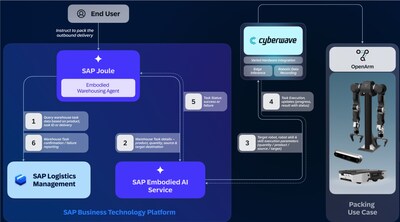


 mm41
5日前
mm41
5日前
 iHub News
2週前
iHub News
2週前
 BottomBounce
6月前
BottomBounce
6月前
 Monksdream
1年前
Monksdream
1年前
 j_iliz
6年前
j_iliz
6年前
 whytestocks
6年前
whytestocks
6年前




 メールアドレスで登録