US Market News
5日前
US Market News
5日前
Instacart Introduces New Shoppable Vertical Video Feed for AdvertisersJune 22, 2026 3:00 AM
PR Newswire (US) New "Immersive Feed" Experience Gives Consumers a More Engaging Way to Discover and Shop Meals and Recipes Hellmann's, Kettle & Fire, Rachael Ray® Nutrish™, and Siete Foods Among First Brand Partners Piloting New Ad Surface to Drive Even More Inspiration and Conversion on InstacartSAN FRANCISCO and CANNES, France, June 22, 2026 /PRNewswire/ -- Instacart (NASDAQ: CART), the leading grocery technology company in North America, today introduced "Immersive Feed," a new short-form, vertical video feed that showcases meals and recipes, currently in pilot as part of Instacart's suite of inspiration ads. Customers can now browse the video feed directly within their favorite retail storefronts on Instacart and seamlessly add items to their cart. The new experience gives consumers a familiar way to scroll, discover, and shop meal ideas on Instacart, like finding the best appetizers to pair with rosé or planning a meal for seasonal occasions, such as a family summer picnic. "For more than a decade, people have come to Instacart for unmatched convenience, selection, and quality from their favorite grocers, and we've seen firsthand how much they love discovering new meal ideas and recipes along the way," said Ali Miller, General Manager of Advertising at Instacart. "Snackable vertical video has transformed how people get inspired with new recipes or the latest food trends to bring into their kitchen. Our Immersive Feed brings that familiar experience directly into our shopping journey. Now, our brand partners can meet consumers at the moment of inspiration through our latest ad experiences that make it effortless to move from discovery to purchase."Immersive Feed is designed to boost discovery, drive engagement, and unlock incremental reach across the Instacart Ads ecosystem. Content in the Immersive Feed will be provided by Instacart's 9,000+ brand partners, including Hellmann's, Kettle & Fire, Rachael Ray® Nutrish™, and Siete Foods, with plans to expand to organic content through third-party partnerships and sponsored creator integrations. Brand partners can launch Immersive Feed campaigns directly through Instacart's Ads Manager, using existing vertical video assets or creating new ones.Today's announcement builds on Instacart's existing suite of Inspiration Ads, designed to boost out-of-aisle awareness, drive conversion at tentpole moments, and build brand affinity. Results show consumers are already discovering and converting through these formats1:Instacart Recipe Ads deliver an average of 78% out-of-aisle impressions and 43% new-to-brand salesInstacart Occasion Ads drive an average of 90% out-of-aisle impressions and 36% new-to-brand salesImmersive Feed is available as 9:16 vertical video between 5 and 30 seconds in length. It is currently in early pilot with select brand partners and other curated content, with plans to expand to more partners later this year.Brand partner supporting quotes"At Hellmann's, we know consumers are increasingly discovering recipes and food trends through short-form video, and Instacart's new Immersive Feed brings that behavior directly into the shopping experience," said Cassie Booth, Retail Marketing at Unilever. "This tactic enables us to go beyond inspiration by pairing recipe videos with easy add-to-cart functionality, resulting in a seamless purchase journey.""Consumers don't just want inspiration— they want an easier path from discovery to dinner," said Niccoló Gloazzo, Director of Media and Omnichannel at Kettle & Fire. "Instacart's Immersive Feed pairs the kind of recipe and creator content our community already loves with a seamless shopping experience. For Kettle & Fire, it's an exciting opportunity to connect with people as they plan nourishing meals and discover ingredients to bring those meals to life.""Meal inspiration is most powerful when it's seamlessly connected to action," said Monica Gratzer, Senior Director of Performance Media for Rachael Ray® Nutrish™. "Being able to bring our delicious, home chef-inspired recipes for pets to life in a familiar, engaging video format and make every product instantly shoppable is a powerful combination. It allows us to tell a richer brand story and make it easier than ever for consumers to act at that moment of inspiration.""Recipes play a huge role in how we inspire consumers, and we're excited about the opportunity to make them more shoppable and engaging. Less doomscrolling, more yumscrolling," said Eric Le, VP of Growth Marketing at Siete Foods.About Instacart
Instacart is a leading grocery technology company that partners with more than 2,200 retail banners – representing nearly 100,000 stores – to transform how people shop for the groceries they need from the retailers they trust, while creating flexible earning opportunities for shoppers. Through the Instacart Marketplace, Instacart Enterprise platform, and Instacart Ads ecosystem, the company powers ecommerce, fulfillment, in-store technology, AI offerings, and advertising for partners. For more information, visit www.instacart.com/company. Maplebear Inc. is the registered corporate name of Instacart.____________________________1 Based on all Q3'25 recipe and occasion ad campaigns. View original content to download multimedia:https://www.prnewswire.com/news-releases/instacart-introduces-new-shoppable-vertical-video-feed-for-advertisers-302805833.htmlSOURCE Maplebear Inc. dba Instacart Original: Instacart Introduces New Shoppable Vertical Video Feed for Advertisers
US Market News
2月前
Instacart Announces First Quarter 2026 Financial ResultsMay 6, 2026 7:00 AM
PR Newswire (US) GTV grew 13% year-over-year and total revenue grew 14% year-over-year GAAP net income of $144 million, up 36% year-over-year; Adjusted EBITDA of $300 million, up 23% year-over-yearSAN FRANCISCO, May 6, 2026 /PRNewswire/ -- Instacart (NASDAQ: CART) today released financial results for its first quarter ended March 31, 2026. "Q1 was a milestone quarter — surpassing $10 billion in GTV and $1 billion in total revenue for the first time. These results prove that our strategy is working. We're the leading grocery technology platform, delivering a best-in-class consumer experience, powering retailers across marketplace and enterprise, and operating a scaled ads ecosystem," said Chris Rogers, CEO. "Each part of our platform is getting stronger — and they're compounding together. That foundation positions us to invest in new initiatives like AI Solutions, international expansion, and in-store technologies that will help accelerate our growth over time.""We started the year with strong momentum, delivering a ninth consecutive quarter of double-digit GTV growth and our fastest advertising and other revenue growth since Q3 2023. We also continued to expand profitability year-over-year while generating meaningful free cash flow," said Emily Reuter, CFO. "Our operating fundamentals are solid and give us the flexibility to reinvest to further accelerate growth, pursue strategic M&A, and opportunistically return capital through share repurchases as we focus on maximizing long-term shareholder value."First Quarter 2026 Financial HighlightsGTV of $10,288 million, up 13% year-over-year.Orders of 91.2 million, up 10% year-over-year.Total revenue of $1,019 million, up 14% year-over-year, representing 9.9% of GTV.Transaction revenue of $733 million, up 13% year-over-year, representing 7.1% of GTV.Advertising and other revenue of $286 million, up 16% year-over-year, representing 2.8% of GTV.GAAP gross profit of $738 million, up 10% year-over-year, representing 7.2% of GTV and 72% of total revenue.GAAP net income of $144 million, up 36% year-over-year, representing 1.4% of GTV and 14% of total revenue.Adjusted EBITDA of $300 million, up 23% year-over-year, representing 2.9% of GTV and 29% of total revenue.Delivered operating cash flow of $268 million and free cash flow of $253 million.Repurchased $349 million in shares and ended the quarter with approximately $880 million in cash and similar assets.
Three Months Ended March 31,
2025
2026
% Change
(in millions, except percentages)
GTV$ 9,122
$ 10,288
13 %Orders83.2
91.2
10 %Total revenue$ 897
$ 1,019
14 %GAAP gross profit$ 671
$ 738
10 %GAAP gross margin75 %
72 %
GAAP gross profit as a percent of GTV7.4 %
7.2 %
GAAP net income$ 106
$ 144
36 %GAAP net income as a percent of total revenue 12 %
14 %
GAAP net income as a percent of GTV1.2 %
1.4 %
Adjusted EBITDA (1)$ 244
$ 300
23 %Adjusted EBITDA margin (1)27 %
29 %
Adjusted EBITDA as a percent of GTV (1)2.7 %
2.9 %
Net cash provided by operating activities$ 298
$ 268
(10) %Free cash flow (1)$ 280
$ 253
(10) %___________(1)Adjusted EBITDA, Adjusted EBITDA margin, Adjusted EBITDA as a percent of GTV, and free cash flow are non-GAAPfinancial measures. For more information regarding our use of these measures and reconciliations to the most directlycomparable financial measures calculated in accordance with GAAP, see the section titled "Non-GAAP FinancialMeasures" and the reconciliations presented at the end of this press release.Operational Highlights By continuously improving what matters most to consumers: selection, quality, affordability, and convenience — we surpassed $10 billion in GTV and over $1 billion in total revenue in Q1.In Q1, Hy-Vee and Raley's moved to price parity on our marketplace. Since then, Fareway launched on marketplace and Storefront Pro at parity, while several local independent grocers also moved to price parity.Deepened our partnership with ALDI U.S. by launching a redesigned website and app powered by Storefront Pro, making Instacart the exclusive fulfillment partner across ALDI's website and mobile app nationwide.Acquired Instaleap, a global enablement and fulfillment solutions platform with deep retailer relationships in nearly 30 countries, to accelerate international expansion of the Instacart Enterprise platform.We are building momentum with our new suite of AI Solutions — especially Cart Assistant, our conversational shopping experience, with early partners like Kroger and Sprouts, and recent additions including Food Bazaar, Heritage Grocers, Restaurant Depot, The Save Mart Companies, and Woodman's.Launched a new integration with Anthropic's Claude, expanding Instacart's AI ecosystem and enabling users to build grocery carts with real-time, personalized results directly within an AI-powered assistant.Continued to expand and diversify both sides of Instacart's advertising ecosystem:Supply is driven by our healthy, growing marketplace and network of over 310 Carrot Ads partners2, which we're expanding with new partners like ALDI, Dierbergs, Fareway, and Jerry's Foods.Demand is strong across the over 9,000 brand partners2 on our platform. New brands are now able to launch campaigns in minutes using automated tools, and our AI-powered recommendations in our self-service platform, Ads Manager, continue to gain traction.Released new measurement case studies with Avaline, Bachan's®, Deep Brands' Deep Indian Kitchen, Good Peeps, and Saffron Road, demonstrating the impact of Instacart Ads on driving consumer demand.Expanded fuel savings for shoppers, increasing per-gallon cash back through our Upside partnership and introducing a new weekly fuel stipend for high-mileage shoppers.Announced $20K in annual scholarships for shoppers through Merit America, a career upskilling program.___________2As of Q4'25.Second Quarter 2026 Financial Outlook GTV$10,100 - $10,250 million Adjusted EBITDA $290 - $300 millionThis GTV outlook represents year-over-year growth between 11% to 13% with GTV expected to continue to outpace orders growth. Our Adjusted EBITDA outlook represents year-over-year growth between 11% to 15%.For fiscal 2026, we remain committed to steady annual Adjusted EBITDA year-over-year growth at a rate that outpaces GTV growth. Similar to prior years, we expect this rate of expansion to moderate year-over-year as we reinvest to accelerate across our multiple growth engines and lap some of the more significant operating expense efficiencies realized in 2024 and 2025.We have not provided the forward-looking GAAP equivalent to our Adjusted EBITDA or a GAAP reconciliation as a result of the uncertainty regarding, and the potential variability of, reconciling items such as stock-based compensation and related payroll tax expenses, certain legal and regulatory accruals and settlements, and reserves for sales and other indirect taxes. Accordingly, a reconciliation of this non-GAAP guidance metric to its corresponding GAAP equivalent is not available without unreasonable effort. However, it is important to note that these reconciling items could have a significant effect on future GAAP results.Webcast and conference call informationInstacart management will host a conference call to discuss the company's results at 5:30 a.m. Pacific Time (8:30 a.m. Eastern Time) today. An audio webcast of the conference call will be available on the company's Investor Relations website at https://investors.instacart.com/.About InstacartInstacart is a leading grocery technology company that partners with more than 2,200 retail banners – representing nearly 100,000 stores – to transform how people shop for the groceries they need from the retailers they trust, while creating flexible earning opportunities for shoppers. Through the Instacart Marketplace, Instacart Enterprise platform, and Instacart Ads ecosystem, the company powers ecommerce, fulfillment, in-store technology, AI offerings, and advertising for partners. For more information, visit www.instacart.com/company. Maplebear Inc. is the registered corporate name of Instacart.Forward-Looking StatementsThis letter and the accompanying oral presentation contain forward-looking statements within the meaning of Section 27A of the Securities Act of 1933, as amended, and Section 21E of the Securities Exchange Act of 1934, as amended. All statements other than statements of historical fact could be deemed forward-looking, including without limitation statements regarding our financial outlook, including GTV, Adjusted EBITDA, transaction revenue, advertising and other revenue, cost of revenue, stock-based compensation expense, cash flow, and orders, trends in our business and industry, impacts from macroeconomic conditions, our plans and expectations regarding growth, products, features, and partnerships, including expansion of our capabilities, services, and solutions, the expected benefits of AI, our strategic priorities, investments, and initiatives, including international expansion and M&A activity, our ability to drive sales and growth for our partners, and activity under our share repurchase program. In some cases, you can identify forward-looking statements because they contain words such as "anticipate," "believe," "contemplate," "continue," "could," "estimate," "expect," "intend," "may," "plan," "potential," "predict," "project," "should," "target," "toward," "will," or "would," or the negative of these words or other similar terms or expressions.The forward-looking statements contained in this letter and the accompanying oral presentation are subject to known and unknown risks, uncertainties, assumptions, and other factors that may cause actual results or outcomes to be materially different from any future results or outcomes expressed or implied by the forward-looking statements. These risks, uncertainties, assumptions, and other factors include, but are not limited to, our ability to forecast our performance; our ability to attract and increase engagement of customers, retailers, brands, and shoppers; the increasing scale, scope, and complexity of our business; evolving and uncertain macroeconomic conditions; our ability to achieve and maintain profitability and profitable growth; competition; and legal and regulatory developments; as well as other risks described from time to time in our filings with the Securities and Exchange Commission (SEC), including in our Annual Report on Form 10-K for the year ended December 31, 2025 filed with the SEC on February 26, 2026.You should not rely on forward-looking statements as predictions of future events. We have based the forward-looking statements contained in this letter and the accompanying oral presentation on information available to us as of the date hereof, and we undertake no obligation to update any forward-looking statements, except as required by law.Key Business MetricsWe use the following key business metrics to help us evaluate our business, identify trends affecting our performance, formulate business plans, and make strategic decisions:Gross Transaction Value (GTV): We define GTV as the value of the products sold through Instacart, including applicable taxes, deposits and other local fees, customer tips, which go directly to shoppers, customer fees, which include flat subscription fees related to Instacart+ that are charged monthly or annually, and other fees. GTV consists of orders including those completed through Instacart Marketplace or services that are part of the Instacart Enterprise platform. We believe that GTV indicates the health of our business, including our ability to drive revenue and profits, and the value we provide to our constituents.Orders: We define an order as a completed customer transaction to purchase goods for delivery or pickup primarily from a single retailer through Instacart during the period indicated, including those completed through Instacart Marketplace or services that are part of the Instacart Enterprise platform. We believe that orders are an indicator of the scale and growth of our business as well as the value we bring to our constituents.Non-GAAP Financial MeasuresWe use the following non-GAAP financial measures in conjunction with GAAP measures to assess performance, to inform the preparation of our annual operating budget and quarterly forecasts, to evaluate the effectiveness of our business strategies, and to discuss our business and financial performance with our board of directors. We believe that these non-GAAP financial measures provide useful information to investors about our business and financial performance, enhance their overall understanding of our past performance and future prospects, and allow for greater transparency with respect to metrics used by our management in their financial and operational decision making. We are presenting these non-GAAP financial measures to assist investors in seeing our business and financial performance through the eyes of management, and because we believe that these non-GAAP financial measures provide an additional tool for investors to use in comparing results of operations of our business over multiple periods with other companies in our industry.Adjusted EBITDA, Adjusted EBITDA as a Percent of GTV, and Adjusted EBITDA Margin. We define Adjusted EBITDA as net income (loss), adjusted to exclude (i) provision for (benefit from) income taxes, (ii) interest income, (iii) other (income) expense, net, (iv) depreciation and amortization expense, (v) stock-based compensation expense, (vi) payroll taxes related to stock-based compensation, (vii) certain legal and regulatory accruals and settlements, net, (viii) reserves for sales and other indirect taxes, net, (ix) acquisition-related expenses, and (x) restructuring charges. We define Adjusted EBITDA margin as Adjusted EBITDA as a percent of total revenue.Adjusted Cost of Revenue and Adjusted Cost of Revenue as a Percent of GTV. We define adjusted cost of revenue as cost of revenue excluding depreciation and amortization expense and stock-based compensation expense.Adjusted Operations and Support Expense and Adjusted Operations and Support Expense as a Percent of GTV. We define adjusted operations and support expense as operations and support expense excluding depreciation and amortization expense, stock-based compensation expense, and payroll taxes related to stock-based compensation.Adjusted Research and Development Expense and Adjusted Research and Development Expense as a Percent of GTV. We define adjusted research and development expense as research and development expense excluding depreciation and amortization expense, stock-based compensation expense, and payroll taxes related to stock-based compensation.Adjusted Sales and Marketing Expense and Adjusted Sales and Marketing Expense as a Percent of GTV. We define adjusted sales and marketing expense as sales and marketing expense excluding depreciation and amortization expense, stock-based compensation expense, and payroll taxes related to stock-based compensation.Adjusted General and Administrative Expense and Adjusted General and Administrative Expense as a Percent of GTV. We define adjusted general and administrative expense as general and administrative expense excluding depreciation and amortization expense; stock-based compensation expense; payroll taxes related to stock-based compensation; certain legal and regulatory accruals and settlements, net; reserves for sales and other indirect taxes, net; and acquisition-related expenses.Adjusted Total Operating Expenses and Adjusted Total Operating Expenses as a Percent of GTV. We define adjusted total operating expenses as the sum of adjusted operations and support expense, adjusted research and development expense, adjusted sales and marketing expense, and adjusted general and administrative expense.We exclude depreciation and amortization expense and stock-based compensation expense from our non-GAAP financial measures as these are non-cash in nature. We exclude payroll taxes related to the vesting and settlement of certain equity awards; certain legal and regulatory accruals and settlements, net; reserves for sales and other indirect taxes, net; acquisition-related expenses; and restructuring charges as these are not indicative of our operating performance.Free Cash Flow. We define free cash flow as net cash provided by (used in) operating activities less purchases of property and equipment, including capitalized internal-use software.Non-GAAP financial measures are not meant to be considered in isolation or as a substitute for comparable GAAP financial measures and should be read only in conjunction with our condensed consolidated financial statements prepared in accordance with GAAP. Our presentation of non-GAAP financial measures may not be comparable to similar measures used by other companies, which reduce their usefulness as comparative measures. In addition, other companies may not publish these or similar measures. Further, these measures have certain limitations in that they do not include the impact of certain expenses that are reflected in our condensed consolidated statements of operations. We encourage investors and others to review our business, results of operations, and financial information in their entirety, not to rely on any single financial measure, and carefully consider our results under GAAP, as well as our supplemental non-GAAP information and the reconciliation between these presentations, to more fully understand our business. Please see the tables included at the end of this press release for the reconciliation of GAAP to non-GAAP results.MAPLEBEAR INC. DBA INSTACARTCONDENSED CONSOLIDATED BALANCE SHEETS(unaudited, in millions)
As of December 31,
As of March 31,
2025
2026ASSETS
Current assets:
Cash and cash equivalents$ 637
$ 631Short-term marketable securities50
59Accounts receivable, net1,127
1,095Restricted cash and cash equivalents, current172
110Prepaid expenses and other current assets213
197Total current assets2,199
2,091Long-term marketable securities81
63Restricted cash and cash equivalents, noncurrent18
18Property and equipment, net218
219Operating lease right-of-use assets30
28Intangible assets, net71
60Goodwill393
393Deferred tax assets, net664
626Other assets14
37Total assets$ 3,687
$ 3,535LIABILITIES, REDEEMABLE CONVERTIBLE PREFERRED STOCK, AND STOCKHOLDERS' EQUITY
Current liabilities:
Accounts payable$ 70
$ 48Accrued and other current liabilities634
604Operating lease liabilities, current3
2Deferred revenue211
230Total current liabilities917
885Operating lease liabilities, noncurrent33
32Other long-term liabilities24
24Total liabilities974
941Series A redeemable convertible preferred stock196
198Stockholders' equity:
Preferred stock—
—Common stock—
—Additional paid-in capital7,005
7,143Accumulated other comprehensive loss(1)
(4)Accumulated deficit(4,486)
(4,744)Total stockholders' equity2,518
2,395Total liabilities, redeemable convertible preferred stock, and stockholders' equity $ 3,687
$ 3,535
Note: Due to rounding, numbers presented may not sum precisely to the totals presented. MAPLEBEAR INC. DBA INSTACARTCONDENSED CONSOLIDATED STATEMENTS OF OPERATIONS(unaudited, in millions, except share amounts, which are reflected in thousands, and per share amounts)
Three Months Ended March 31,
2025
2026Revenue$ 897
$ 1,019Cost of revenue226
281Gross profit671
738Operating expenses:
Operations and support75
74Research and development144
164Sales and marketing216
230General and administrative126
88Total operating expenses561
556Income from operations110
182Interest income14
6Income before provision for income taxes124
188Provision for income taxes18
44Net income$ 106
$ 144Accretion related to Series A redeemable convertible preferred stock(2)
(2)Net income attributable to common stockholders, basic$ 104
$ 142Accretion related to Series A redeemable convertible preferred stock—
2Net income attributable to common stockholders, diluted$ 104
$ 144Net income per share attributable to common stockholders:
Basic$ 0.40
$ 0.59Diluted$ 0.37
$ 0.57Weighted-average shares used in computing net income per share attributable to common stockholders:
Basic262,432
239,273Diluted277,193
253,597
Note: Due to rounding, numbers presented may not sum precisely to the totals presented. MAPLEBEAR INC. DBA INSTACARTCONDENSED CONSOLIDATED STATEMENTS OF CASH FLOWS(unaudited, in millions)
Three Months Ended March 31,
2025
2026OPERATING ACTIVITIES
Net income$ 106
$ 144Adjustments to reconcile net income to net cash provided by operating activities:
Depreciation and amortization expense19
30Stock-based compensation expense66
80Impairments of long-lived assets and other assets6
6Provision for bad debts4
3Amortization of operating lease right-of-use assets3
1Deferred income taxes(2)
38Other—
2Changes in operating assets and liabilities:
Accounts receivable36
28Prepaid expenses and other assets28
(9)Accounts payable(3)
(22)Accrued and other current liabilities22
(51)Deferred revenue17
19Operating lease liabilities(3)
(1)Other long-term liabilities(1)
1Net cash provided by operating activities298
268INVESTING ACTIVITIES
Purchases of marketable securities(62)
(4)Maturities of marketable securities81
12Purchases of property and equipment, including capitalized internal-use software(18)
(16)Net cash provided by (used in) investing activities1
(8)FINANCING ACTIVITIES
Taxes paid related to net share settlement of equity awards(8)
(4)Proceeds from exercise of stock options4
3Changes in advances from payment card issuer47
31Repurchases of common stock(89)
(359)Net cash used in financing activities(46)
(328)Effect of foreign exchange on cash, cash equivalents, and restricted cash and cash equivalents 1
(1)Net increase (decrease) in cash, cash equivalents, and restricted cash and cash equivalents254
(68)Cash, cash equivalents, and restricted cash and cash equivalents - beginning of period1,449
827Cash, cash equivalents, and restricted cash and cash equivalents - end of period$ 1,703
$ 758
Note: Due to rounding, numbers presented may not sum precisely to the totals presented. MAPLEBEAR INC. DBA INSTACARTKEY BUSINESS METRICS AND RECONCILIATION OF GAAP TO NON-GAAP RESULTS(unaudited, in millions, except percentages)
Three Months Ended March 31,
2025
2026GTV$ 9,122
$ 10,288Orders83.2
91.2Net income$ 106
$ 144Provision for income taxes18
44Interest income(14)
(6)Depreciation and amortization expense19
30Stock-based compensation expense66
80Payroll taxes related to stock-based compensation (1)10
7Certain legal and regulatory accruals and settlements, net (2) 40
1Reserves for sales and other indirect taxes, net (3)(1)
—Acquisition-related expenses—
1Adjusted EBITDA$ 244
$ 300Net income as a percent of GTV1.2 %
1.4 %Adjusted EBITDA as a percent of GTV2.7 %
2.9 %Total revenue$ 897
$ 1,019Net income as a percent of total revenue12 %
14 %Adjusted EBITDA margin27 %
29 %(1) Represents employer payroll taxes related to the vesting and settlement of certain equity awards.(2) Represents certain legal, regulatory, and policy expenses, including those related to worker classification, as well as non-recurring intellectualproperty matters and regulatory settlements.(3) Represents sales and other indirect tax reserves, net of abatements, for periods in which we were unable to collect such taxes from customers.We believe this adjustment is useful for investors in understanding our underlying operating performance because in these cases, the taxeswere not intended to be a cost to us but rather are to be borne by the customers.
Note: Due to rounding, numbers presented may not sum precisely to the totals presented. MAPLEBEAR INC. DBA INSTACARTRECONCILIATION OF GAAP TO NON-GAAP RESULTS (unaudited, in millions, except percentages)
Three Months Ended
Mar. 31,
Jun. 30,
Sep. 30,
Dec. 31,
Mar. 31,
2025
2025
2025
2025
2026Cost of revenue$ 226
$ 236
$ 247
$ 275
$ 281Depreciation and amortization expense(14)
(15)
(20)
(20)
(24)Stock-based compensation expense(2)
(2)
(3)
(2)
(2)Adjusted cost of revenue$ 210
$ 218
$ 225
$ 253
$ 255Cost of revenue as a percent of GTV 2.5 %
2.6 %
2.7 %
2.8 %
2.7 %Adjusted cost of revenue as a percent of GTV 2.3 %
2.4 %
2.5 %
2.6 %
2.5 %
Operations and support expense$ 75
$ 66
$ 62
$ 71
$ 74Depreciation and amortization expense—
—
—
(1)
(1)Stock-based compensation expense(3)
(4)
(3)
(4)
(3)Payroll taxes related to stock-based compensation (1)(1)
—
—
—
—Adjusted operations and support expense$ 71
$ 61
$ 58
$ 67
$ 70Operations and support expense as a percent of GTV 0.8 %
0.7 %
0.7 %
0.7 %
0.7 %Adjusted operations and support expense as a percent of GTV0.8 %
0.7 %
0.6 %
0.7 %
0.7 %
Research and development expense$ 144
$ 166
$ 169
$ 170
$ 164Depreciation and amortization expense(2)
(2)
(2)
(2)
(2)Stock-based compensation expense(34)
(58)
(56)
(55)
(46)Payroll taxes related to stock-based compensation (1)(6)
(2)
(2)
(2)
(4)Adjusted research and development expense$ 102
$ 103
$ 109
$ 112
$ 111Research and development expense as a percent of GTV 1.6 %
1.8 %
1.8 %
1.7 %
1.6 %Adjusted research and development expense as a percent of GTV 1.1 %
1.1 %
1.2 %
1.1 %
1.1 %
Sales and marketing expense$ 216
$ 217
$ 206
$ 214
$ 230Depreciation and amortization expense(2)
(2)
(3)
(2)
(2)Stock-based compensation expense(13)
(18)
(13)
(16)
(10)Payroll taxes related to stock-based compensation (1)(1)
(1)
(1)
—
(1)Adjusted sales and marketing expense$ 200
$ 197
$ 191
$ 195
$ 217Sales and marketing expense as a percent of GTV 2.4 %
2.4 %
2.3 %
2.2 %
2.2 %Adjusted sales and marketing expense as a percent of GTV2.2 %
2.2 %
2.1 %
2.0 %
2.1 % MAPLEBEAR INC. DBA INSTACARTRECONCILIATION OF GAAP TO NON-GAAP RESULTS (CONTINUED)(unaudited, in millions, except percentages)
Three Months Ended
Mar. 31,
Jun. 30,
Sep. 30,
Dec. 31,
Mar. 31,
2025
2025
2025
2025
2026General and administrative expense$ 126
$ 106
$ 87
$ 163
$ 88Depreciation and amortization expense(1)
(1)
(1)
(1)
(1)Stock-based compensation expense(14)
(23)
(7)
(21)
(19)Payroll taxes related to stock-based compensation (1)(2)
(1)
(1)
—
(1)Certain legal and regulatory accruals and settlements, net (2)(40)
(6)
(2)
(78)
(1)Reserves for sales and other indirect taxes, net (3)1
—
1
1
—Acquisition-related expenses—
—
—
(1)
(1)Adjusted general and administrative expense$ 70
$ 74
$ 78
$ 63
$ 65General and administrative expense as a percent of GTV 1.4 %
1.2 %
1.0 %
1.7 %
0.9 %Adjusted general and administrative expense as a percent of GTV 0.8 %
0.8 %
0.8 %
0.6 %
0.6 %
Total operating expenses$ 561
$ 554
$ 525
$ 619
$ 556Depreciation and amortization expense(5)
(6)
(6)
(6)
(6)Stock-based compensation expense(64)
(103)
(79)
(96)
(78)Payroll taxes related to stock-based compensation (1)(10)
(5)
(3)
(3)
(6)Certain legal and regulatory accruals and settlements, net (2)(40)
(6)
(2)
(78)
(1)Reserves for sales and other indirect taxes, net (3)1
—
1
1
—Acquisition-related expenses—
—
—
(1)
(1)Adjusted total operating expenses$ 443
$ 434
$ 436
$ 436
$ 463Total operating expenses as a percent of GTV6.1 %
6.1 %
5.7 %
6.3 %
5.4 %Adjusted total operating expenses as a percent of GTV4.9 %
4.8 %
4.8 %
4.4 %
4.5 %(1)Represents employer payroll taxes related to the vesting and settlement of certain equity awards.(2)Represents certain legal, regulatory, and policy expenses, including those related to worker classification, as well as non-recurring intellectual property matters and regulatory settlements.(3)Represents sales and other indirect tax reserves, net of abatements, for periods in which we were unable to collect such taxes from customers. We believe this adjustment is useful for investors in understanding our underlying operating performance because in these cases, the taxes were not intended to be a cost to us but rather are to be borne by the customers.
Three Months Ended
Mar. 31,
Jun. 30,
Sep. 30,
Dec. 31,
Mar. 31,
2025
2025
2025
2025
2026Net cash provided by operating activities$ 298
$ 203
$ 287
$ 184
$ 268Purchases of property and equipment, including capitalized internal-use software(18)
(16)
(15)
(12)
(16)Free cash flow$ 280
$ 187
$ 272
$ 171
$ 253
Note: Due to rounding, numbers presented may not sum precisely to the totals presented. View original content to download multimedia:https://www.prnewswire.com/news-releases/instacart-announces-first-quarter-2026-financial-results-302763379.htmlSOURCE Maplebear Inc. dba Instacart Original: Instacart Announces First Quarter 2026 Financial Results
US Market News
2月前
Instacart Acquires Instaleap to Accelerate Global Expansion of Its Enterprise PlatformApril 14, 2026 5:00 AM
PR Newswire (US)
Acquisition strengthens Instacart's international footprint and builds momentum with leading grocery retailers across Europe, Latin America, and the Middle EastSAN FRANCISCO, April 14, 2026 /PRNewswire/ -- Instacart (NASDAQ: CART), the leading grocery technology company in North America, today announced its acquisition of Instaleap, a global enablement and fulfillment solutions services platform that empowers retailers to streamline and scale their online operations. The acquisition supports Instacart's strategy to expand its enterprise offerings globally and build the technologies that can power every single grocery transaction.
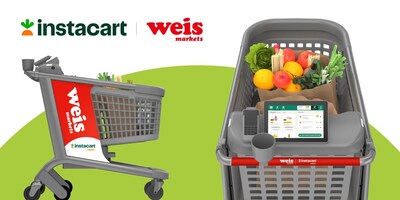
Instaleap offers purpose-built grocery technology, designed to address core retailer needs, including marketplace integrations and fulfillment solutions services, and complements Instacart's broader portfolio of enterprise offerings. The company has established relationships with nearly 100 grocery retailers and marketplaces outside North America, including Cencosud, Continente, Jerónimo Martins, Lulu, and SPAR. With operations in nearly 30 countries, Instaleap has deep local market expertise and a growing presence in Europe, Latin America, and the Middle East. To date, Instaleap has powered more than 100 million transactions."We see a meaningful opportunity to expand internationally through an enterprise-led strategy that empowers retailers across the globe to meet the evolving omnichannel needs of their customers," said Ryan Hamburger, Chief Commercial Officer at Instacart. "We've already seen growing global demand for our online and in-store technologies, including Storefront Pro and Caper Carts, with early traction in Europe and Australia. With the addition of Instaleap's technology, international expertise, and deep retail relationships, we can accelerate our international expansion and better serve retailers and consumers around the world.""This is an exciting moment for Instaleap and for the retailers we serve," said Antonio dos Santos Nunes, CEO and Co-founder of Instaleap. "We've built our platform with a deep focus on the unique needs of grocery retailers across diverse international markets. Joining Instacart enables us to scale our impact with the support of a trusted partner that shares our commitment to retailer success."Instaleap will initially operate as a wholly-owned subsidiary of Instacart to ensure continuity for Instaleap retailers. Instacart looks forward to serving Instaleap's retail partners with its existing product line, and over time, Instacart expects to expand more of its enterprise technology offerings to Instaleap's partners, including Ecommerce, Connected Stores, Retailer Media, AI, and Data solutions. Marquee offerings – in-store and online – include:Storefront Pro, Instacart's enterprise-grade commerce platform that powers 380+ retail banners' owned and operated digital grocery programs – including Aldi, Costco, Publix, Sprouts, Woodman's, and more;Carrot Ads, the retail media technology solution from Instacart that enables 310+ retailers, marketplaces, and commerce partners to build and scale their online and in-store advertising business to unlock new revenue streams;Caper Carts, Instacart's AI-powered smart carts that drive customer engagement through personalization, savings opportunities, and streamlined checkout, and are already launching with retailers outside North America, including Coles in Australia and Morrisons in the UK; andFoodStorm, Instacart's end-to-end order management technology for grocery perimeter departments – connecting online ordering with in-store preparation for reliable, high-quality experiences.The acquisition reinforces Instacart's continued commitment to providing retailers with integrated solutions that help drive their business growth and deliver better experiences for consumers. For more information on the Instacart Enterprise platform, please visit: https://www.instacart.com/company/retailer-platform.Forward Looking Statements
This press release contains forward-looking statements within the meaning of the Private Securities Litigation Reform Act of 1995. All statements other than statements of historical fact could be deemed forward-looking, including without limitation statements regarding anticipated benefits and outcomes of the acquisition of Instaleap and expectations regarding international expansion. These forward-looking statements are subject to known and unknown risks, uncertainties, assumptions, and other factors that may cause actual results or outcomes to be materially different from any future results or outcomes expressed or implied by the forward-looking statements. These risks, uncertainties, assumptions, and other factors include the risks described from time to time in Instacart's filings with the Securities and Exchange Commission, including in Instacart's Annual Report on Form 10-K for the year ended December 31, 2025 filed with the Commission on February 26, 2026. You should not rely on forward-looking statements as predictions of future events. Instacart has based these forward-looking statements primarily on information available to it as of the date of this press release and its current expectations and projections about future events and trends that it believes may affect its business, financial condition, and results of operations. These statements are inherently uncertain, and investors are cautioned not to unduly rely on these statements. Except as required by law, Instacart undertakes no obligation, and does not intend, to update these forward-looking statements.About Instacart
Instacart is a leading grocery technology company that partners with more than 2,200 retail banners – representing nearly 100,000 stores – to transform how people shop for the groceries they need from the retailers they trust, while creating flexible earning opportunities for shoppers. Through the Instacart Marketplace, Instacart Enterprise platform, and Instacart Ads ecosystem, the company powers ecommerce, fulfillment, in-store technology, AI solutions, and advertising for partners. For more information, visit www.instacart.com/company. Maplebear Inc. is the registered corporate name of Instacart.About Instaleap
Instaleap is a global enablement and fulfillment solutions services platform that empowers retailers to streamline and scale their online operations. Serving clients across nearly 30 countries in Latin America, Europe, and the Middle East, the company integrates the full digital commerce lifecycle — including order management, picking, routing, logistics, and customer experience — enabling retailers to operate with enhanced efficiency, scalability, and reliability. Its technology empowers retailers to consistently meet their on-time delivery commitments, optimize operational costs, and deliver high-quality customer experiences that foster long-term loyalty. For more details, visit www.instaleap.io.
View original content to download multimedia:https://www.prnewswire.com/news-releases/instacart-acquires-instaleap-to-accelerate-global-expansion-of-its-enterprise-platform-302741084.htmlSOURCE Maplebear Inc. dba Instacart
Original: Instacart Acquires Instaleap to Accelerate Global Expansion of Its Enterprise Platform
 TRUISM
2年前
TRUISM
2年前
DOORDASH, INSTACART PRICES ON THE RISE FOR SEATTLEITES FOLLOWING APP-BASED WORKER LAW
By Louie Tran-Fri, January 12, 2024, 11:02 PM EST
LINK
Customers who use apps including Uber Eats, Doordash, Instacart in the Emerald City will have to pay more beginning Saturday due to a new Seattle law that’s aimed to help app-based workers.
NEW LAW:
Seattle City Council passed the App-Based Worker Minimum Payment Ordinance, SMC 8.37, on May 31, 2022.
The law goes into effect Saturday, January 13, 2024, according to the City’s website.
According to the website, the ordinance applies to certain app-based workers (sometimes referred to as gig workers) and provides several rights and protections for covered workers, including the following:
· Minimum Payment: Right to minimum pay based on the time worked and miles travelled for each offer.
· Transparency: Right to upfront disclosures of offer-information and right to receipt and payment records.
· Flexibility: Right to access the network platform without limitations (except for health and safety limitations), right to not be penalized for limiting availability or refusing offers, and the right to cancel an offer with cause.
Network companies must pay the greater of:
· Minimum per-minute amount of $.044 and minimum per-mile amount of $.74 or
· Minimum per-offer amount of $5
The legislation was sponsored by Lisa Herbold (District 1 – West Seattle/South Park) and Andrew Lewis (District 7 – Pioneer Square to Magnolia), however, both are no longer on the City Council.
APP-BASED COMPANIES:
KIRO 7 News reached out to companies that would be affected, including Uber Eats, Doordash, Instacart, Grubhub, etc.
A spokesperson for each company shared a statement with us:
UBERT EATS:
“Uber supports and advocates for thoughtful earnings standards across the country that help all sides of the marketplace. Unfortunately, this one more than doubles the fees consumers will have to pay which means fewer orders for businesses, and less opportunities for delivery workers.” The spokesperson added, “Uber is supportive of paying couriers the minimum wage plus expenses and has demonstrated its commitment to working with stakeholders to reach that goal, however this earnings standard will do more harm than good.
This policy will undoubtedly make services more costly for eaters, and our modeling is clear that this will result in a loss of hundreds of thousands of orders for small businesses and will price out Seattleites from access to this service. That means a loss of thousands of job opportunities for delivery workers.”
A spokesperson added that customers will see a new $5 local operating fee in addition to an increased service fee.
DOORDASH:
“There are consequences to bad policy. The previous City Council left a legacy of higher costs and fees for all Seattleites. As a direct result of the costly and unnecessary rules they imposed, we’ll be introducing a new regulatory response fee on all orders within the city of Seattle. Unfortunately, we expect this will lead to lost revenue for local businesses and fewer earning opportunities for the very workers the regulations are supposed to help. We urge the incoming City Council to reconsider these harmful rules, which are only making the cost-of-living crisis even worse.”
INSTACART:
“Due to new regulations imposed by the Seattle City Council, we’re making several changes to how Instacart operates in Seattle. Some of these changes include reduced service options and pricing increases for customers, as well as pay changes for shoppers. As always, we will work to deliver the best customer and shopper experience despite the limitations put in place by the City Council, and we may need to make additional changes in response to these new set of laws.”
GRUBHUB:
“We’re taking appropriate steps to comply with the new legislation in Seattle while maintaining a sustainable business given the added costs to now operate in the market.”
“Grubhub is making adjustments to ensure our most dedicated delivery partners are available for more delivery opportunities, give more insight into earnings, and ensure they have information about accessibility and oversize items. Grubhub is proactively communicating to Seattle delivery and merchant partners regarding these changes to our platform.”
SMALL RESTAURANT OWNER:
KIRO 7 News spoke with Alexandra Serpanos, the owner of Nikos Gyros in Seattle who partners with app-based companies, including Uber Eats.
“I’m trying to keep this restaurant alive and afloat,” she said. “The margins are so slim. It’s so hard for small businesses and you see small restaurants closing.”
Serpanos said she had partnered with app-based companies, such as Uber Eats around 2021 to expand her customer base to combat the challenges she had faced – inflation, supply chain issues, staffing shortages, etc.
However, when the new law goes into effect, she said her restaurant will take a hit.
“We’re going to be impacted. The customers are going to be impacted.” She added, “I was hoping for that to grow and if people can’t afford it, that’s obviously going to impact my sales.”
“I can’t keep raising prices. There’s only so much people are willing to pay for a gyro or a salad,” she shared.
Serpanos encouraged people to support small local businesses as she and other small business owners navigate this new law.
“It pains me to see so many mom-and-pop shops open for decades and have to close and this is just going to be one more item on that list that’s going to lead to more businesses dissolving.” She added, “Continue to support your local businesses. And if you can’t do it through a delivery service, come in and pick it up yourself.”
KIRO 7 News also spoke with customers to understand how the new law will impact their decisions going forward.
Tybald Jourdan said he does not often order food delivery; however, the new law does not entice him to order on the apps.
“That’s crazy though,” he said. “Since I moved to Seattle it’s $10 extra to $15, plus the money you pay for your food, from what I saw, so with what they’re adding now, yea no thank you.”
Rik Schutte, who often orders food delivery said, “I’m glad to hear there is a focus on the drivers.”
“I’m less likely than to order out. I’m already a little bit weary of ordering out through Uber Eats or Grubhub or what have you because the fees are already pretty high up there. Some places it’s nearly double the cost of what that meal would have been,” Schutte added. “I probably will just try to come in and pick it up myself. So, I don’t know if that really helps the drivers at the end of the day if they’re losing that sale entirely.”
TRUISM
TRUISM
3年前
How Your Tips Made Instacart an $8 Billion Company
By Heather Tal Murphy-Fri, September 22, 2023 at 1:48 PM EDT
YAHOO NEWS
He’d long had a policy against accepting Walmart orders. When you’re an Instacart shopper, speed matters. In contrast with most grocery stores, the products at Walmart are quite spread out.
Still, the number that appeared on his Instacart Shopper app was tantalizing. Quan Tsang would make $130.75 for the 111-item order if—and this is always a big if—the customer followed through with the promised tip of $94.77.
Tsang opened it up to the other delivery people who follow him on TikTok, asking, “Would you take this Instacart batch?”
“Hell yeah,” one follower wrote. It was among the biggest batches many of them had ever seen. But others were cautious, given that customers have two hours, after their order has been delivered, to reduce their tip. “Tip baiting”—when a customer lists a misleadingly high tip to get someone to quickly take the job—happens.
“Nope because I would hate to have to burn their house down if it was a tip bait lol,” one woman wrote. (Instacart has offered to compensate shoppers, up to $10, in some tip-baiting incidents.)
Without the tip, Tsang, who lives in pricey Orange County, California, would be using up gas to schlep to Walmart for a grand total of $36 to $46.
Tsang hit accept.
It’s this kind of calculus that has helped make Instacart, as of this week, a more than $8 billion public company. The grocery delivery service debuted on the Nasdaq on Tuesday at around $30 a share, making its young founder a very rich man and inciting conflicted feelings among the shoppers that the tip-reliant business model depends on.
Last year, around 7.7 million individuals and companies regularly ordered groceries and home goods from Instacart. The company acquired these customers without hiring a single full-time delivery person.
The people who do the grocery shopping and transport bags to customers’ doors are all contract workers like Tsang who travel in their own vehicles. In most of the country, they get no hourly wage, and the flat fee—attached to most orders—is tiny; in July, ahead of its IPO, the company lowered the minimum pay from $7 to just $4.
The company bumps this figure up a little based on factors like total items and distance. But ultimately, the only reason high-caliber shoppers like Tsang have stuck around—beyond valuing the schedule flexibility—is the tips that make up the bulk of their payout.
The shoppers I spoke to feel that—now more than ever—Instacart needs to do a better job helping them get those tips. Their requests were straightforward. Many urged doubling tipping defaults from 5 percent—the option that Instacart suggests for large orders—and $2—the default option that Instacart places on many small orders. Still others urged Instacart to take responsibility for making it more clear to customers how their delivery workers get paid.
We all know that in the United States waitresses and bartenders get most of their income from tips. But that’s not necessarily true in the delivery industry. FreshDirect, an online grocery provider that is popular in the New York area, pays an hourly rate.
Blue Apron, one of a handful of other publicly traded food-delivery companies, outsources shipments to non-tip-based companies like FedEx. Further adding to the confusion, Instacart lists a $4 “service fee” that doesn’t actually go to shoppers. (Instacart states this on its site, but it’s easy to get confused by the invoice.)
In a conversation about compensation, a spokesperson for Instacart said that the company supports shoppers by getting them tipping and batch payment information upfront. The company has touted the many ways it says it’s trying to boost tips for shoppers, including urging customers who gave five-star ratings to increase the amount.
But without understanding that their shoppers are working almost entirely for tips, a customer might think that adding one more dollar to a $600 order is generous.
As Tsang entered the Foothill Ranch Walmart in Lake Forest, California, he scanned his list and looked at the Instacart timer. Each order offers a goal time. Tsang always beats his by a long shot.
“I take a lot of pride in my shopping speed,” Tsang said. Surpassing it does not come with a reward. It simply means you are available to take on more orders.
Tsang likes working as a shopper partly because it allows him to watch his kids while his wife is in school. He works seven days a week and responds to Instacart orders from 11 a.m. to 1 p.m. and from 4:30 to 8:30 p.m. Since he’d only spotted the order at 6:30, he hoped he could still pull it off. He didn’t have the store mapped in his head, so he got off to a slow start once inside.
Shoppers don’t know what’s in the batch until they hit accept. This can make for some uncomfortable surprises … like sex toys. (It happens!) There was nothing like that this time, but he was frustrated to find that he had to return to the makeup area about 10 times to get someone to unlock a desired item for him. And that the customer kept adding items as he shopped. By the end he had two carts, overflowing with organizational containers. Checkout took 20 minutes.
The actual delivery is where things get interesting. On the positive side, you might meet a customer who insists on knitting your baby a blanket. This happened to Angela Davis, who worked as an Instacart shopper in Maryland throughout her pregnancy. (She’d be even more pleased, she said, if Instacart compensated shoppers for good ratings.)
On the challenging end, some customers want to talk … and talk. Sometimes allowing a lonely stranger to share a story feels good, said Jessica Smalley, a shopper in Portland, Maine.
Sometimes it’s stressful.
Some customers do strange things, like insist on praying for you in tongues, Sara Amber Victoria, another shopper in Southern California, told me. (That’s not her real name, but the one she uses on social media.)
She also once had a man open the door fully clothed, only to undress further each time she brought in a bag. “The last time I went up, he was in his underwear. I got out of there SO quick!” she wrote to me. She reported him to Instacart.
For Tsang, the Walmart delivery customer turned out to be perfectly, unremarkably pleasant. Two hours and 40 minutes after he’d accepted his order, Tsang was ready to call it a night. Soon after he arrived home, he confirmed that the tip came through: He’d made $135, around $45 an hour.
This was well within his goal of $30 to $50 bucks an hour. (This is double many other shoppers’ goals.) And for some shoppers, particularly those working in lower-income, lower-tipping, lower-demand areas, this would be a reason to celebrate. (One shopper in Atlanta shared on TikTok that she’d been struggling to make $150 a week through Instacart lately—a huge drop from pandemic times, when she could make $1,500 to $2,000 a week.)
But Tsang felt mildly irked. No, this was not one of those lawsuit-inspiring reports from a few years back of shoppers making a few bucks an hour.
Still, he’d hoped for a 10 percent tip on an order of that size, but he was pretty sure this was lower. He couldn’t be certain because shoppers never see how much customers pay—$98 is 9.4 percent of the $1,042 Walmart charged.
But the Instacart app routinely marks up items on the customer end. (Instacart kicks markup responsibility to the stores, which the company says prices items for Instacart delivery.) He suspected it might have actually been closer to a 7 percent tip.
Like other shoppers I spoke to, Tsang felt that Instacart should adjust the default tip setting to 10 percent. Studies show that defaults heavily impact how much people pay, even if they can modify the amount.
In 2022, customers spent, on average, $317 per month, according to Instacart’s own Securities and Exchange Commission filings. Grocery orders of $200 are pretty common in Southern California, Tsang said. At 5 percent for a tip, that means shoppers could only expect a $10 tip on top of the base batch pay of $4 to $7.
“All they need to do is set the default to 10 percent and so many shoppers will be far better off,” Tsang said.
It could also be good for Instacart. As the company states in its SEC filings, one of the biggest risks to the future of its business is failing to retain quality shoppers. It’s hard to keep people at $14–$17 for an hour and a half of work.
TRUISM
 Hot Features


 プレミアム
プレミアム





 登録してリアルタイムのアラート、カスタムポートフォリオ、市場の動きを入手してください。



 pocket.change
2月前
pocket.change
2月前
 Monksdream
1年前
Monksdream
1年前
 Bushmantrader
2年前
Bushmantrader
2年前





 メールアドレスで登録