US Market News
1月前
US Market News
1月前
Chevron Updates Stockholders at Annual MeetingMay 27, 2026 10:50 AM
Business Wire Chevron Corporation (NYSE: CVX) today provided an overview of the company’s business performance and plans at its Annual Meeting of Stockholders. The meeting highlighted the company’s strong performance and consistent strategy, with stockholders showing their support by voting in favor of the full slate of Directors and with the company’s recommendations on all matters to be voted upon. “Recent events remind us of the importance of energy,” said Mike Wirth, Chevron’s chairman and chief executive officer. “Oil and natural gas remain vital to people, economies, and global energy security. While the future is uncertain, our actions are not. Our strategy remains consistent: leverage our strengths to safely deliver lower carbon energy to a growing world.” Stockholders voted on six items. As reported during the meeting, the preliminary report of the Inspector of Elections was as follows: Item 1: An average of 97% of the votes cast were voted for the 12 nominees for election to the Board of Directors. Item 2: Approximately 96% of the votes cast were voted for the ratification of the appointment of PricewaterhouseCoopers LLP as the company’s independent registered public accounting firm for 2026. Item 3: Approximately 97% of the votes cast were voted in support of named executive officer compensation. Item 4: Approximately 15% of the votes cast were voted in support of the proposal regarding an independent chair. Item 5: Approximately 9% of the votes cast were voted in support of the proposal to publish a report on Indigenous Peoples’ rights. Item 6: Approximately 9% of the votes cast were voted in support of the proposal to commission a third-party report on human rights processes. Over 1.6 billion shares were represented at this meeting – or approximately 85% of Chevron’s outstanding common stock were present by proxy. Final voting results on all agenda items will be posted at www.chevron.com after they have been reported on a Form 8-K, which will be filed with the U.S. Securities and Exchange Commission. Specific information about the proposals presented before Chevron stockholders at the 2026 Annual Meeting of Stockholders may be found in the 2026 Proxy Statement, which is available in the “Investors” section of the company’s website under “Corporate Governance.” Chevron is one of the world’s leading integrated energy companies. We believe affordable, reliable and ever-cleaner energy is essential to enabling human progress. Chevron produces crude oil and natural gas; manufactures transportation fuels, lubricants, petrochemicals and additives; and develops technologies that enhance our business and the industry. We aim to grow our oil and gas business, lower the carbon intensity of operations, and grow new energies businesses. More information about Chevron is available at www.chevron.com. NOTICE As used in this news release, the term “Chevron” and such terms as “the company,” “the corporation,” “our,” “we,” “us” and “its” may refer to Chevron Corporation, one or more of its consolidated subsidiaries, or to all of them taken as a whole. All of these terms are used for convenience only and are not intended as a precise description of any of the separate companies, each of which manages its own affairs. Please visit Chevron’s website and Investor Relations page at www.chevron.com and www.chevron.com/investors, LinkedIn: www.linkedin.com/company/chevron, Twitter: @Chevron, Facebook: www.facebook.com/chevron, and Instagram: www.instagram.com/chevron, where Chevron often discloses important information about the company, its business, and its results of operations. CAUTIONARY STATEMENTS RELEVANT TO FORWARD-LOOKING INFORMATION FOR THE PURPOSE OF “SAFE HARBOR” PROVISIONS OF THE PRIVATE SECURITIES LITIGATION REFORM ACT OF 1995 This news release contains forward-looking statements relating to Chevron’s operations, assets, and strategy that are based on management’s current expectations, estimates and projections about the petroleum, chemicals and other energy-related industries. Words or phrases such as “anticipates,” “expects,” “intends,” “plans,” “targets,” “advances,” “commits,” “drives,” “aims,” “forecasts,” “projects,” “believes,” “approaches,” “seeks,” “schedules,” “estimates,” “positions,” “pursues,” “progress,” “design,” “enable,” “may,” “can,” “could,” “should,” “will,” “budgets,” “outlook,” “trends,” “guidance,” “focus,” “on track,” “trajectory,” “goals,” “objectives,” “strategies,” “opportunities,” “poised,” “potential,” “ambitions,” “future,” “aspires” and similar expressions, and variations or negatives of these words, are intended to identify such forward-looking statements, but not all forward-looking statements include such words. These statements are not guarantees of future performance and are subject to numerous risks, uncertainties and other factors, many of which are beyond the company’s control and are difficult to predict. Therefore, actual outcomes and results may differ materially from what is expressed or forecasted in such forward-looking statements. The reader should not place undue reliance on these forward-looking statements, which speak only as of the date of this news release. Unless legally required, Chevron undertakes no obligation to update publicly any forward-looking statements, whether as a result of new information, future events or otherwise. Among the important factors that could cause actual results to differ materially from those in the forward-looking statements are: changing crude oil and natural gas prices and demand for the company’s products, and production curtailments due to market conditions; crude oil production quotas or other actions that might be imposed by the Organization of Petroleum Exporting Countries and other producing countries; technological advancements; changes to government policies in the countries in which the company operates; public health crises, such as pandemics and epidemics, and any related government policies and actions; disruptions in the company’s global supply chain, including supply chain constraints and escalation of the cost of goods and services; changing economic, regulatory and political environments in the various countries in which the company operates, including Venezuela; general domestic and international economic, market and political conditions, including the conflict between Russia and Ukraine, the ongoing conflict in the Middle East and the global response to these hostilities; changing refining, marketing and chemicals margins; the amount and timing of settlements on the company’s commodity derivative contracts; the company’s ability to realize anticipated cost savings and efficiencies associated with enterprise structural cost reduction initiatives; actions of competitors or regulators; timing of exploration expenses; changes in projected future cash flows; timing of crude oil liftings; uncertainties about the estimated quantities of crude oil, natural gas liquids and natural gas reserves; the competitiveness of alternate-energy sources or product substitutes; pace and scale of the development of large carbon capture and storage and offset markets; the results of operations and financial condition of the company’s suppliers, vendors, partners and equity affiliates; the inability or failure of the company’s joint-venture partners to fund their share of operations and development activities; the potential failure to achieve expected net production from existing and future crude oil and natural gas development projects; potential delays in the development, construction or start-up of planned projects; the potential disruption or interruption of the company’s operations due to war, accidents, political events, civil unrest, severe weather, cyber threats, terrorist acts, or other natural or human causes beyond the company’s control; the potential liability for remedial actions or assessments under existing or future environmental regulations and litigation; significant operational, investment or product changes undertaken or required by existing or future environmental statutes and regulations, including international agreements and national or regional legislation and regulatory measures related to greenhouse gas emissions and climate change; the potential liability resulting from pending or future litigation; the company’s ability to achieve the anticipated benefits from the acquisition of Hess Corporation; the company’s future acquisitions or dispositions of assets or shares or the delay or failure of such transactions to close based on required closing conditions; the potential for gains and losses from asset dispositions or impairments; government mandated sales, divestitures, recapitalizations, taxes and tax audits, tariffs, sanctions, changes in fiscal terms or restrictions on scope of company operations; foreign currency movements compared with the U.S. dollar; higher inflation and related impacts; material reductions in corporate liquidity and access to debt markets; changes to the company’s capital allocation strategies; the effects of changed accounting rules under generally accepted accounting principles promulgated by rule-setting bodies; the company’s ability to identify and mitigate the risks and hazards inherent in operating in the global energy industry; and the factors set forth under the heading “Risk Factors” on pages 21 through 27 of the company’s 2025 Annual Report on Form 10-K, and as updated in the future. Other unpredictable or unknown factors not discussed in this news release could also have material adverse effects on forward-looking statements. View source version on businesswire.com: https://www.businesswire.com/news/home/20260527622790/en/ James Craig, Media Relations +1 (925) 842-1319 Original: Chevron Updates Stockholders at Annual Meeting
US Market News
2月前
Chevron Reports First Quarter 2026 ResultsMay 1, 2026 6:15 AM
Business Wire
Reported earnings of $2.2 billion; adjusted earnings of $2.8 billion
Returned $6.0 billion cash to shareholders; 16th consecutive quarter over $5 billion
Worldwide and U.S. production increased by 15 and 24 percent, respectively
Chevron Corporation (NYSE: CVX) reported earnings of $2.2 billion ($1.11 per share - diluted) for first quarter 2026, compared with $3.5 billion ($2.00 per share - diluted) in first quarter 2025. Included in the quarter was a net loss of $360 million related to a legal reserve. Foreign currency effects decreased earnings by $223 million. Adjusted earnings of $2.8 billion ($1.41 per share - diluted) in first quarter 2026 compared to adjusted earnings of $3.8 billion ($2.18 per share - diluted) in first quarter 2025. See Attachment 4 for a reconciliation of adjusted earnings.
Earnings & Cash Flow Summary
Unit
1Q 2026
4Q 2025
1Q 2025
Total Earnings / (Loss)
$ MM
$
2,210
$
2,770
$
3,500
Upstream
$ MM
$
3,909
$
3,035
$
3,758
Downstream
$ MM
$
(817
)
$
823
$
325
All Other
$ MM
$
(882
)
$
(1,088
)
$
(583
)
Earnings Per Share - Diluted
$/Share
$
1.11
$
1.39
$
2.00
Adjusted Earnings (1)
$ MM
$
2,793
$
3,028
$
3,813
Adjusted Earnings Per Share - Diluted (1)
$/Share
$
1.41
$
1.52
$
2.18
Cash Flow From Operations (CFFO)
$ B
$
2.5
$
10.8
$
5.2
CFFO Excluding Working Capital (1)
$ B
$
7.1
$
9.1
$
7.6
Avg. Brent Spot Price (Source: Platts)
$/BBL
$
81
$
64
$
76
(1) See non-GAAP measure definitions on page 6 and reconciliations in the attachments
“Despite heightened geopolitical volatility and related supply disruptions, Chevron delivered solid first quarter performance, underscoring the resilience of our portfolio and the value of disciplined execution,” said Mike Wirth, Chevron’s Chairman and Chief Executive Officer. “Strong operating results in the United States, particularly following the integration of Hess, and continued growth in the Gulf of America and Permian Basin, drove higher production while maintaining financial flexibility.”
“Our U.S. refineries operated at record crude throughput in March, capital spending remains within guidance, and our structural cost reductions are firmly on track,” Wirth continued. “This disciplined performance supports dependable cash generation, enabling us to continue returning significant capital to shareholders, while investing in advantaged long-lived assets.”
“We continue to closely monitor developments in the Middle East with a focus on the safety of our workforce and the integrity of our assets and operations,” Wirth concluded. “The unpredictable external environment reinforces the importance of disciplined investment to ensure reliable energy supply and global energy security.”
Financial and Business Highlights
Unit
1Q 2026
4Q 2025
1Q 2025
Return on Capital Employed (ROCE)
%
4.5
%
5.4
%
8.3
%
Capital Expenditures (Capex)
$ B
$
4.1
$
5.3
$
3.9
Affiliate Capex
$ B
$
0.3
$
0.4
$
0.5
Free Cash Flow (FCF) (1)
$ B
$
(1.5
)
$
5.5
$
1.3
Adjusted Free Cash Flow (1)
$ B
$
4.1
$
4.2
$
4.2
Debt-to-CFFO
Ratio
1.5x
1.2x
1.0x
Net debt-to-CFFO (1)
Ratio
1.3x
1.0x
0.8x
Net Oil-Equivalent Production
MBOED
3,858
4,045
3,353
(1) See non-GAAP measure definitions on page 6 and reconciliations in the attachments
Financial Highlights
Reported earnings decreased compared to first quarter 2025 primarily due to unfavorable timing effects of approximately $2.9 billion. These effects include timing mismatches in earnings recognition related to the mark-to-market of financial derivatives prior to the physical delivery of the associated hydrocarbons, as well as the impact of LIFO inventory accounting. Excluding those unfavorable effects, earnings improved due to upstream production growth and higher refining margins.
Production in the first quarter of 2026 was higher than first quarter last year largely due to the acquisition of Hess Corporation (Hess) and growth in the Gulf of America and the Permian Basin, partly offset by downtime at the company’s 50 percent owned affiliate Tengizchevroil (TCO) and curtailments in the Middle East (Israel and the Partitioned Zone between Saudi Arabia and Kuwait). U.S. production exceeded 2 million oil-equivalent barrels per day for the third consecutive quarter.
U.S. refinery crude unit throughput remains over 1 million barrels per day for the fifth consecutive quarter and achieved a record in March 2026.
Capex in the first quarter of 2026 was higher than last year largely due to spend on legacy Hess assets, partially offset by lower spend in the Permian Basin.
Cash flow from operations in the first quarter of 2026 was lower than a year ago primarily due to higher working capital outflows largely resulting from the sharp increase in commodity prices in March 2026. Adjusted free cash flow benefited from a $1 billion loan repayment from TCO.
The company returned $6.0 billion of cash to shareholders during the quarter, including share repurchases of $2.5 billion and dividends of $3.5 billion.
The company’s Board of Directors declared a quarterly dividend of one dollar and seventy-eight cents ($1.78) per share, payable June 10, 2026, to all holders of common stock as shown on the transfer records of the corporation at the close of business on May 19, 2026.
Business Highlights and Milestones
Announced an agreement in Venezuela to expand Chevron’s heavy oil interest in the Petroindependencia, S.A. joint venture and include rights to develop the adjacent Ayacucho 8 area at the Petropiar, S.A. joint venture in the Orinoco Oil Belt.
Entered into an exclusivity agreement with Microsoft and Engine No. 1 related to a proposed power generation and electricity offtake agreement to support the power project under development in West Texas.
Expansions at Tamar and Leviathan in Israel have achieved start-up, adding production capacity to support growing demand and regional energy security.
Reached a final investment decision on the Aseng gas project in Equatorial Guinea, advancing the country's efforts to expand its role in global gas markets.
Discovered oil at the Bandit prospect in Green Canyon Block 680 in the Gulf of America, through a non-operated joint venture.
Entered Libya as a winning bidder in the Sirte Basin, expanding the company’s exploration portfolio with high-quality acreage and high-impact prospects.
Awarded four offshore exploration leases in Greece, further expanding the company's position in the Eastern Mediterranean region.
Farmed into the OFF-7 block in Uruguay, building depth in the exploration portfolio.
Segment Highlights
Upstream
U.S. Upstream
Unit
1Q 2026
4Q 2025
1Q 2025
Earnings / (Loss)
$ MM
$
2,112
$
1,258
$
1,858
Net Oil-Equivalent Production
MBOED
2,024
2,055
1,636
Liquids Production
MBD
1,461
1,488
1,159
Natural Gas Production
MMCFD
3,380
3,402
2,859
Liquids Realization
$/BBL
$
51.94
$
42.99
$
55.26
Natural Gas Realization
$/MCF
$
2.48
$
2.21
$
2.50
U.S. upstream earnings were higher primarily due to increased sales volumes partly offset by higher depreciation, depletion and amortization, higher operating expenses, and lower liquids realizations.
Net oil-equivalent production during the quarter was up 388,000 barrels per day from the year-ago period primarily due to the acquisition of Hess and higher production in the Gulf of America following project start-ups, and growth in the Permian Basin.
International Upstream
Unit
1Q 2026
4Q 2025
1Q 2025
Earnings / (Loss) (1)
$ MM
$
1,797
$
1,777
$
1,900
Net Oil-Equivalent Production
MBOED
1,834
1,990
1,717
Liquids Production
MBD
974
1,071
822
Natural Gas Production
MMCFD
5,161
5,514
5,371
Liquids Realization
$/BBL
$
77.50
$
57.53
$
67.69
Natural Gas Realization
$/MCF
$
6.99
$
6.97
$
7.12
(1) Includes foreign currency effects
$ MM
$
(233
)
$
(125
)
$
(136
)
International upstream earnings were lower than a year ago primarily due to unfavorable timing effects, higher depreciation, depletion and amortization, and unfavorable foreign currency effects that were partly offset by higher sales volumes.
Net oil-equivalent production during the quarter was up 117,000 barrels per day from the year-ago period primarily due to the acquisition of Hess, partly offset by lower production at TCO.
Downstream
U.S. Downstream
Unit
1Q 2026
4Q 2025
1Q 2025
Earnings / (Loss)
$ MM
$
196
$
230
$
103
Refinery Crude Unit Inputs
MBD
1,054
1,020
1,018
Refined Product Sales
MBD
1,265
1,293
1,293
U.S. downstream earnings were higher than the year-ago period primarily due to higher margins on refined product sales partly offset by a higher litigation reserve.
Refinery crude unit inputs increased 4 percent from the year-ago period primarily due to the continued ramp-up of the Light Tight Oil project at the Pasadena, Texas refinery.
Refined product sales decreased 2 percent compared to the year-ago period.
International Downstream
Unit
1Q 2026
4Q 2025
1Q 2025
Earnings / (Loss) (1)
$ MM
$
(1,013
)
$
593
$
222
Refinery Crude Unit Inputs
MBD
616
665
618
Refined Product Sales
MBD
1,493
1,546
1,398
(1) Includes foreign currency effects
$ MM
$
8
$
9
$
3
International downstream earnings were lower than the year-ago period primarily due to lower margins on refined product sales, including unfavorable timing effects and higher operating expenses mainly from higher transportation costs.
Refinery crude unit inputs were flat relative to the year-ago period.
Refined product sales increased 7 percent from the year-ago period due to higher demand for gasoline.
All Other
All Other
Unit
1Q 2026
4Q 2025
1Q 2025
Net charges (1)
$ MM
$
(882
)
$
(1,088
)
$
(583
)
(1) Includes foreign currency effects
$ MM
$
2
$
(14
)
$
(5
)
All Other consists of worldwide cash management and debt financing activities, corporate administrative functions, insurance operations, real estate activities, and technology companies.
Net charges increased compared to a year ago primarily due to the absence of prior-year favorable fair value adjustment on Hess shares and higher interest expense.
Chevron is one of the world’s leading integrated energy companies. We believe affordable, reliable and ever-cleaner energy is essential to enabling human progress. Chevron produces crude oil and natural gas; manufactures transportation fuels, lubricants, petrochemicals and additives; and develops technologies that enhance our business and the industry. We aim to grow our oil and gas business, lower the carbon intensity of operations, and grow new energies businesses. More information about Chevron is available at www.chevron.com.
NOTICE
Chevron’s discussion of first quarter 2026 earnings with security analysts will take place on Friday, May 1, 2026, at 10:00 a.m. CT. A webcast of the meeting will be available in a listen-only mode to individual investors, media, and other interested parties on Chevron’s website at www.chevron.com under the “Investors” section. Prepared remarks for today’s call, additional financial and operating information and other complementary materials will be available prior to the call at approximately 5:30 a.m. CT and located under “Events and Presentations” in the “Investors” section on the Chevron website. Chevron also publishes a “Sensitivities and Forward Guidance” document with consolidated guidance and sensitivities that is updated quarterly and posted to the Chevron website the month prior to earnings calls.
As used in this news release, the term “Chevron” and such terms as “the company,” “the corporation,” “our,” “we,” “us” and “its” may refer to Chevron Corporation, one or more of its consolidated subsidiaries, or to all of them taken as a whole. All of these terms are used for convenience only and are not intended as a precise description of any of the separate companies, each of which manages its own affairs. Structural cost reductions describe decreases in operating expenses from operational efficiencies, divestments, and other cost saving measures that are expected to be sustainable compared with 2024 levels.
Please visit Chevron’s website and Investor Relations page at www.chevron.com and www.chevron.com/investors, LinkedIn: www.linkedin.com/company/chevron, X: @Chevron, Facebook: www.facebook.com/chevron, and Instagram: www.instagram.com/chevron, where Chevron often discloses important information about the company, its business, and its results of operations.
Non-GAAP Financial Measures - This news release includes adjusted earnings/(loss), which reflect earnings or losses excluding significant non-operational items including impairment charges, write-offs, decommissioning obligations from previously sold assets, severance costs, gains on asset sales, legal reserves for ceased operations, fair value adjustments for investments in equity securities, unusual tax items, effects of pension settlements and curtailments, foreign currency effects and other special items. We believe it is useful for investors to consider this measure in comparing the underlying performance of our business across periods. The presentation of this additional information is not meant to be considered in isolation or as a substitute for net income (loss) as prepared in accordance with U.S. GAAP. A reconciliation to net income (loss) attributable to Chevron Corporation is shown in Attachment 4.
This news release also includes cash flow from operations excluding working capital, free cash flow and adjusted free cash flow. Cash flow from operations excluding working capital is defined as net cash provided by operating activities less net changes in operating working capital, and represents cash generated by operating activities excluding the timing impacts of working capital. Free cash flow is defined as net cash provided by operating activities less capital expenditures and generally represents the cash available to creditors and investors after investing in the business. Adjusted free cash flow is defined as free cash flow excluding working capital plus proceeds and deposits related to asset sales and returns of investments plus net repayment (borrowing) of loans by equity affiliates and generally represents the cash available to creditors and investors after investing in the business excluding the timing impacts of working capital. The company believes these measures are useful to monitor the financial health of the company and its performance over time. Reconciliations of cash flow from operations excluding working capital, free cash flow and adjusted free cash flow are shown in Attachment 3.
This news release also includes net debt ratio and net debt-to-CFFO ratio. Net debt ratio is defined as total debt less cash and cash equivalents, time deposits and marketable securities (net debt) as a percentage of net debt plus Chevron Corporation stockholders’ equity, which indicates the company’s leverage, net of its cash balances. The net debt-to-CFFO ratio is defined as net debt divided by CFFO for the prior four quarters, which measures the company’s ability to cover its net debt using the cash it generates from operations. The company believes these measures are useful to monitor the strength of the company’s balance sheet. A reconciliation of net debt ratio and net debt-to-CFFO ratio is shown in Attachment 2.
CAUTIONARY STATEMENTS RELEVANT TO FORWARD-LOOKING INFORMATION FOR THE PURPOSE OF “SAFE HARBOR” PROVISIONS OF THE PRIVATE SECURITIES LITIGATION REFORM ACT OF 1995
This news release contains forward-looking statements relating to Chevron’s operations, assets, and strategy that are based on management’s current expectations, estimates and projections about the petroleum, chemicals and other energy-related industries. Words or phrases such as “anticipates,” “expects,” “intends,” “plans,” “targets,” “advances,” “commits,” “drives,” “aims,” “forecasts,” “projects,” “believes,” “approaches,” “seeks,” “schedules,” “estimates,” “positions,” “pursues,” “progress,” “design,” “enable,” “may,” “can,” “could,” “should,” “will,” “budgets,” “outlook,” “trends,” “guidance,” “focus,” “on track,” “trajectory,” “goals,” “objectives,” “strategies,” “opportunities,” “poised,” “potential,” “ambitions,” “future,” “aspires” and similar expressions, and variations or negatives of these words, are intended to identify such forward-looking statements, but not all forward-looking statements include such words. These statements are not guarantees of future performance and are subject to numerous risks, uncertainties and other factors, many of which are beyond the company’s control and are difficult to predict. Therefore, actual outcomes and results may differ materially from what is expressed or forecasted in such forward-looking statements. The reader should not place undue reliance on these forward-looking statements, which speak only as of the date of this news release. Unless legally required, Chevron undertakes no obligation to update publicly any forward-looking statements, whether as a result of new information, future events or otherwise.
Among the important factors that could cause actual results to differ materially from those in the forward-looking statements are: changing crude oil and natural gas prices and demand for the company’s products, and production curtailments due to market conditions; crude oil production quotas or other actions that might be imposed by the Organization of Petroleum Exporting Countries and other producing countries; technological advancements; changes to government policies in the countries in which the company operates; public health crises, such as pandemics and epidemics, and any related government policies and actions; disruptions in the company’s global supply chain, including supply chain constraints and escalation of the cost of goods and services; changing economic, regulatory and political environments in the various countries in which the company operates, including Venezuela; general domestic and international economic, market and political conditions, including the conflict between Russia and Ukraine, the ongoing conflict in the Middle East and the global response to these hostilities; changing refining, marketing and chemicals margins; the amount and timing of settlements on the company’s commodity derivative contracts; the company’s ability to realize anticipated cost savings and efficiencies associated with enterprise structural cost reduction initiatives; actions of competitors or regulators; timing of exploration expenses; changes in projected future cash flows; timing of crude oil liftings; uncertainties about the estimated quantities of crude oil, natural gas liquids and natural gas reserves; the competitiveness of alternate-energy sources or product substitutes; pace and scale of the development of large carbon capture and storage and offset markets; the results of operations and financial condition of the company’s suppliers, vendors, partners and equity affiliates; the inability or failure of the company’s joint-venture partners to fund their share of operations and development activities; the potential failure to achieve expected net production from existing and future crude oil and natural gas development projects; potential delays in the development, construction or start-up of planned projects; the potential disruption or interruption of the company’s operations due to war, accidents, political events, civil unrest, severe weather, cyber threats, terrorist acts, or other natural or human causes beyond the company’s control; the potential liability for remedial actions or assessments under existing or future environmental regulations and litigation; significant operational, investment or product changes undertaken or required by existing or future environmental statutes and regulations, including international agreements and national or regional legislation and regulatory measures related to greenhouse gas emissions and climate change; the potential liability resulting from pending or future litigation; the company’s ability to achieve the anticipated benefits from the acquisition of Hess Corporation; the company’s future acquisitions or dispositions of assets or shares or the delay or failure of such transactions to close based on required closing conditions; the potential for gains and losses from asset dispositions or impairments; government mandated sales, divestitures, recapitalizations, taxes and tax audits, tariffs, sanctions, changes in fiscal terms or restrictions on scope of company operations; foreign currency movements compared with the U.S. dollar; higher inflation and related impacts; material reductions in corporate liquidity and access to debt markets; changes to the company’s capital allocation strategies; the effects of changed accounting rules under generally accepted accounting principles promulgated by rule-setting bodies; the company’s ability to identify and mitigate the risks and hazards inherent in operating in the global energy industry; and the factors set forth under the heading “Risk Factors” on pages 21 through 27 of the company’s 2025 Annual Report on Form 10-K, and as updated in the future. Other unpredictable or unknown factors not discussed in this news release could also have material adverse effects on forward-looking statements.
Attachment 1
CHEVRON CORPORATION - FINANCIAL REVIEW
(Millions of Dollars, Except Per-Share Amounts)
(unaudited)
CONSOLIDATED STATEMENT OF INCOME
Three Months Ended
March 31,
REVENUES AND OTHER INCOME
2026
2025
Sales and other operating revenues
$
47,556
$
46,101
Income (loss) from equity affiliates
745
820
Other income (loss)
306
689
Total Revenues and Other Income
48,607
47,610
COSTS AND OTHER DEDUCTIONS
Purchased crude oil and products
28,265
28,610
Operating expenses (1)
8,724
7,640
Exploration expenses
205
187
Depreciation, depletion and amortization
5,808
4,123
Taxes other than on income
1,314
1,255
Interest and debt expense
345
212
Total Costs and Other Deductions
44,661
42,027
Income (Loss) Before Income Tax Expense
3,946
5,583
Income tax expense (benefit)
1,653
2,071
Net Income (Loss)
2,293
3,512
Less: Net income (loss) attributable to noncontrolling interests
83
12
NET INCOME (LOSS) ATTRIBUTABLE TO CHEVRON CORPORATION
$
2,210
$
3,500
(1) Includes operating expense, selling, general and administrative expense, and other components of net periodic benefit costs.
PER SHARE OF COMMON STOCK
Net Income (Loss) Attributable to Chevron Corporation
- Basic
$
1.12
$
2.01
- Diluted
$
1.11
$
2.00
Weighted Average Number of Shares Outstanding (000's)
- Basic
1,980,146
1,744,628
- Diluted
1,985,900
1,751,441
Note: Shares outstanding (excluding 14 million associated with Chevron’s Benefit Plan Trust) were 1,977 million and 1,980 million at March 31, 2026, and December 31, 2025, respectively.
EARNINGS BY MAJOR OPERATING AREA
Three Months Ended
March 31,
2026
2025
Upstream
United States
$
2,112
$
1,858
International
1,797
1,900
Total Upstream
3,909
3,758
Downstream
United States
196
103
International
(1,013
)
222
Total Downstream
(817
)
325
All Other
(882
)
(583
)
NET INCOME (LOSS) ATTRIBUTABLE TO CHEVRON CORPORATION
$
2,210
$
3,500
Attachment 2
CHEVRON CORPORATION - FINANCIAL REVIEW
(Millions of Dollars)
(unaudited)
SELECTED BALANCE SHEET ACCOUNT DATA (Preliminary)
March 31,
2026
December 31,
2025
Cash and cash equivalents
$
5,323
$
6,293
Time deposits
$
4
$
4
Total assets
$
329,551
$
324,012
Total debt
$
45,428
$
40,758
Total Chevron Corporation stockholders’ equity
$
183,715
$
186,450
Noncontrolling interests
$
5,656
$
5,726
SELECTED FINANCIAL RATIOS
Total debt plus total stockholders’ equity
$
229,143
$
227,208
Debt ratio (Total debt / Total debt plus stockholders’ equity)
19.8
%
17.9
%
Net debt (Total debt less cash and cash equivalents, time deposits and marketable securities)
$
40,101
$
34,461
Net debt plus total stockholders’ equity
$
223,816
$
220,911
Net debt ratio (Net debt / Net debt plus total stockholders’ equity)
17.9
%
15.6
%
Cash flow from operations (CFFO) (1)
$
31,264
$
33,939
Debt-to-CFFO ratio (1)
1.5x
1.2x
Net debt-to-CFFO ratio (1)
1.3x
1.0x
(1) CFFO is presented on a trailing 12 months basis.
RETURN ON CAPITAL EMPLOYED (ROCE)
Three Months Ended
March 31,
2026
2025
Total reported earnings
$
2,210
$
3,500
Noncontrolling interest
83
12
Interest expense (A/T)
310
192
ROCE earnings
2,603
3,704
Annualized ROCE earnings
10,412
14,816
Average capital employed (1)
233,867
178,730
ROCE
4.5
%
8.3
%
(1) Capital employed is the sum of Chevron Corporation stockholders’ equity, total debt and noncontrolling interest. Average capital employed is computed by averaging the sum of capital employed at the beginning and the end of the period.
Three Months Ended
March 31,
CAPEX BY SEGMENT
2026
2025
United States
Upstream
$
2,190
$
2,545
Downstream
91
155
Other
53
63
Total United States
2,334
2,763
International
Upstream
1,675
1,123
Downstream
47
27
Other
7
14
Total International
1,729
1,164
CAPEX
$
4,063
$
3,927
AFFILIATE CAPEX (not included above)
Upstream
$
110
$
206
Downstream
176
282
AFFILIATE CAPEX
$
286
$
488
Attachment 3
CHEVRON CORPORATION - FINANCIAL REVIEW
(Millions of Dollars)
(unaudited)
SUMMARIZED STATEMENT OF CASH FLOWS (Preliminary)
Three Months Ended
March 31,
OPERATING ACTIVITIES
2026
2025
Net Income (Loss)
$
2,293
$
3,512
Adjustments
Depreciation, depletion and amortization
5,808
4,123
Distributions more (less) than income from equity affiliates
(400
)
268
Loss (gain) on asset retirements and sales
(7
)
(19
)
Net foreign currency effects
157
130
Deferred income tax provision
(264
)
480
Net decrease (increase) in operating working capital
(4,625
)
(2,408
)
Other operating activity
(448
)
(897
)
Net Cash Provided by Operating Activities (CFFO)
$
2,514
$
5,189
INVESTING ACTIVITIES
Acquisition of businesses, net of cash acquired
—
—
Acquisition of Hess Corporation common stock
—
(2,225
)
Capital expenditures (Capex)
(4,063
)
(3,927
)
Proceeds and deposits related to asset sales and returns of investment
72
600
Net repayment (borrowing) of loans by equity affiliates
979
(66
)
Net Cash Provided by (Used for) Investing Activities
$
(3,012
)
$
(5,618
)
FINANCING ACTIVITIES
Net change in debt
4,642
5,030
Cash dividends — common stock
(3,526
)
(2,984
)
Shares issued for share-based compensation
1,160
218
Shares repurchased
(2,572
)
(3,917
)
Distributions to noncontrolling interests
(152
)
(11
)
Net Cash Provided by (Used for) Financing Activities
$
(448
)
$
(1,664
)
EFFECT OF EXCHANGE RATE CHANGES ON CASH, CASH EQUIVALENTS AND RESTRICTED CASH
(23
)
(3
)
NET CHANGE IN CASH, CASH EQUIVALENTS AND RESTRICTED CASH
$
(969
)
$
(2,096
)
RECONCILIATION OF NON-GAAP MEASURES
Net Cash Provided by Operating Activities
$
2,514
$
5,189
Less: Net decrease (increase) in operating working capital
(4,625
)
(2,408
)
Cash Flow from Operations Excluding Working Capital
$
7,139
$
7,597
Net Cash Provided by Operating Activities
$
2,514
$
5,189
Less: Capital expenditures
4,063
3,927
Free Cash Flow
$
(1,549
)
$
1,262
Less: Net decrease (increase) in operating working capital
(4,625
)
(2,408
)
Plus: Proceeds and deposits related to asset sales and returns of capital
72
600
Plus: Net repayment (borrowing) of loans by equity affiliates
979
(66
)
Adjusted Free Cash Flow
$
4,127
$
4,204
Attachment 4
CHEVRON CORPORATION - FINANCIAL REVIEW
(Millions of Dollars)
(unaudited)
RECONCILIATION OF NON-GAAP MEASURES
Three Months Ended
March 31, 2026
Three Months Ended
March 31, 2025
REPORTED EARNINGS
Pre-Tax
Income Tax
After-Tax
Pre-Tax
Income Tax
After-Tax
U.S. Upstream
$
2,112
$
1,858
Int'l Upstream
1,797
1,900
U.S. Downstream
196
103
Int'l Downstream
(1,013
)
222
All Other
(882
)
(583
)
Net Income (Loss) Attributable to Chevron Corporation
$
2,210
$
3,500
SPECIAL ITEMS
U.S. Upstream
Legal reserves
$
—
$
—
$
—
$
(130
)
$
—
$
(130
)
Int'l Upstream
Tax items
—
—
—
—
(55
)
(55
)
U.S. Downstream
Legal reserves
(470
)
110
(360
)
(226
)
56
(170
)
Int'l Downstream
All Other
Fair value adjustment of Hess common stock
—
—
—
232
(52
)
180
Total Special Items
$
(470
)
$
110
$
(360
)
$
(124
)
$
(51
)
$
(175
)
FOREIGN CURRENCY EFFECTS
Int'l Upstream
$
(233
)
$
(136
)
Int'l Downstream
8
3
All Other
2
(5
)
Total Foreign Currency Effects
$
(223
)
$
(138
)
ADJUSTED EARNINGS/(LOSS) (1)
U.S. Upstream
$
2,112
$
1,988
Int'l Upstream
2,030
2,091
U.S. Downstream
556
273
Int'l Downstream
(1,021
)
219
All Other
(884
)
(758
)
Total Adjusted Earnings/(Loss)
$
2,793
$
3,813
Total Adjusted Earnings/(Loss) per share
$
1.41
$
2.18
(1) Adjusted Earnings/(Loss) is defined as Net Income (loss) attributable to Chevron Corporation excluding special items and foreign currency effects.
View source version on businesswire.com: https://www.businesswire.com/news/home/20260501114528/en/
James Craig -- +1 925-842-1319
Original: Chevron Reports First Quarter 2026 Results
US Market News
3月前
Chevron Consolidates Venezuela Heavy Oil Position in Asset SwapApril 13, 2026 4:57 PM
Business Wire
Chevron Corporation (NYSE:CVX) announced today it has, through its subsidiaries with interests in Venezuela, agreed to an asset swap with Petroleos de Venezuela, S. A. (“PDVSA”) and subsidiaries of PDVSA in a mutually beneficial agreement which will consolidate all parties’ focus on strategic assets in the country.
Under the agreement, Chevron will receive an additional 13.21% working interest in the Petroindependencia, S.A. joint venture, increasing its total stake to 49%. In addition, Petropiar, S.A. joint venture, in which Chevron’s subsidiary holds a 30% interest, has been assigned the rights to develop the adjacent Ayacucho 8 area located in the Orinoco Oil Belt of Venezuela.
Venezuela will receive from Chevron subsidiaries its 60% and 100% operated interests in the offshore Plataforma Deltana Block 21 and Block 32 gas licenses, respectively, and its 25.2% non-operated interest in the Petroindependiente, S.A. joint venture located in western Venezuela.
“This agreement expands Chevron’s heavy oil position in two key joint ventures in Venezuela and reflects our disciplined development of the country’s significant resources. Ayacucho 8 is a producing asset in close proximity to Petropiar, which enhances development efficiencies,” said Javier La Rosa, President of Chevron Base Assets and Emerging Countries. “This asset swap marks another important step in Chevron’s long history in Venezuela and reinforces our role in supporting regional energy security.”
Chevron is one of the leading energy companies in Venezuela, with a presence that dates back to 1923. Petroindependencia and Petropiar operate extra-heavy oil from projects in the Orinoco Oil Belt.
Chevron has a broad production and exploration footprint across Latin America, with active operations spanning conventional, shale, and offshore assets. The company produces oil and gas across key countries including Argentina, Guyana, and Venezuela, supported by operated and non-operated assets. In parallel, Chevron maintains a strong exploration portfolio with about 35 active exploration blocks across Brazil, Suriname, Uruguay, and Peru, positioning the company for long-term growth while maintaining a balanced mix of production and future opportunities across the region.
[1] Plataforma Deltana Block 2 License contains the Loran gas discovery.
[2] Plataforma Deltana Block 3 License contains the Macuira gas discovery.
About Chevron
Chevron is one of the world’s leading integrated energy companies. We believe affordable, reliable and ever-cleaner energy is essential to enabling human progress. Chevron produces crude oil and natural gas; manufactures transportation fuels, lubricants, petrochemicals and additives; and develops technologies that enhance our business and the industry. We aim to grow our oil and gas business, lower the carbon intensity of operations, and grow new energies businesses. More information about Chevron is available at www.chevron.com.
As used in this news release, the term “Chevron” and such terms as “the company,” “the corporation,” “our,” “we,” “us” and “its” may refer to Chevron Corporation, one or more of its consolidated subsidiaries, or to all of them taken as a whole. All of these terms are used for convenience only and are not intended as a precise description of any of the separate companies, each of which manages its own affairs.
CAUTIONARY STATEMENTS RELEVANT TO FORWARD-LOOKING INFORMATION FOR THE PURPOSE OF "SAFE HARBOR" PROVISIONS OF THE PRIVATE SECURITIES LITIGATION REFORM ACT OF 1995
This news release contains forward-looking statements relating to Chevron’s operations, assets and strategy that are based on management’s current expectations, estimates, and projections about the petroleum, chemicals, and other energy-related industries. Words or phrases such as “anticipates,” “expects,” “intends,” “plans,” “targets,” “advances,” “commits,” “drives,” “aims,” “forecasts,” “projects,” “believes,” “approaches,” “seeks,” “schedules,” “estimates,” “positions,” “pursues,” “progress,” “design,” “enable,” “may,” “can,” “could,” “should,” “will,” “budgets,” “outlook,” “trends,” “guidance,” “focus,” “on track,” “trajectory,” “goals,” “objectives,” “strategies,” “opportunities,” “poised,” “potential,” “ambitions,” “future,” “aspires” and similar expressions, and variations or negatives of these words, are intended to identify such forward-looking statements, but not all forward-looking statements include such words. These statements are not guarantees of future performance and are subject to numerous risks, uncertainties and other factors, many of which are beyond the company’s control and are difficult to predict. Therefore, actual outcomes and results may differ materially from what is expressed or forecasted in such forward-looking statements. The reader should not place undue reliance on these forward-looking statements, which speak only as of the date of this news release. Unless legally required, Chevron undertakes no obligation to update publicly any forward-looking statements, whether as a result of new information, future events or otherwise.
Among the important factors that could cause actual results to differ materially from those in the forward-looking statements are: changing crude oil and natural gas prices and demand for the company’s products, and production curtailments due to market conditions; crude oil production quotas or other actions that might be imposed by the Organization of Petroleum Exporting Countries and other producing countries; technological advancements; changes to government policies in the countries in which the company operates; public health crises, such as pandemics and epidemics, and any related government policies and actions; disruptions in the company’s global supply chain, including supply chain constraints and escalation of the cost of goods and services; changing economic, regulatory and political environments in the various countries in which the company operates, including Venezuela; general domestic and international economic, market and political conditions, including the conflict between Russia and Ukraine, the ongoing conflict in the Middle East and the global response to these hostilities; changing refining, marketing and chemicals margins; the amount and timing of settlements on the company’s commodity derivative contracts; the company’s ability to realize anticipated cost savings and efficiencies associated with enterprise structural cost reduction initiatives; actions of competitors or regulators; timing of exploration expenses; changes in projected future cash flows; timing of crude oil liftings; uncertainties about the estimated quantities of crude oil, natural gas liquids and natural gas reserves; the competitiveness of alternate-energy sources or product substitutes; pace and scale of the development of large carbon capture and storage and offset markets; the results of operations and financial condition of the company’s suppliers, vendors, partners and equity affiliates; the inability or failure of the company’s joint-venture partners to fund their share of operations and development activities; the potential failure to achieve expected net production from existing and future crude oil and natural gas development projects; potential delays in the development, construction or start-up of planned projects; the potential disruption or interruption of the company’s operations due to war, accidents, political events, civil unrest, severe weather, cyber threats, terrorist acts, or other natural or human causes beyond the company’s control; the potential liability for remedial actions or assessments under existing or future environmental regulations and litigation; significant operational, investment or product changes undertaken or required by existing or future environmental statutes and regulations, including international agreements and national or regional legislation and regulatory measures related to greenhouse gas emissions and climate change; the potential liability resulting from pending or future litigation; the company’s ability to achieve the anticipated benefits from the acquisition of Hess Corporation; the company’s future acquisitions or dispositions of assets or shares or the delay or failure of such transactions to close based on required closing conditions; the potential for gains and losses from asset dispositions or impairments; government mandated sales, divestitures, recapitalizations, taxes and tax audits, tariffs, sanctions, changes in fiscal terms or restrictions on scope of company operations; foreign currency movements compared with the U.S. dollar; higher inflation and related impacts; material reductions in corporate liquidity and access to debt markets; changes to the company’s capital allocation strategies; the effects of changed accounting rules under generally accepted accounting principles promulgated by rule-setting bodies; the company’s ability to identify and mitigate the risks and hazards inherent in operating in the global energy industry; and the factors set forth under the heading “Risk Factors” on pages 21 through 27 of the company’s 2025 Annual Report on Form 10-K and in subsequent filings with the U.S. Securities and Exchange Commission. Other unpredictable or unknown factors not discussed in this news release could also have material adverse effects on forward-looking statements.
View source version on businesswire.com: https://www.businesswire.com/news/home/20260413861458/en/
Laura Hurst +44 7707-856162
laura.hurst@chevron.com
Bill Turenne +1 202-408-5859
bill.turenne@chevron.com
Original: Chevron Consolidates Venezuela Heavy Oil Position in Asset Swap
US Market News
3月前
Global Energy Pressures Elevate the Importance of New Supply FrontiersApril 10, 2026 9:00 AM
InvestorsHub NewsWireGlobal Energy Pressures Elevate the Importance of New Supply FrontiersNetworkNewsWire Editorial Coverage: Escalating geopolitical tensions and renewed disruptions to key shipping corridors, particularly around the Strait of Hormuz, are once again highlighting a persistent vulnerability: global energy security remains fragile. Despite years of diversification efforts, both the United States and Europe continue to face exposure to supply disruptions capable of cascading through economies, industries and households. In this environment, companies focused on unlocking new energy resources in politically stable regions are attracting increased attention. Greenland Energy Company (NASDAQ: GLND) (profile) is one such operator, advancing exploration activities within Greenland's Jameson Land Basin. With the potential for a substantial oil resource and plans to drill key wells, the company is positioning itself within a broader narrative centered on strengthening energy independence for Western economies. Through its focus on exploration and production, Greenland Energy operates alongside major industry participants pursuing similar objectives, including TotalEnergies SE (NYSE: TTE), Hess Corporation, a subsidiary of Chevron Corp. (NYSE: CVX), Eni SpA (NYSE: E) and Equinor ASA (NYSE: EQNR)Greenland Energy Company's primary asset is located within the Jameson Land Basin, an area long recognized for its favorable geological characteristics. Historically, significant oil discoveries have had a profound impact on both regional and global energy markets. A defining characteristic of Greenland Energy Company is its financial structure.Management expertise plays a vital role in assessing early-stage energy companies, particularly those working in frontier regions.The wider importance of Greenland Energy's work is closely tied to its geopolitical context.Click here to view the custom infographic of the Greenland Energy editorial.Geopolitical Instability Sharpens Energy Security FocusOngoing instability in the Middle East has intensified concerns regarding the resilience of global energy supply networks. The Strait of Hormuz, responsible for the transit of approximately 20% of global oil consumption, remains one of the most strategically important chokepoints in international trade. Historically, disruptions in this region have triggered sharp price volatility and heightened geopolitical risk.Reducing dependence on such vulnerable transit routes has become a priority for policymakers across both North America and Europe. The European Commission has consistently emphasized the need to diversify energy sources and expand domestic production capacity in response to recent crises. In addition, policy discussions in the United States have become more focused on reshoring or near-shoring energy supply chains to mitigate exposure to global instability.According to data from the International Energy Agency (IEA), while diversification efforts have made progress, global oil markets remain deeply interconnected. As a result, disruptions in one region can have far-reaching effects on pricing and supply worldwide. This dynamic underscores the strategic importance of developing new, dependable sources of energy in geopolitically stable areas.With this in mind, Greenland Energy Company's work to advance oil development in Greenland support a broader movement toward greater energy independence. By aiming for large-scale resources in a region aligned with Western interests, the company's strategy reflects an increased urgency to obtain long-term, reliable supply sources.Advancing Exploration in the Jameson BasinGreenland Energy Company's primary asset is located within the Jameson Land Basin, an area long recognized for its favorable geological characteristics. Estimates suggest the basin may contain up to 13 billion barrels of oil, positioning it among the more compelling underexplored regions globally.Viewed in a broader industry context, this level of potential is significant. Discoveries exceeding one billion barrels are often categorized as "giant" fields, highlighting the possible impact of a multibillion-barrel resource if successfully developed. Decades of geological research have identified key elements within the basin, including suitable source rocks, reservoir formations and trapping structures.Recent developments indicate that Greenland Energy is progressing toward unlocking this potential. The company recently secured access to drilling capacity through a strategic agreement, an important step given that infrastructure availability often represents a major constraint in frontier exploration.In addition, the company has reported that, following the drilling of two targeted wells, it plans to secure rights to approximately 70% of the Jameson Land Basin, representing roughly two million acres. This level of ownership would significantly increase exposure to the basin's resource base and could represent a transformative opportunity if exploration efforts prove successful.Potential Scale Points to Major DiscoveryHistorically, significant oil discoveries have had a profound impact on both regional and global energy markets. Developments in areas such as the North Sea and offshore Brazil have reshaped supply dynamics, created economic hubs and reduced reliance on established producing regions. The Jameson Land Basin has grabbed the spotlight and is often considered within this same framework.Industry attention toward Greenland's hydrocarbon potential has grown, supported by recent agreements related to drilling and logistical partnerships. These developments suggest that exploration activity in the region is gaining momentum, with Greenland Energy preparing to drill its initial wells this year.A "world-class" discovery is typically defined by both its size and its ability to be economically recovered. While exploration inherently carries risk, the estimated scale of the Jameson Land Basin places it in a category that, if supported by drilling exploration, could rank among the most significant discoveries in recent history.This potential is especially relevant given the decline in major new discoveries globally over the past decade. Data indicates that annual discovered volumes have decreased substantially since the early 2010s, while the International Energy Agency continues to note the need for new discoveries to offset declining production from existing fields. As a result, frontier basins with substantial untapped resources are becoming increasingly valuable.Within this framework, Greenland Energy's exploration program represents more than a single project; it reflects involvement in a broader industry effort to identify the next generation of large-scale energy supply. The results of its drilling activities could therefore carry implications beyond the company itself.Strong Capital Structure Supports FlexibilityA defining characteristic of Greenland Energy Company is its financial structure. Based on recent disclosures, the company appears to operate with limited leverage, which may provide greater flexibility as it advances its exploration initiatives.In an industry where development often requires substantial upfront capital, companies with high debt burdens can face restraints on operational decision-making. A relatively clean balance sheet allows management to allocate resources more strategically, particularly during early-stage exploration.Market data suggests the company's enterprise value falls within an approximate range of $200 million to $220 million, with market capitalization estimates in late March ranging between $300 million and $345 million. This valuation may be considered modest relative to the scale of the resource potential being targeted, a dynamic that can attract investor interest in early-stage exploration opportunities.The company's ability to secure calculated agreements, including drilling partnerships, also reflects its financial positioning. Access to such arrangements without significant leverage can be viewed positively by capital markets. Overall, Greenland Energy's financial profile may provide the flexibility needed to advance exploration while maintaining optionality for future development or strategic partnerships.Leadership Experience Supports Execution StrategyManagement expertise plays a vital role in assessing early-stage energy companies, particularly those working in frontier regions. Greenland Energy has highlighted the experience of its leadership team in both capital markets and energy investing.Worth noting in this area is the appointment of Joe Moglia, former chairman of TD Ameritrade, to a leadership position within the company. His background in financial markets and corporate governance may provide valuable guidance as the company navigates operational milestones and capital strategy. According to the company, Moglia will contribute to long-term Arctic development strategy, capital markets engagement and regulatory oversight, while also emphasizing environmental and governance considerations.Leadership experience in scaling public companies can be especially key as projects transition from exploration toward development. Companies must manage increasingly complex financial, regulatory and operational demands during this phase.Beyond board-level leadership, the company's extended team members are positioned within the energy investment ecosystem, which may support efforts to secure partnerships, raise capital and navigate industry dynamics. While geology defines the presence of resources, execution ultimately determines their successful development. Greenland Energy's leadership reflects an effort to align expertise with opportunity.Strategic Role in Western Energy SecurityThe wider importance of Greenland Energy's work is closely tied to its geopolitical context. Greenland, as a self-governing territory within the Kingdom of Denmark, is aligned with western political and economic systems, making it an attractive location for resource development compared with more unstable regions. For both the United States and Europe, obtaining energy resources and supplies from politically stable partners remains a core piece of long-term plans.In addition, Greenland's geographic position provides some logistical benefits. Its proximity to both North America and Europe may support integration into existing infrastructure, potentially reducing transportation dangers that come with distant supply routes such as the Strait of Hormuz.In regards to investment potential, Greenland Energy represents a potential high-reward opportunity linked to one of the most pressing worldwide dilemmas: energy security. The blend of resource scale, geographic positioning and timing places the company within a broader strategic narrative.As the company's drilling plans progress this year, outcomes will be closely monitored. A successful result could not only reshape the company's trajectory but also contribute to broader efforts aimed at strengthening energy independence across Western economies, a goal that has become increasingly urgent.Global Energy Developments Highlight Focus on Supply GrowthGlobal energy markets remain shaped by a combination of geopolitical pressures, long-term demand expectations and the need for reliable supply. In this environment, large-scale oil and gas developments, infrastructure expansion and exploration success continue to play a central role in supporting energy security and stabilizing markets. Recent announcements across the sector underscore how major operators are advancing projects, expanding resource bases and accelerating timelines to bring new supply online.TotalEnergies SE (NYSE: TTE) announced the restart of production at the Mabruk oil field in Libya, marking the return of an asset that had been offline since 2015. The construction of a new production unit with a capacity of 25,000 barrels per day was launched in May 2024; start-up of this new facility occurred on February 28, 2026, less than two years after the project was launched. According to the company, the project brings low-cost, low-emissions oil production in line with the company's strategy, and contributes to TotalEnergies' objective of 3% annual production growth per year until 2030.Hess Corporation, a subsidiary of Chevron Corp. (NYSE: CVX), has made a final investment decision to proceed with Whiptail, the sixth development on the Stabroek Block. The company has received key government and regulatory approvals for the project. Whiptail is expected to add gross production capacity of approximately 250,000 barrels of oil per day by the end of 2027. According to the company, the $12.7 billion Whiptail development will target an estimated resource base of more than 850 million barrels of oil and include up to 10 drill centers and 48 production and injection wells.Equinor ASA (NYSE: EQNR) has made an oil discovery that will be tied into the Johan Castberg field in the Barents Sea. The discovery was made in the Polynya Tubåen prospect, and the well was drilled by the COSL Prospector rig. The preliminary volume estimate is between 14 and 24 million barrels of recoverable oil equivalents. "With Johan Castberg, we opened a new oil province in the Barents Sea one year ago," said Grete Birgitte Haaland, area director for Exploration and Production North at Equinor. "It is encouraging that we are now making new discoveries in the area. We plan to drill one to two exploration wells annually in this region going forward to increase the resource base and maintain plateau production for a longer period."Eni Spa ADR (NYSE: E) announced the first gas delivery from the New Gas Consortium (NGC) Quiluma field, a major milestone for Angola's energy sector. Gas will be treated at the NGC gas treatment plant in Soyo, inaugurated in November 2025, and then supplied to the Angola LNG plant for export and domestic consumption. NGC has been operated by Eni before the establishment of Azule Energy, an Eni upstream satellite. NGC focuses on the development of the first nonassociated gas fields in the Republic of Angola and is set to both maximize the country's LNG export and the utilization of domestic gas for local development. These developments illustrate a broader trend across the energy sector, where companies are prioritizing scalable project execution, infrastructure integration and disciplined capital deployment. As global demand remains resilient, such initiatives highlight the ongoing importance of upstream investment in maintaining supply stability while adapting to an evolving energy landscape.For more information about Greenland Energy Company, please visit the Greenland Energy Company profile.About NetworkNewsWireNetworkNewsWire ("NNW") is a specialized communications platform with a focus on financial news and content distribution for private and public companies and the investment community. It is one of 70+ brands within the Dynamic Brand Portfolio @ IBN that delivers: (1) access to a vast network of wire solutions via InvestorWire to efficiently and effectively reach a myriad of target markets, demographics and diverse industries; (2) article and editorial syndication to 5,000+ outlets; (3) enhanced press release enhancement to ensure maximum impact; (4) social media distribution via IBN to millions of social media followers; and (5) a full array of tailored corporate communications solutions. With broad reach and a seasoned team of contributing journalists and writers, NNW is uniquely positioned to best serve private and public companies that want to reach a wide audience of investors, influencers, consumers, journalists and the general public. By cutting through the overload of information in today's market, NNW brings its clients unparalleled recognition and brand awareness.NNW is where breaking news, insightful content and actionable information converge.For more information, please visit www.NetworkNewsWire.comPlease view full terms of use and disclaimers on the NNW website applicable to all content provided by NNW, wherever published or re-published: http://www.nnw.fm/DisclaimerNetworkNewsWire
New York, NY
www.NetworkNewsWire.com
212.418.1217 Office
Editor@NetworkNewsWire.comNetworkNewsWire is powered by IBNDISCLAIMER: NetworkNewsWire (NNW) is the source of the Article and content set forth above. References to any issuer other than the profiled issuer are intended solely to identify industry participants and do not constitute an endorsement of any issuer and do not constitute a comparison to the profiled issuer. The commentary, views and opinions expressed in this release by NNW are solely those of NNW. Readers of this Article and content agree that they cannot and will not seek to hold liable NNW for any investment decisions by their readers or subscribers. NNW is a news dissemination and financial marketing solutions provider and are NOT registered broker-dealers/analysts/investment advisers, hold no investment licenses and may NOT sell, offer to sell or offer to buy any security.The Article and content related to the profiled company represent the personal and subjective views of the Author, and are subject to change at any time without notice. The information provided in the Article and the content has been obtained from sources which the Author believes to be reliable. However, the Author has not independently verified or otherwise investigated all such information. None of the Author, NNW, or any of their respective affiliates, guarantee the accuracy or completeness of any such information. This Article and content are not, and should not be regarded as investment advice or as a recommendation regarding any particular security or course of action; readers are strongly urged to speak with their own investment advisor and review all of the profiled issuer's filings made with the Securities and Exchange Commission before making any investment decisions and should understand the risks associated with an investment in the profiled issuer's securities, including, but not limited to, the complete loss of your investment.NNW HOLDS NO SHARES OF ANY COMPANY NAMED IN THIS RELEASE.This release contains "forward-looking statements" within the meaning of Section 27A of the Securities Act of 1933, as amended, and Section 21E the Securities Exchange Act of 1934, as amended and such forward-looking statements are made pursuant to the safe harbor provisions of the Private Securities Litigation Reform Act of 1995. "Forward-looking statements" describe future expectations, plans, results, or strategies and are generally preceded by words such as "may", "future", "plan" or "planned", "will" or "should", "expected," "anticipates", "draft", "eventually" or "projected". You are cautioned that such statements are subject to a multitude of risks and uncertainties that could cause future circumstances, events, or results to differ materially from those projected in the forward-looking statements, including the risks that actual results may differ materially from those projected in the forward-looking statements as a result of various factors, and other risks identified in a company's annual report on Form 10-K or 10-KSB and other filings made by such company with the Securities and Exchange Commission. You should consider these factors in evaluating the forward-looking statements included herein, and not place undue reliance on such statements. The forward-looking statements in this release are made as of the date hereof and NNW undertakes no obligation to update such statements.
Original: Global Energy Pressures Elevate the Importance of New Supply Frontiers
US Market News
3月前
Chevron Confirms Oil Discovery at Bandit Prospect in Gulf of AmericaApril 9, 2026 7:30 AM
Business Wire
Chevron Corporation (NYSE:CVX) today confirmed an oil discovery at the Bandit prospect in the Gulf of America, as announced by operator Occidental. The exploration well is located in Green Canyon Block 680, about 125 miles south of the Louisiana coast.
The well encountered high-quality, full-to-base oil-bearing Miocene sands. The co-owners are currently evaluating results to determine next steps. The discovery has the potential for subsea tie-backs to an adjacent Occidental-operated facility and others in the nearby area.
Bandit is operated by Occidental, which holds a 45.375 percent working interest, and is co-owned by Chevron subsidiary Chevron U.S.A. Inc. (37.125 percent working interest) and Woodside Energy (Deepwater) Inc. (17.5 percent working interest).
“Bandit demonstrates our exploration strategy in action and reinforces the high-quality opportunities in the prolific deepwater Gulf of America,” said Kevin McLachlan, Vice President, Exploration, Chevron. “We are working with our co-owners to advance appraisal and development planning in a disciplined manner, leveraging existing infrastructure to help deliver competitive barrels.”
Chevron’s exploration strategy is focused on disciplined investment across a resilient, balanced portfolio of infrastructure-enabled and frontier high-impact exploration opportunities. Chevron is the largest leaseholder and a leading producer in the Gulf of America, with a portfolio that includes operated and non-operated assets. Discoveries like Bandit build on Chevron’s deepwater expertise.
About Chevron
Chevron is one of the world’s leading integrated energy companies. We believe affordable, reliable and ever-cleaner energy is essential to enabling human progress. Chevron produces crude oil and natural gas; manufactures transportation fuels, lubricants, petrochemicals and additives; and develops technologies that enhance our business and the industry. We aim to grow our oil and gas business, lower the carbon intensity of operations, and grow new energies businesses. More information about Chevron is available at www.chevron.com.
As used in this news release, the term “Chevron” and such terms as “the company,” “the corporation,” “our,” “we,” “us” and “its” may refer to Chevron Corporation, one or more of its consolidated subsidiaries, or to all of them taken as a whole. All of these terms are used for convenience only and are not intended as a precise description of any of the separate companies, each of which manages its own affairs.
CAUTIONARY STATEMENTS RELEVANT TO FORWARD-LOOKING INFORMATION FOR THE PURPOSE OF "SAFE HARBOR" PROVISIONS OF THE PRIVATE SECURITIES LITIGATION REFORM ACT OF 1995
This news release contains forward-looking statements relating to Chevron’s operations, assets and strategy that are based on management’s current expectations, estimates, and projections about the petroleum, chemicals, and other energy-related industries. Words or phrases such as “anticipates,” “expects,” “intends,” “plans,” “targets,” “advances,” “commits,” “drives,” “aims,” “forecasts,” “projects,” “believes,” “approaches,” “seeks,” “schedules,” “estimates,” “positions,” “pursues,” “progress,” “design,” “enable,” “may,” “can,” “could,” “should,” “will,” “budgets,” “outlook,” “trends,” “guidance,” “focus,” “on track,” “trajectory,” “goals,” “objectives,” “strategies,” “opportunities,” “poised,” “potential,” “ambitions,” “future,” “aspires” and similar expressions, and variations or negatives of these words, are intended to identify such forward-looking statements, but not all forward-looking statements include such words. These statements are not guarantees of future performance and are subject to numerous risks, uncertainties and other factors, many of which are beyond the company’s control and are difficult to predict. Therefore, actual outcomes and results may differ materially from what is expressed or forecasted in such forward-looking statements. The reader should not place undue reliance on these forward-looking statements, which speak only as of the date of this news release. Unless legally required, Chevron undertakes no obligation to update publicly any forward-looking statements, whether as a result of new information, future events or otherwise.
Among the important factors that could cause actual results to differ materially from those in the forward-looking statements are: changing crude oil and natural gas prices and demand for the company’s products, and production curtailments due to market conditions; crude oil production quotas or other actions that might be imposed by the Organization of Petroleum Exporting Countries and other producing countries; technological advancements; changes to government policies in the countries in which the company operates; public health crises, such as pandemics and epidemics, and any related government policies and actions; disruptions in the company’s global supply chain, including supply chain constraints and escalation of the cost of goods and services; changing economic, regulatory and political environments in the various countries in which the company operates, including Venezuela; general domestic and international economic, market and political conditions, including the conflict between Russia and Ukraine, the conflict in the Middle East and the global response to these hostilities; changing refining, marketing and chemicals margins; the company’s ability to realize anticipated cost savings and efficiencies associated with enterprise structural cost reduction initiatives; actions of competitors or regulators; timing of exploration expenses; changes in projected future cash flows; timing of crude oil liftings; uncertainties about the estimated quantities of crude oil, natural gas liquids and natural gas reserves; the competitiveness of alternate-energy sources or product substitutes; pace and scale of the development of large carbon capture and storage and offset markets; the results of operations and financial condition of the company’s suppliers, vendors, partners and equity affiliates; the inability or failure of the company’s joint-venture partners to fund their share of operations and development activities; the potential failure to achieve expected net production from existing and future crude oil and natural gas development projects; potential delays in the development, construction or start-up of planned projects; the potential disruption or interruption of the company’s operations due to war, accidents, political events, civil unrest, severe weather, cyber threats, terrorist acts, or other natural or human causes beyond the company’s control; the potential liability for remedial actions or assessments under existing or future environmental regulations and litigation; significant operational, investment or product changes undertaken or required by existing or future environmental statutes and regulations, including international agreements and national or regional legislation and regulatory measures related to greenhouse gas emissions and climate change; the potential liability resulting from pending or future litigation; the company’s ability to achieve the anticipated benefits from the acquisition of Hess Corporation; the company’s future acquisitions or dispositions of assets or shares or the delay or failure of such transactions to close based on required closing conditions; the potential for gains and losses from asset dispositions or impairments; government mandated sales, divestitures, recapitalizations, taxes and tax audits, tariffs, sanctions, changes in fiscal terms or restrictions on scope of company operations; foreign currency movements compared with the U.S. dollar; higher inflation and related impacts; material reductions in corporate liquidity and access to debt markets; changes to the company’s capital allocation strategies; the effects of changed accounting rules under generally accepted accounting principles promulgated by rule-setting bodies; the company’s ability to identify and mitigate the risks and hazards inherent in operating in the global energy industry; and the factors set forth under the heading “Risk Factors” on pages 21 through 27 of the company’s 2025 Annual Report on Form 10-K and in subsequent filings with the U.S. Securities and Exchange Commission. Other unpredictable or unknown factors not discussed in this news release could also have material adverse effects on forward-looking statements.
View source version on businesswire.com: https://www.businesswire.com/news/home/20260408874637/en/
Allison Cook 228-623-4616
acook@chevron.com
Original: Chevron Confirms Oil Discovery at Bandit Prospect in Gulf of America
US Market News
3月前
Energy Security in a Shifting World: Why New Supply Frontiers MatterApril 8, 2026 9:00 AM
InvestorsHub NewsWire
Energy Security in a Shifting World: Why New Supply Frontiers Matter
NetworkNewsWire Editorial Coverage: Rising geopolitical tensions and renewed disruptions to global shipping lanes, particularly around the Strait of Hormuz, are once again underscoring a hard truth for policymakers: Energy security remains deeply fragile. The United States and Europe, despite years of diversification efforts, continue to face exposure to supply shocks that can ripple across economies, industries and households. Against this backdrop, companies working to unlock new, politically stable energy resources are drawing increased attention. One such company is Greenland Energy Company (NASDAQ: GLND) (Profile), which is advancing exploration in Greenland's Jameson Land Basin. With a potentially significant oil resource and plans to drill key wells, the company is positioning itself within a broader narrative: the urgent push toward greater energy independence for Western economies. With its focus on exploration and oil production, Greenland finds itself among an impressive group of companies focused on providing energy independence, including Exxon Mobile Corporation (NYSE: XOM), Shell PLC (NYSE: SHEL), Chevron Corp. (NYSE: CVX) and BP PLC (NYSE: BP).
Greenland Energy Company's core asset lies in the Jameson Land Basin, a region that has long been recognized for its geological potential.
Large-scale oil discoveries have historically reshaped regional and even global energy markets.
One of the distinguishing features of Greenland Energy Company is its capital structure.
Greenland Energy has emphasized its executive team's background in public markets and energy investing.
The broader significance of Greenland Energy's project lies in its geopolitical positioning.
Geopolitics Reinforces Urgency of Energy Independence
Recent instability in the Middle East has renewed focus on the vulnerability of global energy supply chains. The Strait of Hormuz, through which roughly 20% of the world's oil consumption passes, remains one of the most critical chokepoints in global trade. Any disruption in this corridor has historically triggered volatility in oil prices and heightened geopolitical risk.
The importance of reducing reliance on such chokepoints has been emphasized by policymakers across both the United States and Europe. The European Commission, for example, has repeatedly emphasized the need to diversify supply sources and strengthen domestic production capacity following recent energy crises. Similarly, U.S. policy discussions have increasingly focused on reshoring or near-shoring energy supply to reduce exposure to global instability.
Data from the International Energy Agency ("IEA") highlights that while diversification has improved, global oil markets remain interconnected, meaning disruptions anywhere can affect prices everywhere. This interconnectedness reinforces the strategic value of developing new, reliable sources of supply within politically stable regions.
In this context, Greenland Energy Company's efforts to develop significant oil resources in Greenland represent part of a broader shift toward energy independence. By targeting large-scale reserves in a region aligned with Western interests, the company's activities align with the growing urgency to secure long-term, stable energy supplies.
Unlocking the Potential of Jameson Basin
Greenland Energy Company's core asset lies in the Jameson Land Basin, a region that has long been recognized for its geological potential. The basin is estimated to hold up to 13 billion barrels of oil potential, making it one of the more intriguing, underexplored basins worldwide.
The scale of this potential is significant when viewed in a global context. For comparison, discoveries exceeding one billion barrels are typically classified as "giant" fields in the oil industry, underscoring how impactful a multi-billion-barrel basin could be if successfully developed. Geological studies conducted over decades have indicated the presence of favorable source rocks, reservoir structures and trapping mechanisms within the region.
Recent corporate developments suggest that Greenland Energy is actively moving toward unlocking this potential. Last month, the company announced that it had secured drilling capacity through a strategic agreement, positioning it to advance exploration activities. This step is critical, as access to drilling infrastructure remains a key bottleneck in frontier exploration.
Importantly, the company also indicated that after drilling two targeted wells, it will secure rights to 70% of the Jameson Land Basin (two million acres), reinforcing its exposure to the basin's full resource potential. If successful, this could represent a transformational asset with implications not only for the company, but also for broader energy supply dynamics.
Scale Suggests Potential World-Class Discovery
Large-scale oil discoveries have historically reshaped regional and even global energy markets. From the North Sea to offshore Brazil, major finds have altered supply balances, created new economic hubs and reduced reliance on traditional producing regions. The Jameson Land Basin is increasingly being evaluated through this same lens.
Industry coverage has pointed to renewed interest in Greenland's hydrocarbon potential, including agreements tied to drilling and logistics partnerships. These fast-moving developments indicate that exploration momentum in the region is gaining traction with Greenland Energy drilling its first two wells this year.
The classification of a "world-class" discovery typically depends on both scale and recoverability. While exploration risk remains inherent, the estimated size of the Jameson Land Basin places it within a category that, if validated through drilling, could rank among the more significant discoveries in recent decades.
This is particularly relevant given the relative scarcity of large new onshore discoveries in stable jurisdictions. The global oil industry has faced a decline in major discoveries over the past decade, with analysis showing that annual discovered volumes have fallen sharply from early-2010s levels, while the International Energy Agency highlights the growing need for new discoveries to offset accelerating declines in existing fields. This trend has increased the strategic value of frontier basins that still hold large, untapped resources.
In that context, Greenland Energy's exploration program is not just about one project; it represents participation in a broader search for the next generation of large-scale oil supply. The outcome of its drilling efforts could therefore carry implications well beyond the company itself.
Clean Balance Sheet Supports Strategic Flexibility
One of the distinguishing features of Greenland Energy Company is its capital structure. The company looks to have limited leverage based on its recent public filings, which could provide added flexibility as it advances a capital intensive exploration program.
In an industry where exploration and development often require significant upfront investment, companies burdened with high debt levels can face constraints on operational flexibility. A debt-free structure allows management to allocate capital more strategically, particularly during early-stage exploration.
Reports surrounding the company's market positioning indicate an enterprise value in the range of approximately $200 million to $220 million, with market capitalization late-March estimates around $300 million to $345 million, suggesting a valuation that may be modest relative to the scale of the resource it is targeting. This dynamic — large potential resource versus relatively small valuation — often attracts investor attention, especially in early-stage exploration plays.
Additionally, access to strategic agreements, such as drilling capacity partnerships, indicates that the company is actively leveraging its financial position to move projects forward. The ability to secure such agreements without excessive leverage can be viewed as a positive signal in capital markets. Taken together, Greenland Energy's capital structure may provide it with the flexibility needed to advance exploration while preserving optionality for future development or partnerships.
Leadership Experience Anchors Execution Strategy
Leadership experience is often a critical factor in evaluating early-stage energy companies, particularly those operating in frontier regions. Greenland Energy has emphasized its executive team's background in public markets and energy investing.
A notable development includes the appointment of Joe Moglia, former chairman of TD Ameritrade, to a leadership role within the company. Moglia's experience in capital markets and corporate governance may provide strategic guidance as the company navigates both operational and financial milestones. The company noted that Moglia will advise on long-term strategy for Arctic development, capital markets engagement and regulatory stewardship as Greenland Energy pursues opening up a new oil basin while citing environmental and governance priorities.
The involvement of executives with experience in scaling public companies can be particularly important for exploration firms. As projects progress from exploration to potential development, companies must manage financial, regulatory and operational milestones.
In addition to board-level expertise, the company's broader team is positioned within the oil and gas investment ecosystem. This can be advantageous when securing partnerships, raising capital or navigating industry dynamics. Ultimately, while geology determines the presence of resources, execution determines whether those resources are being successfully developed. Greenland Energy's leadership composition suggests an awareness of this balance and an effort to align expertise with opportunity.
Strategic Importance for Western Energy Security
The broader significance of Greenland Energy's project lies in its geopolitical positioning. Greenland, as an autonomous territory within the Kingdom of Denmark, is aligned with western political and economic systems. This makes it an attractive location for resource development compared to more geopolitically volatile regions.
For the United States and Europe, securing energy supply from politically stable allies is a central component of long-term energy strategy. The European Union, for instance, has emphasized reducing reliance on external suppliers that may pose geopolitical risks.
Greenland's geographic location also offers logistical advantages. Proximity to North America and Europe could facilitate integration into existing energy infrastructure, potentially reducing transportation risks associated with distant supply routes such as the Strait of Hormuz.
From an investment perspective, Greenland Energy presents what some may view as a high-risk, high-reward opportunity tied directly to one of the most pressing global challenges: energy security. The combination of scale, location and timing positions the company within a narrative that extends beyond traditional exploration.
As the company moves forward with its planned drilling program this year, the outcome will be closely watched. Success could not only redefine the company's trajectory but also contribute to a broader shift toward energy independence for Western economies, an objective that has rarely felt more urgent.
Energy's Boldest Bets: The Frontier Rush
The world's largest energy companies are aggressively pursuing frontier exploration, the pursuit of oil and gas in remote, technically challenging and largely untested regions. This signals a powerful conviction that the next great discovery is still out there. For emerging Arctic explorers, that conviction couldn't come at a better time.
Exxon Mobile Corporation (NYSE: XOM) has a century-long Arctic presence and ongoing commitment to the North Slope. The company has explored throughout Alaska including Cook Inlet, the Alaska Peninsula, St. George Basin, Norton Sound, Navarin Basin, Yukon Flats, Beaufort Sea and the North Slope. ExxonMobil is one of the top three producers of oil and the largest holder of discovered gas resources on Alaska's North Slope.
Shell PLC (NYSE: SHEL) has stated that exploration plays a key role at the front end of the company's intent to create more value with less emissions. That exploration is focused on performance, discipline, and simplification across the business. "Our exploration programme supports Shell's target to sustain material liquids production through 2030 and grow total production including gas by around 1% per year to 2030 across our combined Upstream and Integrated Gas businesses."
Chevron Corp. (NYSE: CVX) has been awarded four offshore leases for Greece exploration blocks. The company, via its four Dutch subsidiaries and with HELLENiQ ENERGY, has signed lease agreements with the Hellenic Republic. "We look forward to working with our partners HELLENiQ ENERGY and the Hellenic Republic to evaluate the hydrocarbon potential of these frontier areas," said VP of exploration at Chevron Kevin Mclachlan. "With our expertise in developing oil and gas projects worldwide, Chevron has the resources, experience, and technology to advance and unlock new energy supplies in this frontier region."
BP PLC (NYSE: BP) has announced an oil and gas discovery at the Bumerangue prospect in the deepwater offshore Brazil, underscoring the company's push into frontier exploration. "We are excited to announce this significant discovery at Bumerangue, BP's largest in 25 years," said EVP of production and operations Gordon Birrell. According to the announcement, BP drilled an exploration well at the Bumerangue block, located in the Santos Basin, 404 kilometers from Rio de Janeiro, in a water depth of 2,372 meters; the well was drilled to a total depth of 5,855 meters. The company reports that in 2025 alone, it had 12 new discoveries, representative of the company's focus on exploration.
The message from the world's leading energy companies is clear: Frontier exploration is back, and the stakes have never been higher. For those drilling in some of the Arctic's most promising and untested basins, the industry winds are blowing in the right direction.
For more information about Greenland Energy Company, please visit the Greenland Energy Company profile.
About NetworkNewsWire
NetworkNewsWire ("NNW") is a specialized communications platform with a focus on financial news and content distribution for private and public companies and the investment community. It is one of 70+ brands within the Dynamic Brand Portfolio @ IBN that delivers: (1) access to a vast network of wire solutions via InvestorWire to efficiently and effectively reach a myriad of target markets, demographics and diverse industries; (2) article and editorial syndication to 5,000+ outlets; (3) enhanced press release enhancement to ensure maximum impact; (4) social media distribution via IBN to millions of social media followers; and (5) a full array of tailored corporate communications solutions. With broad reach and a seasoned team of contributing journalists and writers, NNW is uniquely positioned to best serve private and public companies that want to reach a wide audience of investors, influencers, consumers, journalists and the general public. By cutting through the overload of information in today's market, NNW brings its clients unparalleled recognition and brand awareness.
NNW is where breaking news, insightful content and actionable information converge.
For more information, please visit www.NetworkNewsWire.com
Please view full terms of use and disclaimers on the NNW website applicable to all content provided by NNW, wherever published or re-published: http://www.nnw.fm/Disclaimer
NetworkNewsWire
New York, NY
www.NetworkNewsWire.com
212.418.1217 Office
Editor@NetworkNewsWire.com
NetworkNewsWire is powered by IBN
DISCLAIMER: NetworkNewsWire (NNW) is the source of the Article and content set forth above. References to any issuer other than the profiled issuer are intended solely to identify industry participants and do not constitute an endorsement of any issuer and do not constitute a comparison to the profiled issuer. The commentary, views and opinions expressed in this release by NNW are solely those of NNW. Readers of this Article and content agree that they cannot and will not seek to hold liable NNW for any investment decisions by their readers or subscribers. NNW is a news dissemination and financial marketing solutions provider and are NOT registered broker-dealers/analysts/investment advisers, hold no investment licenses and may NOT sell, offer to sell or offer to buy any security.
The Article and content related to the profiled company represent the personal and subjective views of the Author, and are subject to change at any time without notice. The information provided in the Article and the content has been obtained from sources which the Author believes to be reliable. However, the Author has not independently verified or otherwise investigated all such information. None of the Author, NNW, or any of their respective affiliates, guarantee the accuracy or completeness of any such information. This Article and content are not, and should not be regarded as investment advice or as a recommendation regarding any particular security or course of action; readers are strongly urged to speak with their own investment advisor and review all of the profiled issuer's filings made with the Securities and Exchange Commission before making any investment decisions and should understand the risks associated with an investment in the profiled issuer's securities, including, but not limited to, the complete loss of your investment.
NNW HOLDS NO SHARES OF ANY COMPANY NAMED IN THIS RELEASE.
This release contains "forward-looking statements" within the meaning of Section 27A of the Securities Act of 1933, as amended, and Section 21E the Securities Exchange Act of 1934, as amended and such forward-looking statements are made pursuant to the safe harbor provisions of the Private Securities Litigation Reform Act of 1995. "Forward-looking statements" describe future expectations, plans, results, or strategies and are generally preceded by words such as "may", "future", "plan" or "planned", "will" or "should", "expected," "anticipates", "draft", "eventually" or "projected". You are cautioned that such statements are subject to a multitude of risks and uncertainties that could cause future circumstances, events, or results to differ materially from those projected in the forward-looking statements, including the risks that actual results may differ materially from those projected in the forward-looking statements as a result of various factors, and other risks identified in a company's annual report on Form 10-K or 10-KSB and other filings made by such company with the Securities and Exchange Commission. You should consider these factors in evaluating the forward-looking statements included herein, and not place undue reliance on such statements. The forward-looking statements in this release are made as of the date hereof and NNW undertakes no obligation to update such statements.
Original: Energy Security in a Shifting World: Why New Supply Frontiers Matter
US Market News
3月前
Chevron Announces Senior Leadership ChangesMarch 31, 2026 9:00 AM
Business Wire
Chevron Corporation (NYSE:CVX) today announced leadership updates that reflect the company’s continued focus on strong operational performance and safety.
Chevron has appointed Daniel Woodall as Chief Health, Safety and Environment (HSE) Officer, effective May 1, 2026. In this role, Woodall, 49, will lead Chevron’s enterprise-wide strategy to protect people, communities and the environment while supporting safe and reliable operations across the global portfolio.
With more than 25 years of experience, Woodall joined Chevron as an engineer and has progressed through leadership roles spanning upstream and downstream operations globally. He currently serves as director of operations and maintenance for Chevron Australia
Additionally, Chevron announced that current Chief HSE Officer Marissa Badenhorst has been appointed director of the Pascagoula and Pasadena refineries effective May 1, 2026. The refinery in Pascagoula, Mississippi, is the company’s largest wholly owned refinery. Badenhorst, 50, will oversee refinery operations, safety performance, workforce engagement and community partnerships.
In addition to leading enterprise health, safety and environmental strategy, Badenhorst has deep experience in downstream operations. After joining Chevron in 2000 as a process engineer at the company’s South Africa refinery, she has advanced through leadership roles spanning operations, maintenance and reliability, engineering and safety organizations. She will succeed Tim Potter, who will retire after 36 years of distinguished service to the company.
“Danny and Marissa are proven leaders with strong records of delivering results and advancing safety excellence,” said Chevron Chairman and CEO Mike Wirth. “I want to thank Tim for his outstanding leadership and many years of service, and we wish him the very best in retirement.”
About Chevron
Chevron is one of the world’s leading integrated energy companies. We believe affordable, reliable and ever-cleaner energy is essential to enabling human progress. Chevron produces crude oil and natural gas; manufactures transportation fuels, lubricants, petrochemicals and additives; and develops technologies that enhance our business and the industry. We aim to grow our oil and gas business, lower the carbon intensity of operations, and grow new energies businesses. More information about Chevron is available at www.chevron.com.
As used in this news release, the term “Chevron” and such terms as “the company,” “the corporation,” “our,” “we,” “us” and “its” may refer to Chevron Corporation, one or more of its consolidated subsidiaries, or to all of them taken as a whole. All of these terms are used for convenience only and are not intended as a precise description of any of the separate companies, each of which manages its own affairs.
CAUTIONARY STATEMENTS RELEVANT TO FORWARD-LOOKING INFORMATION FOR THE PURPOSE OF "SAFE HARBOR" PROVISIONS OF THE PRIVATE SECURITIES LITIGATION REFORM ACT OF 1995
This news release contains forward-looking statements relating to Chevron’s operations, assets and strategy that are based on management’s current expectations, estimates, and projections about the petroleum, chemicals, and other energy-related industries. Words or phrases such as “anticipates,” “expects,” “intends,” “plans,” “targets,” “advances,” “commits,” “drives,” “aims,” “forecasts,” “projects,” “believes,” “approaches,” “seeks,” “schedules,” “estimates,” “positions,” “pursues,” “progress,” “design,” “enable,” “may,” “can,” “could,” “should,” “will,” “budgets,” “outlook,” “trends,” “guidance,” “focus,” “on track,” “trajectory,” “goals,” “objectives,” “strategies,” “opportunities,” “poised,” “potential,” “ambitions,” “future,” “aspires” and similar expressions, and variations or negatives of these words, are intended to identify such forward-looking statements, but not all forward-looking statements include such words. These statements are not guarantees of future performance and are subject to numerous risks, uncertainties and other factors, many of which are beyond the company’s control and are difficult to predict. Therefore, actual outcomes and results may differ materially from what is expressed or forecasted in such forward-looking statements. The reader should not place undue reliance on these forward-looking statements, which speak only as of the date of this news release. Unless legally required, Chevron undertakes no obligation to update publicly any forward-looking statements, whether as a result of new information, future events or otherwise.
Among the important factors that could cause actual results to differ materially from those in the forward-looking statements are: changing crude oil and natural gas prices and demand for the company’s products, and production curtailments due to market conditions; crude oil production quotas or other actions that might be imposed by the Organization of Petroleum Exporting Countries and other producing countries; technological advancements; changes to government policies in the countries in which the company operates; public health crises, such as pandemics and epidemics, and any related government policies and actions; disruptions in the company’s global supply chain, including supply chain constraints and escalation of the cost of goods and services; changing economic, regulatory and political environments in the various countries in which the company operates, including Venezuela; general domestic and international economic, market and political conditions, including the conflict between Russia and Ukraine, the conflict in the Middle East and the global response to these hostilities; changing refining, marketing and chemicals margins; the company’s ability to realize anticipated cost savings and efficiencies associated with enterprise structural cost reduction initiatives; actions of competitors or regulators; timing of exploration expenses; changes in projected future cash flows; timing of crude oil liftings; uncertainties about the estimated quantities of crude oil, natural gas liquids and natural gas reserves; the competitiveness of alternate-energy sources or product substitutes; pace and scale of the development of large carbon capture and storage and offset markets; the results of operations and financial condition of the company’s suppliers, vendors, partners and equity affiliates; the inability or failure of the company’s joint-venture partners to fund their share of operations and development activities; the potential failure to achieve expected net production from existing and future crude oil and natural gas development projects; potential delays in the development, construction or start-up of planned projects; the potential disruption or interruption of the company’s operations due to war, accidents, political events, civil unrest, severe weather, cyber threats, terrorist acts, or other natural or human causes beyond the company’s control; the potential liability for remedial actions or assessments under existing or future environmental regulations and litigation; significant operational, investment or product changes undertaken or required by existing or future environmental statutes and regulations, including international agreements and national or regional legislation and regulatory measures related to greenhouse gas emissions and climate change; the potential liability resulting from pending or future litigation; the company’s ability to achieve the anticipated benefits from the acquisition of Hess Corporation; the company’s future acquisitions or dispositions of assets or shares or the delay or failure of such transactions to close based on required closing conditions; the potential for gains and losses from asset dispositions or impairments; government mandated sales, divestitures, recapitalizations, taxes and tax audits, tariffs, sanctions, changes in fiscal terms or restrictions on scope of company operations; foreign currency movements compared with the U.S. dollar; higher inflation and related impacts; material reductions in corporate liquidity and access to debt markets; changes to the company’s capital allocation strategies; the effects of changed accounting rules under generally accepted accounting principles promulgated by rule-setting bodies; the company’s ability to identify and mitigate the risks and hazards inherent in operating in the global energy industry; and the factors set forth under the heading “Risk Factors” on pages 21 through 27 of the company’s 2025 Annual Report on Form 10-K and in subsequent filings with the U.S. Securities and Exchange Commission. Other unpredictable or unknown factors not discussed in this news release could also have material adverse effects on forward-looking statements.
View source version on businesswire.com: https://www.businesswire.com/news/home/20260331060493/en/
Allison Cook 228-623-4616
acook@chevron.com
Original: Chevron Announces Senior Leadership Changes
US Market News
4月前
Chevron Awarded Four Offshore Leases for Greece Exploration BlocksFebruary 16, 2026 7:05 AM
Business Wire
Supports strategy to enhance exploration portfolio and efforts in Mediterranean region
Chevron Corporation (NYSE: CVX), via its four Dutch subsidiaries, together with HELLENiQ ENERGY has today signed Lease Agreements with the Hellenic Republic which will enable exploration of four blocks offshore Greece.
The blocks are located south of Crete (South Crete 1, South Crete 2) and within the Peloponnese (South of Peloponnese, and Block A2). The awarded consortium, in which Chevron holds a 70% operating interest and HELLENiQ ENERGY a 30% interest, was selected following an international call for tender launched by the Greek government in 2025.
“This is another important milestone for Chevron as we continue building momentum in the Mediterranean region, an area where we already have a significant position and are actively pursuing exploration opportunities to further strengthen and expand our portfolio,” said Kevin McLachlan, Vice President of Exploration at Chevron.
“We look forward to working with our partners HELLENiQ ENERGY and the Hellenic Republic to evaluate the hydrocarbon potential of these frontier areas. With our expertise in developing oil and gas projects worldwide, Chevron has the resources, experience, and technology to advance and unlock new energy supplies in this frontier region.”
Under the terms of the Lease Agreements, the consortium will complete 2D and 3D seismic exploration work programs in phase one of the leases, to assess the hydrocarbon potential of the areas.
The Lease Agreements are now subject to ratification by the Greek Parliament.
Chevron’s assets in the Mediterranean region include two gas producing fields (offshore Israel), and the Aphrodite gas field which is currently in development (offshore Cyprus). In Egypt, Chevron is the operator of two Egyptian exploration blocks and is in a non-operated joint venture in the Mediterranean Sea.
On February 11, 2026, Chevron was the winning bidder for onshore block S4 in Libya. This follows the signing of a Memorandum of Understanding (MoU) in Libya to evaluate the development and exploration potential onshore Libya. Also in February, Chevron was awarded MoUs with Turkey and Syria to evaluate opportunities.
Chevron’s Dutch subsidiaries are (“Chevron Greece Holdings (A2) B.V”., “Chevron Greece Holdings (S Peloponnese) B.V.”, “Chevron Greece Holdings (S Crete 1) B.V.” and “Chevron Greece Holdings (S Crete 2) B.V.”).
About Chevron
Chevron is one of the world’s leading integrated energy companies. We believe affordable, reliable and ever-cleaner energy is essential to enabling human progress. Chevron produces crude oil and natural gas; manufactures transportation fuels, lubricants, petrochemicals and additives; and develops technologies that enhance our business and the industry. We aim to grow our oil and gas business, lower the carbon intensity of our operations and grow new energies businesses. More information about Chevron is available at www.chevron.com.
NOTICE
As used in this news release, the term “Chevron” and such terms as “the company,” “the corporation,” “our,” “we,” “us” and “its” may refer to Chevron Corporation, one or more of its consolidated subsidiaries, or to all of them taken as a whole. All of these terms are used for convenience only and are not intended as a precise description of any of the separate companies, each of which manages its own affairs. Structural cost reductions describe decreases in operating expenses from operational efficiencies, divestments, and other cost saving measures that are expected to be sustainable compared with 2024 levels.
Please visit Chevron’s website and Investor Relations page at www.chevron.com and www.chevron.com/investors, LinkedIn: www.linkedin.com/company/chevron, X: @Chevron, Facebook: www.facebook.com/chevron, and Instagram: www.instagram.com/chevron, where Chevron often discloses important information about the company, its business, and its results of operations. Chevron also publishes a “Sensitivities and Forward Guidance” document with consolidated guidance and sensitivities that is updated quarterly and posted to the Chevron website the month prior to earnings calls.
CAUTIONARY STATEMENTS RELEVANT TO FORWARD-LOOKING INFORMATION FOR THE PURPOSE OF “SAFE HARBOR” PROVISIONS OF THE PRIVATE SECURITIES LITIGATION REFORM ACT OF 1995
This news release contains forward-looking statements relating to Chevron’s operations, assets and strategy that are based on management’s current expectations, estimates, and projections about the petroleum, chemicals, and other energy-related industries. Words or phrases such as “anticipates,” “expects,” “intends,” “plans,” “targets,” “advances,” “commits,” “drives,” “aims,” “forecasts,” “projects,” “believes,” “approaches,” “seeks,” “schedules,” “estimates,” “positions,” “pursues,” “progress,” “design,” “enable,” “may,” “can,” “could,” “should,” “will,” “budgets,” “outlook,” “trends,” “guidance,” “focus,” “on track,” “trajectory,” “goals,” “objectives,” “strategies,” “opportunities,” “poised,” “potential,” “ambitions,” “future,” “aspires” and similar expressions, and variations or negatives of these words, are intended to identify such forward-looking statements, but not all forward-looking statements include such words. These statements are not guarantees of future performance and are subject to numerous risks, uncertainties and other factors, many of which are beyond the company’s control and are difficult to predict. Therefore, actual outcomes and results may differ materially from what is expressed or forecasted in such forward-looking statements. The reader should not place undue reliance on these forward-looking statements, which speak only as of the date of this news release. Unless legally required, Chevron undertakes no obligation to update publicly any forward-looking statements, whether as a result of new information, future events or otherwise.
Among the important factors that could cause actual results to differ materially from those in the forward-looking statements are: changing crude oil and natural gas prices and demand for the company’s products, and production curtailments due to market conditions; crude oil production quotas or other actions that might be imposed by the Organization of Petroleum Exporting Countries and other producing countries; technological advancements; changes to government policies in the countries in which the company operates; public health crises, such as pandemics and epidemics, and any related government policies and actions; disruptions in the company’s global supply chain, including supply chain constraints and escalation of the cost of goods and services; changing economic, regulatory and political environments in the various countries in which the company operates; general domestic and international economic, market and political conditions, including the conflict between Russia and Ukraine, the conflict in the Middle East and the global response to these hostilities; changing refining, marketing and chemicals margins; the company’s ability to realize anticipated cost savings and efficiencies associated with enterprise structural cost reduction initiatives; actions of competitors or regulators; timing of exploration expenses; changes in projected future cash flows; timing of crude oil liftings; uncertainties about the estimated quantities of crude oil, natural gas liquids and natural gas reserves; the competitiveness of alternate-energy sources or product substitutes; pace and scale of the development of large carbon capture and offset markets; the results of operations and financial condition of the company’s suppliers, vendors, partners and equity affiliates; the inability or failure of the company’s joint-venture partners to fund their share of operations and development activities; the potential failure to achieve expected net production from existing and future crude oil and natural gas development projects; potential delays in the development, construction or start-up of planned projects; the potential disruption or interruption of the company’s operations due to war, accidents, political events, civil unrest, severe weather, cyber threats, terrorist acts, or other natural or human causes beyond the company’s control; the potential liability for remedial actions or assessments under existing or future environmental regulations and litigation; significant operational, investment or product changes undertaken or required by existing or future environmental statutes and regulations, including international agreements and national or regional legislation and regulatory measures related to greenhouse gas emissions and climate change; the potential liability resulting from pending or future litigation; the company’s ability to successfully integrate the operations of the company and Hess Corporation and achieve the anticipated benefits and projected synergies from the transaction; the company’s future acquisitions or dispositions of assets or shares or the delay or failure of such transactions to close based on required closing conditions; the potential for gains and losses from asset dispositions or impairments; government mandated sales, divestitures, recapitalizations, taxes and tax audits, tariffs, sanctions, changes in fiscal terms or restrictions on scope of company operations; foreign currency movements compared with the U.S. dollar; higher inflation and related impacts; material reductions in corporate liquidity and access to debt markets; changes to the company’s capital allocation strategies; the effects of changed accounting rules under generally accepted accounting principles promulgated by rule-setting bodies; the company’s ability to identify and mitigate the risks and hazards inherent in operating in the global energy industry; and the factors set forth under the heading “Risk Factors” on pages 20 through 27 of the company’s 2024 Annual Report on Form 10-K and in subsequent filings with the U.S. Securities and Exchange Commission. Other unpredictable or unknown factors not discussed in this news release could also have material adverse effects on forward-looking statements.
View source version on businesswire.com: https://www.businesswire.com/news/home/20260215868343/en/
Sally Jones
Joness@chevron.com
Original: Chevron Awarded Four Offshore Leases for Greece Exploration Blocks
US Market News
5月前
Chevron Enters Libya With New Block Award as Part of Broader Exploration Growth StrategyFebruary 11, 2026 9:15 AM
Business Wire
Chevron Corporation (NYSE: CVX) by its subsidiary Chevron Business Development EMEA Ltd., has entered Libya after it was designated as a winning bidder in the 2025 Libyan Bid Round. This follows the signing of a Memorandum of Understanding (MoU) with the country’s National Oil Corporation (NOC).
Chevron was designated as the winning bidder for Contract Area 106 located in the Sirte Basin on February 11, 2026 in Libya’s 2025 Bidding Round. On January 24, 2026 Chevron separately signed an MoU with NOC in Tripoli to evaluate the development and exploration potential onshore Libya.
“Chevron is excited to enter Libya with the award of onshore Contract Area 106, which underscores our focus on North Africa and the Eastern Mediterranean region, and is a good fit in our exploration strategy to grow our portfolio with high-quality acreage and high impact prospects,” said Kevin McLachlan, Vice President of Exploration at Chevron.
“Libya has significant proven oil reserves and a long history of producing its resources. Chevron is confident that its proven track record in developing oil and gas projects and its technical expertise gives it the ability to support Libya to further develop its resources.”
The award of the Contract Area is subject to the execution of a Production Sharing Agreement.
“Chevron looks forward to our partnership with NOC and other key stakeholders in Libya. The Contract Area award and MoU are important milestones as we continue to evaluate opportunities to support Libya’s energy sector,” said Frank Mount, President of Corporate Business Development.
Chevron has a diverse exploration and production portfolio in the Mediterranean and Africa and continues to assess potential future opportunities in the region. Chevron is one of the largest producers and acreage holders in Nigeria, Angola and Equatorial Guinea. It has two exploration blocks each in Namibia and Guinea-Bissau, and three exploration blocks in Egypt. In February, Chevron also signed an MoU in Syria.
About Chevron
Chevron is one of the world’s leading integrated energy companies. We believe affordable, reliable and ever-cleaner energy is essential to enabling human progress. Chevron produces crude oil and natural gas; manufactures transportation fuels, lubricants, petrochemicals and additives; and develops technologies that enhance our business and the industry. We aim to grow our oil and gas business, lower the carbon intensity of our operations and grow new energies businesses. More information about Chevron is available at www.chevron.com.
NOTICE
As used in this news release, the term “Chevron” and such terms as “the company,” “the corporation,” “our,” “we,” “us” and “its” may refer to Chevron Corporation, one or more of its consolidated subsidiaries, or to all of them taken as a whole. All of these terms are used for convenience only and are not intended as a precise description of any of the separate companies, each of which manages its own affairs. Structural cost reductions describe decreases in operating expenses from operational efficiencies, divestments, and other cost saving measures that are expected to be sustainable compared with 2024 levels.
Please visit Chevron’s website and Investor Relations page at www.chevron.com and www.chevron.com/investors, LinkedIn: www.linkedin.com/company/chevron, X: @Chevron, Facebook: www.facebook.com/chevron, and Instagram: www.instagram.com/chevron, where Chevron often discloses important information about the company, its business, and its results of operations. Chevron also publishes a “Sensitivities and Forward Guidance” document with consolidated guidance and sensitivities that is updated quarterly and posted to the Chevron website the month prior to earnings calls.
CAUTIONARY STATEMENTS RELEVANT TO FORWARD-LOOKING INFORMATION FOR THE PURPOSE OF “SAFE HARBOR” PROVISIONS OF THE PRIVATE SECURITIES LITIGATION REFORM ACT OF 1995
This news release contains forward-looking statements relating to Chevron’s operations, assets and strategy that are based on management’s current expectations, estimates, and projections about the petroleum, chemicals, and other energy-related industries. Words or phrases such as “anticipates,” “expects,” “intends,” “plans,” “targets,” “advances,” “commits,” “drives,” “aims,” “forecasts,” “projects,” “believes,” “approaches,” “seeks,” “schedules,” “estimates,” “positions,” “pursues,” “progress,” “design,” “enable,” “may,” “can,” “could,” “should,” “will,” “budgets,” “outlook,” “trends,” “guidance,” “focus,” “on track,” “trajectory,” “goals,” “objectives,” “strategies,” “opportunities,” “poised,” “potential,” “ambitions,” “future,” “aspires” and similar expressions, and variations or negatives of these words, are intended to identify such forward-looking statements, but not all forward-looking statements include such words. These statements are not guarantees of future performance and are subject to numerous risks, uncertainties and other factors, many of which are beyond the company’s control and are difficult to predict. Therefore, actual outcomes and results may differ materially from what is expressed or forecasted in such forward-looking statements. The reader should not place undue reliance on these forward-looking statements, which speak only as of the date of this news release. Unless legally required, Chevron undertakes no obligation to update publicly any forward-looking statements, whether as a result of new information, future events or otherwise.
Among the important factors that could cause actual results to differ materially from those in the forward-looking statements are: changing crude oil and natural gas prices and demand for the company’s products, and production curtailments due to market conditions; crude oil production quotas or other actions that might be imposed by the Organization of Petroleum Exporting Countries and other producing countries; technological advancements; changes to government policies in the countries in which the company operates; public health crises, such as pandemics and epidemics, and any related government policies and actions; disruptions in the company’s global supply chain, including supply chain constraints and escalation of the cost of goods and services; changing economic, regulatory and political environments in the various countries in which the company operates; general domestic and international economic, market and political conditions, including the conflict between Russia and Ukraine, the conflict in the Middle East and the global response to these hostilities; changing refining, marketing and chemicals margins; the company’s ability to realize anticipated cost savings and efficiencies associated with enterprise structural cost reduction initiatives; actions of competitors or regulators; timing of exploration expenses; changes in projected future cash flows; timing of crude oil liftings; uncertainties about the estimated quantities of crude oil, natural gas liquids and natural gas reserves; the competitiveness of alternate-energy sources or product substitutes; pace and scale of the development of large carbon capture and offset markets; the results of operations and financial condition of the company’s suppliers, vendors, partners and equity affiliates; the inability or failure of the company’s joint-venture partners to fund their share of operations and development activities; the potential failure to achieve expected net production from existing and future crude oil and natural gas development projects; potential delays in the development, construction or start-up of planned projects; the potential disruption or interruption of the company’s operations due to war, accidents, political events, civil unrest, severe weather, cyber threats, terrorist acts, or other natural or human causes beyond the company’s control; the potential liability for remedial actions or assessments under existing or future environmental regulations and litigation; significant operational, investment or product changes undertaken or required by existing or future environmental statutes and regulations, including international agreements and national or regional legislation and regulatory measures related to greenhouse gas emissions and climate change; the potential liability resulting from pending or future litigation; the company’s ability to successfully integrate the operations of the company and Hess Corporation and achieve the anticipated benefits and projected synergies from the transaction; the company’s future acquisitions or dispositions of assets or shares or the delay or failure of such transactions to close based on required closing conditions; the potential for gains and losses from asset dispositions or impairments; government mandated sales, divestitures, recapitalizations, taxes and tax audits, tariffs, sanctions, changes in fiscal terms or restrictions on scope of company operations; foreign currency movements compared with the U.S. dollar; higher inflation and related impacts; material reductions in corporate liquidity and access to debt markets; changes to the company’s capital allocation strategies; the effects of changed accounting rules under generally accepted accounting principles promulgated by rule-setting bodies; the company’s ability to identify and mitigate the risks and hazards inherent in operating in the global energy industry; and the factors set forth under the heading “Risk Factors” on pages 20 through 27 of the company’s 2024 Annual Report on Form 10-K and in subsequent filings with the U.S. Securities and Exchange Commission. Other unpredictable or unknown factors not discussed in this news release could also have material adverse effects on forward-looking statements
View source version on businesswire.com: https://www.businesswire.com/news/home/20260211544168/en/
Laura Hurst: Laura.Hurst@chevron.com
Original: Chevron Enters Libya With New Block Award as Part of Broader Exploration Growth Strategy
US Market News
5月前
Chevron Reports Fourth Quarter 2025 ResultsJanuary 30, 2026 6:15 AM
Business Wire
Reported earnings of $2.8 billion; adjusted earnings of $3.0 billion
Cash flow from operations of $10.8 billion; adjusted free cash flow of $4.2 billion
Increased 2025 worldwide and U.S. production by 12 and 16 percent to record levels
Reserve replacement ratio of 158 percent in 2025
Announces a 4 percent increase in quarterly dividend to $1.78 per share
Chevron Corporation (NYSE: CVX) reported earnings of $2.8 billion ($1.39 per share - diluted) for fourth quarter 2025, compared with $3.2 billion ($1.84 per share - diluted) in fourth quarter 2024. Included in the quarter was a net loss of $128 million due to pension settlement costs. Foreign currency effects decreased earnings by $130 million. Adjusted earnings of $3.0 billion ($1.52 per share - diluted) in fourth quarter 2025 compared to adjusted earnings of $3.6 billion ($2.06 per share - diluted) in fourth quarter 2024. See Attachment 4 for a reconciliation of adjusted earnings.
Earnings & Cash Flow Summary
Unit
4Q 2025
3Q 2025
4Q 2024
2025
2024
Total Earnings / (Loss)
$ MM
$
2,770
$
3,539
$
3,239
$
12,299
$
17,661
Upstream
$ MM
$
3,035
$
3,302
$
4,304
$
12,822
$
18,602
Downstream
$ MM
$
823
$
1,137
$
(248
)
$
3,022
$
1,727
All Other
$ MM
$
(1,088
)
$
(900
)
$
(817
)
$
(3,545
)
$
(2,668
)
Earnings Per Share - Diluted
$/Share
$
1.39
$
1.82
$
1.84
$
6.63
$
9.72
Adjusted Earnings (1)
$ MM
$
3,028
$
3,627
$
3,632
$
13,521
$
18,256
Adjusted Earnings Per Share - Diluted (1)
$/Share
$
1.52
$
1.85
$
2.06
$
7.29
$
10.05
Cash Flow From Operations (CFFO)
$ B
$
10.8
$
9.4
$
8.7
$
33.9
$
31.5
CFFO Excluding Working Capital (1)
$ B
$
9.1
$
9.9
$
5.3
$
34.9
$
30.3
Avg. Brent Spot Price (Source: Platts)
$/BBL
$
64
$
69
$
75
$
69
$
81
(1) See non-GAAP measure definitions on page 6 and reconciliations in the attachments
“2025 was a year of significant achievement. We successfully integrated Hess, started-up major projects, delivered record production and reorganized our business. This resulted in industry-leading free cash flow growth and superior shareholder returns, despite declining oil prices,” said Mike Wirth, Chevron’s chairman and chief executive officer.
After integrating Hess Corporation (Hess), the company quickly delivered on its initial $1 billion synergy target. In Kazakhstan, the company’s 50 percent owned affiliate, Tengizchevroil (TCO), started up the Future Growth Project. In the U.S., several major projects achieved first oil in the Gulf of America, and the Permian Basin delivered on its production target of 1 million barrels of oil equivalent per day. The company also continued to advance new energies opportunities in power, lithium and hydrogen and achieved structural cost reductions of $1.5 billion in 2025. This enabled the company to grow its production to record levels and generate the highest cash flow from operations in the company’s history at similar commodity prices, and positions the company to increase its annual dividend payout per share for the 39th consecutive year.
As developments progress in Venezuela, Chevron continues to engage with the U.S. and Venezuelan governments to advance shared energy goals. “We have been a part of Venezuela’s past for more than a century. We remain committed to its present. And we stand ready to help it build a better future while strengthening U.S. energy and regional security,” Wirth concluded.
Financial and Business Highlights
Unit
4Q 2025
3Q 2025
4Q 2024
2025
2024
Return on Capital Employed (ROCE)
%
5.4
%
7.6
%
7.6
%
6.6
%
10.1
%
Capital Expenditures (Capex)
$ B
$
5.3
$
4.4
$
4.3
$
17.3
$
16.4
Affiliate Capex
$ B
$
0.4
$
0.4
$
0.6
$
1.8
$
2.4
Free Cash Flow (FCF) (1)
$ B
$
5.5
$
4.9
$
4.4
$
16.6
$
15.0
Adjusted Free Cash Flow (1)
$ B
$
4.2
$
7.0
$
8.0
$
20.2
$
21.3
Debt-to-CFFO
Ratio
1.2x
1.3x
0.8x
1.2x
0.8x
Net debt-to-CFFO (1)
Ratio
1.0x
1.1x
0.6x
1.0x
0.6x
Net Oil-Equivalent Production
MBOED
4,045
4,086
3,350
3,723
3,338
(1) See non-GAAP measure definitions on page 6 and reconciliations in the attachments
Financial Highlights
Reported earnings decreased in 2025 compared to last year primarily due to lower crude oil prices, lower affiliate earnings and unfavorable foreign currency effects, partly offset by higher margins on refined product sales, impact from higher sales volumes and lower severance charges.
Worldwide and U.S. net oil-equivalent production set annual records. For 2025, the Hess acquisition contributed 261 MBOED, while legacy Chevron operations added another 124 MBOED, driven by growth in the Permian Basin and project ramp-ups at TCO and in the Gulf of America.
Year-end 2025 proved reserves were approximately 10.6 billion barrels of net oil-equivalent, subject to final review. The largest additions were from the acquisition of Hess and extensions and discoveries in shale and tight assets in the Permian Basin, and project approvals in Australia and Guyana. The one-year reserve replacement ratio was 158 percent.
Capex in 2025 was higher than last year largely due to spend on legacy Hess assets post-acquisition and increased investments in U.S. data center power solutions more than offsetting lower spend in downstream. Affiliate capex was down primarily due to lower spend at TCO.
Cash flow from operations in 2025 was higher than a year ago as higher cash distributions from TCO and contributions from legacy Hess assets more than offset the impact of lower commodity prices. Adjusted free cash flow includes asset sale proceeds of $1.8 billion and net loan repayments from equity affiliates of $0.8 billion.
The company returned $27.1 billion of cash to shareholders during the year, including share repurchases of $12.1 billion, dividends of $12.8 billion, and $2.2 billion of Hess share purchases in early 2025.
The company’s Board of Directors declared a 4 percent increase in the quarterly dividend to one dollar and seventy-eight cents ($1.78) per share, payable March 10, 2026, to all holders of common stock as shown on the transfer records of the corporation at the close of business on February 17, 2026.
Business Highlights and Milestones
Completed the acquisition of Hess, creating a combined company with a premier upstream portfolio, and achieved the initial run-rate synergy target of $1 billion.
Started production at the Future Growth Project and ramped up total production to around 1 million BOE per day at TCO in Kazakhstan.
Started production from new wells and ramped up production at the Anchor, Ballymore, Stampede, and Whale fields in the deepwater Gulf of America.
Achieved first oil at Yellowtail, the fourth development, and reached final investment decision on Hammerhead, the seventh development, in Guyana’s offshore Stabroek block.
Achieved first oil from South N’dola platform in Angola leveraging existing infrastructure.
Completed the sale of the company’s interest in the Republic of Congo, the Malaysia-Thailand joint development area, certain non-operated U.S. midstream pipelines and facilities, and a portion of its interest in certain gas assets in East Texas.
Discovered hydrocarbons at several infrastructure-enabled prospects, including the non-operated Far South well in the deepwater Gulf of America, and at Awodi-07, one of three consecutive discoveries in Nigeria since late 2024.
Secured exploration blocks in Brazil, Egypt, Guinea-Bissau, the Gulf of America, Namibia, Peru and Suriname, increasing the company’s exploration acreage position by over 50 percent compared to 2023.
Reached final investment decision on the Leviathan Gas Expansion project that is expected to increase Leviathan's production capacity to 2.1 billion cubic feet per day in Israel.
Approved backfill development to connect the Geryon and Eurytion offshore fields to Gorgon’s existing infrastructure, enabling the long-term supply of domestic gas in Western Australia and liquefied natural gas in Asia.
Achieved the highest U.S. refinery throughput in 20 years, with fewer refineries, due to reliable operations and efficiency improvements.
Started production from the Geismar renewable diesel plant in Louisiana after completing an expansion project that increased plant capacity from 7,000 to 22,000 barrels per day.
Announced plans to provide power solutions to support U.S. data center growth with the first project under development in West Texas.
Entered U.S. lithium sector and acquired approximately 135,000 net acres in the Smackover Formation in Northeast Texas and Southwest Arkansas for direct lithium extraction.
Streamlined the organization and achieved $1.5 billion of cost reductions, as part of a program that aims to reduce structural costs by $3-4 billion by the end of 2026.
Segment Highlights
Upstream
U.S. Upstream
Unit
4Q 2025
3Q 2025
4Q 2024
2025
2024
Earnings / (Loss)
$ MM
$
1,258
$
1,282
$
1,420
$
5,815
$
7,602
Net Oil-Equivalent Production
MBOED
2,055
2,040
1,646
1,858
1,599
Liquids Production
MBD
1,488
1,496
1,189
1,341
1,152
Natural Gas Production
MMCFD
3,402
3,265
2,743
3,099
2,684
Liquids Realization
$/BBL
$
42.99
$
48.12
$
53.12
$
48.13
$
56.24
Natural Gas Realization
$/MCF
$
2.21
$
1.77
$
1.62
$
2.05
$
1.04
U.S. upstream earnings were lower than the year-ago period primarily due to lower liquids realizations, partly offset by the impact of higher sales volumes and the absence of prior year severance charges.
U.S. net oil-equivalent production during the quarter was up 409,000 barrels per day from the year-ago period primarily due to the acquisition of Hess and higher production in the Gulf of America following the start-up of major deepwater projects, and growth in the Permian Basin.
International Upstream
Unit
4Q 2025
3Q 2025
4Q 2024
2025
2024
Earnings / (Loss) (1)
$ MM
$
1,777
$
2,020
$
2,884
$
7,007
$
11,000
Net Oil-Equivalent Production
MBOED
1,990
2,046
1,704
1,865
1,739
Liquids Production
MBD
1,071
1,099
797
962
823
Natural Gas Production
MMCFD
5,514
5,674
5,437
5,416
5,494
Liquids Realization
$/BBL
$
57.53
$
63.16
$
67.33
$
61.58
$
71.38
Natural Gas Realization
$/MCF
$
6.97
$
6.88
$
7.67
$
7.04
$
7.32
(1) Includes foreign currency effects
$ MM
$
(125
)
$
89
$
597
$
(408
)
$
395
International upstream earnings were lower than a year ago primarily due to unfavorable foreign currency effects largely in Australia, lower affiliate earnings, and lower realizations, partly offset by earnings from legacy Hess, primarily Guyana, and lower operating expenses in part due to the absence of prior-year severance charges.
Net oil-equivalent production during the quarter was up 286,000 barrels per day from the year-ago period primarily due to the acquisition of Hess and higher production at TCO, partly offset by impacts from asset sales in Canada and the Republic of Congo.
Downstream
U.S. Downstream
Unit
4Q 2025
3Q 2025
4Q 2024
2025
2024
Earnings / (Loss)
$ MM
$
230
$
638
$
(348
)
$
1,375
$
531
Refinery Crude Unit Inputs
MBD
1,020
1,064
893
1,038
917
Refined Product Sales
MBD
1,293
1,303
1,257
1,317
1,286
U.S. downstream earnings were higher than the year-ago period primarily due to lower operating expenses, in part due to the absence of prior-year severance charges, higher margins on refined product sales, and lower impairments.
Refinery crude unit inputs increased 14 percent from the year-ago period primarily due to the continued ramp-up of the Light Tight Oil project along with higher reliability at the Pasadena, Texas refinery.
Refined product sales increased 3 percent compared to the year-ago period due to higher demand for jet fuel.
International Downstream
Unit
4Q 2025
3Q 2025
4Q 2024
2025
2024
Earnings / (Loss) (1)
$ MM
$
593
$
499
$
100
$
1,647
$
1,196
Refinery Crude Unit Inputs
MBD
665
663
651
652
646
Refined Product Sales
MBD
1,546
1,517
1,557
1,484
1,495
(1) Includes foreign currency effects
$ MM
$
9
$
42
$
126
$
(48
)
$
126
International downstream earnings were higher than the year-ago period primarily due to higher margins on refined product sales and the absence of prior-year impairments, partially offset by less favorable foreign currency effects.
Refinery crude unit inputs increased 2 percent from the year-ago period primarily due to lower turnaround activity at our affiliate refinery in South Korea.
Refined product sales decreased 1 percent from the year-ago period.
All Other
All Other
Unit
4Q 2025
3Q 2025
4Q 2024
2025
2024
Net charges (1)
$ MM
$
(1,088
)
$
(900
)
$
(817
)
$
(3,545
)
$
(2,668
)
(1) Includes foreign currency effects
$ MM
$
(14
)
$
16
$
(1
)
$
(13
)
$
(1
)
All Other consists of worldwide cash management and debt financing activities, corporate administrative functions, insurance operations, real estate activities, and technology companies.
Net charges increased compared to a year ago primarily due to higher corporate tax costs, interest expense, and pension settlement costs, partly offset by the absence of prior-year severance charges.
Chevron is one of the world’s leading integrated energy companies. We believe affordable, reliable and ever-cleaner energy is essential to enabling human progress. Chevron produces crude oil and natural gas; manufactures transportation fuels, lubricants, petrochemicals and additives; and develops technologies that enhance our business and the industry. We aim to grow our oil and gas business, lower the carbon intensity of our operations, and grow new energies businesses. More information about Chevron is available at www.chevron.com.
NOTICE
Chevron’s discussion of fourth quarter 2025 earnings with security analysts will take place on Friday, January 30, 2026, at 10:00 a.m. CT. A webcast of the meeting will be available in a listen-only mode to individual investors, media, and other interested parties on Chevron’s website at www.chevron.com under the “Investors” section. Prepared remarks for today’s call, additional financial and operating information and other complementary materials will be available prior to the call at approximately 5:30 a.m. CT and located under “Events and Presentations” in the “Investors” section on the Chevron website. Chevron also publishes a “Sensitivities and Forward Guidance” document with consolidated guidance and sensitivities that is updated quarterly and posted to the Chevron website the month prior to earnings calls.
As used in this news release, the term “Chevron” and such terms as “the company,” “the corporation,” “our,” “we,” “us” and “its” may refer to Chevron Corporation, one or more of its consolidated subsidiaries, or to all of them taken as a whole. All of these terms are used for convenience only and are not intended as a precise description of any of the separate companies, each of which manages its own affairs. Structural cost reductions describe decreases in operating expenses from operational efficiencies, divestments, and other cost saving measures that are expected to be sustainable compared with 2024 levels.
Please visit Chevron’s website and Investor Relations page at www.chevron.com and www.chevron.com/investors, LinkedIn: www.linkedin.com/company/chevron, X: @Chevron, Facebook: www.facebook.com/chevron, and Instagram: www.instagram.com/chevron, where Chevron often discloses important information about the company, its business, and its results of operations.
Non-GAAP Financial Measures - This news release includes adjusted earnings/(loss), which reflect earnings or losses excluding significant non-operational items including impairment charges, write-offs, decommissioning obligations from previously sold assets, severance costs, gains on asset sales, legal reserves for ceased operations, fair value adjustments for investments in equity securities, unusual tax items, effects of pension settlements and curtailments, foreign currency effects and other special items. We believe it is useful for investors to consider this measure in comparing the underlying performance of our business across periods. The presentation of this additional information is not meant to be considered in isolation or as a substitute for net income (loss) as prepared in accordance with U.S. GAAP. A reconciliation to net income (loss) attributable to Chevron Corporation is shown in Attachment 4.
This news release also includes cash flow from operations excluding working capital, free cash flow and adjusted free cash flow. Cash flow from operations excluding working capital is defined as net cash provided by operating activities less net changes in operating working capital, and represents cash generated by operating activities excluding the timing impacts of working capital. Free cash flow is defined as net cash provided by operating activities less capital expenditures and generally represents the cash available to creditors and investors after investing in the business. Adjusted free cash flow is defined as free cash flow excluding working capital plus proceeds and deposits related to asset sales and returns of investments plus net repayment (borrowing) of loans by equity affiliates and generally represents the cash available to creditors and investors after investing in the business excluding the timing impacts of working capital. The company believes these measures are useful to monitor the financial health of the company and its performance over time. Reconciliations of cash flow from operations excluding working capital, free cash flow and adjusted free cash flow are shown in Attachment 3.
This news release also includes net debt ratio and net debt-to-CFFO ratio. Net debt ratio is defined as total debt less cash and cash equivalents, time deposits and marketable securities (net debt) as a percentage of net debt plus Chevron Corporation stockholders’ equity, which indicates the company’s leverage, net of its cash balances. The net debt-to-CFFO ratio is defined as net debt divided by CFFO for the prior four quarters, which measures the company’s ability to cover its net debt using the cash it generates from operations. The company believes these measures are useful to monitor the strength of the company’s balance sheet. A reconciliation of net debt ratio and net debt-to-CFFO ratio is shown in Attachment 2.
CAUTIONARY STATEMENTS RELEVANT TO FORWARD-LOOKING INFORMATION FOR THE PURPOSE OF “SAFE HARBOR” PROVISIONS OF THE PRIVATE SECURITIES LITIGATION REFORM ACT OF 1995
This news release contains forward-looking statements relating to Chevron’s operations, assets and strategy that are based on management’s current expectations, estimates, and projections about the petroleum, chemicals, and other energy-related industries. Words or phrases such as “anticipates,” “expects,” “intends,” “plans,” “targets,” “advances,” “commits,” “drives,” “aims,” “forecasts,” “projects,” “believes,” “approaches,” “seeks,” “schedules,” “estimates,” “positions,” “pursues,” “progress,” “design,” “enable,” “may,” “can,” “could,” “should,” “will,” “budgets,” “outlook,” “trends,” “guidance,” “focus,” “on track,” “trajectory,” “goals,” “objectives,” “strategies,” “opportunities,” “poised,” “potential,” “ambitions,” “future,” “aspires” and similar expressions, and variations or negatives of these words, are intended to identify such forward-looking statements, but not all forward-looking statements include such words. These statements are not guarantees of future performance and are subject to numerous risks, uncertainties and other factors, many of which are beyond the company’s control and are difficult to predict. Therefore, actual outcomes and results may differ materially from what is expressed or forecasted in such forward-looking statements. The reader should not place undue reliance on these forward-looking statements, which speak only as of the date of this news release. Unless legally required, Chevron undertakes no obligation to update publicly any forward-looking statements, whether as a result of new information, future events or otherwise.
Among the important factors that could cause actual results to differ materially from those in the forward-looking statements are: changing crude oil and natural gas prices and demand for the company’s products, and production curtailments due to market conditions; crude oil production quotas or other actions that might be imposed by the Organization of Petroleum Exporting Countries and other producing countries; technological advancements; changes to government policies in the countries in which the company operates; public health crises, such as pandemics and epidemics, and any related government policies and actions; disruptions in the company’s global supply chain, including supply chain constraints and escalation of the cost of goods and services; changing economic, regulatory and political environments in the various countries in which the company operates, including Venezuela; general domestic and international economic, market and political conditions, including the conflict between Russia and Ukraine, the conflict in the Middle East and the global response to these hostilities; changing refining, marketing and chemicals margins; the company’s ability to realize anticipated cost savings and efficiencies associated with enterprise structural cost reduction initiatives; actions of competitors or regulators; timing of exploration expenses; changes in projected future cash flows; timing of crude oil liftings; uncertainties about the estimated quantities of crude oil, natural gas liquids and natural gas reserves; the competitiveness of alternate-energy sources or product substitutes; pace and scale of the development of large carbon capture and offset markets; the results of operations and financial condition of the company’s suppliers, vendors, partners and equity affiliates; the inability or failure of the company’s joint-venture partners to fund their share of operations and development activities; the potential failure to achieve expected net production from existing and future crude oil and natural gas development projects; potential delays in the development, construction or start-up of planned projects; the potential disruption or interruption of the company’s operations due to war, accidents, political events, civil unrest, severe weather, cyber threats, terrorist acts, or other natural or human causes beyond the company’s control; the potential liability for remedial actions or assessments under existing or future environmental regulations and litigation; significant operational, investment or product changes undertaken or required by existing or future environmental statutes and regulations, including international agreements and national or regional legislation and regulatory measures related to greenhouse gas emissions and climate change; the potential liability resulting from pending or future litigation; the company’s ability to achieve the anticipated benefits from the acquisition of Hess Corporation; the company’s future acquisitions or dispositions of assets or shares or the delay or failure of such transactions to close based on required closing conditions; the potential for gains and losses from asset dispositions or impairments; government mandated sales, divestitures, recapitalizations, taxes and tax audits, tariffs, sanctions, changes in fiscal terms or restrictions on scope of company operations; foreign currency movements compared with the U.S. dollar; higher inflation and related impacts; material reductions in corporate liquidity and access to debt markets; changes to the company’s capital allocation strategies; the effects of changed accounting rules under generally accepted accounting principles promulgated by rule-setting bodies; the company’s ability to identify and mitigate the risks and hazards inherent in operating in the global energy industry; and the factors set forth under the heading “Risk Factors” on pages 20 through 27 of the company’s 2024 Annual Report on Form 10-K and in subsequent filings with the U.S. Securities and Exchange Commission. Other unpredictable or unknown factors not discussed in this news release could also have material adverse effects on forward-looking statements.
Attachment 1
CHEVRON CORPORATION - FINANCIAL REVIEW
(Millions of Dollars, Except Per-Share Amounts)
(unaudited)
CONSOLIDATED STATEMENT OF INCOME
Three Months Ended
December 31,
Year Ended
December 31,
REVENUES AND OTHER INCOME
2025
2024
2025
2024
Sales and other operating revenues
$
45,787
$
48,334
$
184,432
$
193,414
Income (loss) from equity affiliates
663
688
3,000
4,596
Other income (loss)
423
3,204
1,599
4,782
Total Revenues and Other Income
46,873
52,226
189,031
202,792
COSTS AND OTHER DEDUCTIONS
Purchased crude oil and products
25,348
30,148
108,214
119,206
Operating expenses (1)
9,030
9,257
33,444
32,493
Exploration expenses
324
449
1,051
995
Depreciation, depletion and amortization
5,884
4,973
20,132
17,282
Taxes other than on income
1,327
1,141
5,230
4,716
Interest and debt expense
361
199
1,217
594
Total Costs and Other Deductions
42,274
46,167
169,288
175,286
Income (Loss) Before Income Tax Expense
4,599
6,059
19,743
27,506
Income tax expense (benefit)
1,754
2,800
7,258
9,757
Net Income (Loss)
2,845
3,259
12,485
17,749
Less: Net income (loss) attributable to noncontrolling interests
75
20
186
88
NET INCOME (LOSS) ATTRIBUTABLE TO CHEVRON CORPORATION
$
2,770
$
3,239
$
12,299
$
17,661
(1) Includes operating expense, selling, general and administrative expense, and other components of net periodic benefit costs.
PER SHARE OF COMMON STOCK
Net Income (Loss) Attributable to Chevron Corporation
- Basic
$
1.39
$
1.85
$
6.65
$
9.76
- Diluted
$
1.39
$
1.84
$
6.63
$
9.72
Weighted Average Number of Shares Outstanding (000's)
- Basic
1,990,448
1,770,310
1,849,217
1,809,583
- Diluted
1,996,984
1,777,366
1,855,637
1,816,602
Note: Shares outstanding (excluding 14 million associated with Chevron’s Benefit Plan Trust) were 1,980 million and 1,755 million at December 31, 2025, and December 31, 2024, respectively.
EARNINGS BY MAJOR OPERATING AREA
Three Months Ended
December 31,
Year Ended
December 31,
2025
2024
2025
2024
Upstream
United States
$
1,258
$
1,420
$
5,815
$
7,602
International
1,777
2,884
7,007
11,000
Total Upstream
3,035
4,304
12,822
18,602
Downstream
United States
230
(348
)
1,375
531
International
593
100
1,647
1,196
Total Downstream
823
(248
)
3,022
1,727
All Other
(1,088
)
(817
)
(3,545
)
(2,668
)
NET INCOME (LOSS) ATTRIBUTABLE TO CHEVRON CORPORATION
$
2,770
$
3,239
$
12,299
$
17,661
Attachment 2
CHEVRON CORPORATION - FINANCIAL REVIEW
(Millions of Dollars)
(unaudited)
SELECTED BALANCE SHEET ACCOUNT DATA (Preliminary)
December 31,
2025
December 31,
2024
Cash and cash equivalents
$
6,293
$
6,781
Time deposits
$
4
$
4
Total assets
$
324,012
$
256,938
Total debt
$
40,758
$
24,541
Total Chevron Corporation stockholders’ equity
$
186,450
$
152,318
Noncontrolling interests
$
5,726
$
839
SELECTED FINANCIAL RATIOS
Total debt plus total stockholders’ equity
$
227,208
$
176,859
Debt ratio (Total debt / Total debt plus stockholders’ equity)
17.9
%
13.9
%
Net debt (Total debt less cash and cash equivalents, time deposits and marketable securities)
$
34,461
$
17,756
Net debt plus total stockholders’ equity
$
220,911
$
170,074
Net debt ratio (Net debt / Net debt plus total stockholders’ equity)
15.6
%
10.4
%
Cash flow from operations (CFFO)
$
33,939
$
31,492
Debt-to-CFFO ratio
1.2x
0.8x
Net debt-to-CFFO ratio
1.0x
0.6x
RETURN ON CAPITAL EMPLOYED (ROCE)
Three Months Ended
December 31,
Year Ended
December 31,
2025
2024
2025
2024
Total reported earnings
$
2,770
$
3,239
$
12,299
$
17,661
Noncontrolling interest
75
20
186
88
Interest expense (A/T)
325
181
1,096
539
ROCE earnings
3,170
3,440
13,581
18,288
Annualized ROCE earnings
12,680
13,760
13,581
18,288
Average capital employed (1)
235,039
180,285
205,316
180,232
ROCE
5.4
%
7.6
%
6.6
%
10.1
%
(1) Capital employed is the sum of Chevron Corporation stockholders’ equity, total debt and noncontrolling interest. Average capital employed is computed by averaging the sum of capital employed at the beginning and the end of the period.
Three Months Ended
December 31,
Year Ended
December 31,
CAPEX BY SEGMENT
2025
2024
2025
2024
United States
Upstream
$
2,568
$
2,355
$
9,777
$
9,481
Downstream
234
327
676
1,443
Other
190
132
476
406
Total United States
2,992
2,814
10,929
11,330
International
Upstream
2,146
1,388
6,113
4,850
Downstream
113
127
252
251
Other
13
9
53
17
Total International
2,272
1,524
6,418
5,118
CAPEX
$
5,264
$
4,338
$
17,347
$
16,448
AFFILIATE CAPEX (not included above)
Upstream
$
204
$
341
$
797
$
1,451
Downstream
237
294
1,003
998
AFFILIATE CAPEX
$
441
$
635
$
1,800
$
2,449
Attachment 3
CHEVRON CORPORATION - FINANCIAL REVIEW
(Billions of Dollars)
(unaudited)
SUMMARIZED STATEMENT OF CASH FLOWS (Preliminary) (1)
Three Months Ended
December 31,
Year Ended
December 31,
OPERATING ACTIVITIES
2025
2024
2025
2024
Net Income (Loss)
$
2.8
$
3.3
$
12.5
$
17.7
Adjustments
Depreciation, depletion and amortization
5.9
5.0
20.1
17.3
Distributions more (less) than income from equity affiliates
0.5
0.1
2.3
(0.4
)
Loss (gain) on asset retirements and sales
(0.2
)
(1.4
)
(0.5
)
(1.7
)
Net foreign currency effects
0.1
(0.7
)
0.6
(0.6
)
Deferred income tax provision
0.3
(0.3
)
1.0
1.2
Net decrease (increase) in operating working capital
1.7
3.4
(1.0
)
1.2
Other operating activity
(0.4
)
(0.6
)
(1.1
)
(3.3
)
Net Cash Provided by Operating Activities (CFFO)
$
10.8
$
8.7
$
33.9
$
31.5
INVESTING ACTIVITIES
Acquisition of businesses, net of cash acquired
—
—
1.1
—
Acquisition of Hess Corporation common stock
—
—
(2.2
)
—
Capital expenditures (Capex)
(5.3
)
(4.3
)
(17.3
)
(16.4
)
Proceeds and deposits related to asset sales and returns of investment
0.4
7.1
1.8
7.7
Net repayment (borrowing) of loans by equity affiliates
—
(0.1
)
0.8
(0.2
)
Net Cash Provided by (Used for) Investing Activities
$
(4.9
)
$
2.7
$
(15.9
)
$
(8.9
)
FINANCING ACTIVITIES
Net change in debt
(0.9
)
(1.4
)
5.9
3.6
Cash dividends — common stock
(3.4
)
(2.9
)
(12.8
)
(11.8
)
Shares issued for share-based compensation
0.1
0.1
0.4
0.3
Shares repurchased (2)
(3.0
)
(4.6
)
(12.2
)
(15.4
)
Distributions to noncontrolling interests
(0.1
)
—
(0.3
)
(0.2
)
Net Cash Provided by (Used for) Financing Activities
$
(7.4
)
$
(8.8
)
$
(19.1
)
$
(23.5
)
EFFECT OF EXCHANGE RATE CHANGES ON CASH, CASH EQUIVALENTS AND RESTRICTED CASH
—
(0.1
)
0.1
(0.1
)
NET CHANGE IN CASH, CASH EQUIVALENTS AND RESTRICTED CASH
$
(1.5
)
$
2.5
$
(1.0
)
$
(1.0
)
RECONCILIATION OF NON-GAAP MEASURES (1)
Net Cash Provided by Operating Activities
$
10.8
$
8.7
$
33.9
$
31.5
Less: Net decrease (increase) in operating working capital
1.7
3.4
(1.0
)
1.2
Cash Flow from Operations Excluding Working Capital
$
9.1
$
5.3
$
34.9
$
30.3
Net Cash Provided by Operating Activities
$
10.8
$
8.7
$
33.9
$
31.5
Less: Capital expenditures
5.3
4.3
17.3
16.4
Free Cash Flow
$
5.5
$
4.4
$
16.6
$
15.0
Less: Net decrease (increase) in operating working capital
1.7
3.4
(1.0
)
1.2
Plus: Proceeds and deposits related to asset sales and returns of capital
0.4
7.1
1.8
7.7
Plus: Net repayment (borrowing) of loans by equity affiliates
—
(0.1
)
0.8
(0.2
)
Adjusted Free Cash Flow
$
4.2
$
8.0
$
20.2
$
21.3
(1) Totals may not match sum of parts due to presentation in billions.
(2) Includes $146 million and $145 million in 2025 and 2024, respectively, related to excise tax payments for prior year repurchases.
Attachment 4
CHEVRON CORPORATION - FINANCIAL REVIEW
(Millions of Dollars)
(unaudited)
RECONCILIATION OF NON-GAAP MEASURES
Three Months Ended
December 31, 2025
Three Months Ended
December 31, 2024
Year Ended
December 31, 2025
Year Ended
December 31, 2024
REPORTED EARNINGS
Pre-Tax
Income Tax
After-Tax
Pre-Tax
Income Tax
After-Tax
Pre-Tax
Income Tax
After-Tax
Pre-Tax
Income Tax
After-Tax
U.S. Upstream
$
1,258
$
1,420
$
5,815
$
7,602
Int'l Upstream
1,777
2,884
7,007
11,000
U.S. Downstream
230
(348
)
1,375
531
Int'l Downstream
593
100
1,647
1,196
All Other
(1,088
)
(817
)
(3,545
)
(2,668
)
Net Income (Loss) Attributable to Chevron Corporation
$
2,770
$
3,239
$
12,299
$
17,661
SPECIAL ITEMS
U.S. Upstream
Asset sale gains
$
—
$
—
$
—
$
—
$
—
$
—
$
172
$
(57
)
$
115
$
—
$
—
$
—
Hess severance and transaction costs
—
—
—
—
—
—
(325
)
80
(245
)
—
—
—
Severance
—
—
—
(240
)
57
(183
)
—
—
—
(240
)
57
(183
)
Legal reserves
—
—
—
—
—
—
(130
)
—
(130
)
—
—
—
Int'l Upstream
Write-offs & impairments
—
—
—
(164
)
39
(125
)
—
—
—
(164
)
39
(125
)
Hess transaction costs
—
—
—
—
—
—
(88
)
18
(70
)
—
—
—
Severance
—
—
—
(197
)
78
(119
)
—
—
—
(197
)
78
(119
)
Tax items
—
—
—
—
—
—
—
(55
)
(55
)
—
—
—
U.S. Downstream
Write-offs & impairments
—
—
—
(118
)
28
(90
)
—
—
—
(118
)
28
(90
)
Legal reserves
—
—
—
—
—
—
(226
)
56
(170
)
—
—
—
Severance
—
—
—
(247
)
59
(188
)
—
—
—
(247
)
59
(188
)
Int'l Downstream
Write-offs & impairments
—
—
—
(243
)
58
(185
)
—
—
—
(243
)
58
(185
)
Severance
—
—
—
(22
)
5
(17
)
—
—
—
(22
)
5
(17
)
All Other
Pension settlement & curtailment costs (including Hess)
(168
)
40
(128
)
—
—
—
(294
)
71
(223
)
—
—
—
Hess transaction costs
—
—
—
—
—
—
(51
)
11
(40
)
—
—
—
Severance
—
—
—
(274
)
66
(208
)
—
—
—
(274
)
66
(208
)
Fair value adjustment of Hess common stock
—
—
—
—
—
—
65
—
65
—
—
—
Total Special Items
$
(168
)
$
40
$
(128
)
$
(1,505
)
$
390
$
(1,115
)
$
(877
)
$
124
$
(753
)
$
(1,505
)
$
390
$
(1,115
)
FOREIGN CURRENCY EFFECTS
Int'l Upstream
$
(125
)
$
597
$
(408
)
$
395
Int'l Downstream
9
126
(48
)
126
All Other
(14
)
(1
)
(13
)
(1
)
Total Foreign Currency Effects
$
(130
)
$
722
$
(469
)
$
520
ADJUSTED EARNINGS/(LOSS) (1)
U.S. Upstream
$
1,258
$
1,603
$
6,075
$
7,785
Int'l Upstream
1,902
2,531
7,540
10,849
U.S. Downstream
230
(70
)
1,545
809
Int'l Downstream
584
176
1,695
1,272
All Other
(946
)
(608
)
(3,334
)
(2,459
)
Total Adjusted Earnings/(Loss)
$
3,028
$
3,632
$
13,521
$
18,256
Total Adjusted Earnings/(Loss) per share
$
1.52
$
2.06
$
7.29
$
10.05
(1) Adjusted Earnings/(Loss) is defined as Net Income (loss) attributable to Chevron Corporation excluding special items and foreign currency effects.
View source version on businesswire.com: https://www.businesswire.com/news/home/20260130488543/en/
Kevin Slagle -- +1 925-208-7259
Original: Chevron Reports Fourth Quarter 2025 Results
 Hot Features


 プレミアム
プレミアム





 登録してリアルタイムのアラート、カスタムポートフォリオ、市場の動きを入手してください。

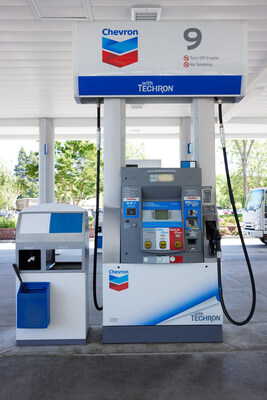


 mik1234
1週前
mik1234
1週前
 iHub News
1月前
iHub News
1月前
 crudeoil24
2月前
crudeoil24
2月前
 Monksdream
2月前
Monksdream
2月前
 DewDiligence
3月前
DewDiligence
3月前
 RiskAndReason
6月前
RiskAndReason
6月前





 メールアドレスで登録