US Market News
3月前
US Market News
3月前
SOUTHWEST AIRLINES REPORTS FIRST QUARTER RESULTS, BUSINESS TRANSFORMATION INITIATIVES DELIVER MEANINGFUL MARGIN EXPANSIONApril 22, 2026 4:21 PM
PR Newswire (US)
$227 million net income and $0.45 EPS, in line with guidanceOperating margin of 4.6%, an improvement of 8.1 points year-over-yearGenerated $1.4 billion in operating cash flow in the quarterRecord first-quarter passenger, operating, and unit revenuesManaged business revenue performance a March and quarterly recordDALLAS, April 22, 2026 /PRNewswire/ -- Southwest Airlines Co. (NYSE:LUV) today reported first quarter 2026 financial results, representing an important milestone as the transformational plan announced just 18 months ago is now fully implemented."First quarter 2026 marked a turning point for Southwest, as our broad set of commercial, operational, and cost initiatives is now translating into terrific results. Demand for our new product offerings drove record first quarter revenues, double-digit unit revenue growth, and significant improvement in earnings and margins. These results were achieved despite significantly higher fuel costs, underscoring the momentum across the business and the strength of our transformed business model."Our Customers have embraced and value our new products, and that is reflected in our financial performance. Demand continues to be strong, and we remain focused on controlling what we can control by managing costs, optimizing revenue initiatives, and directing capacity toward higher-return opportunities. While the external environment remains uncertain, we are confident in our positioning and the strong momentum we are seeing at Southwest," said Bob Jordan, Southwest's President & Chief Executive Officer.1Q Highlights:Operating revenues of $7.2 billion, a first-quarter record, up 12.8% year-over-yearNet income of $227 million, or $0.45 diluted earnings per share, and an adjusted net margin1 expected to be the highest among large U.S. airlinesOperating margin of 4.6%, an improvement of 8.1 points and 6.6 points adjusted1, both year-over-yearGenerated operating cash flow of $1.4 billion, an increase of 65% from the first quarter of 2025Strong cost discipline continued in the quarter, with operating expenses increasing 4.0% and unit costs (CASM-X1) increasing 2.3% on capacity growth of 1.5%, all year-over-yearReturned over $1.3 billion to Shareholders through a combination of share repurchases and dividendsDrove strong Customer buy-up, with approximately 60% of Customers upgrading from the base product in first quarter 2026, up from approximately 20% in 2025Rapid Rewards engagement strengthened, with enrollments up 37% and tier-status earners increasing 62%, both year-over-yearManaged business revenue delivered its strongest March and quarterly performances in Company history, increasing 25% and 16%, respectively, year-over-yearSuccessfully launched assigned and extra legroom seating on January 27, 2026, while achieving best-in-class on-time performance and the highest completion factor among large domestic airline peers on the day of launchContinued fleet upgrades with in-seat power and larger overhead bins, with approximately two thirds of aircraft expected to be equipped with both features by late 2026Announced planned deployment of Starlink ultra-fast Wi-Fi across the fleet, with initial aircraft expected to enter service in summer 2026 and at least 300 aircraft planned by year-end 2026Entered a new strategic partnership with All Nippon Airways, expanding the Company's global network to seven partnersCommenced service in St. Thomas, U.S. Virgin Islands and Knoxville, Tennessee, two of five new market entries in 2026Guidance and Outlook:
The following table provides guidance for second quarter 2026. The Company is guiding adjusted EPS1,2,3 to be in the range of $0.35 to $0.65, based on the forward fuel curve as of April 16, and the current demand and revenue environment. Given the ongoing macroeconomic uncertainty, updating the Company's full-year adjusted EPS guidance of $4.00 would not be productive at this time. Achieving this outcome would require lower fuel prices and/or stronger revenue performance to offset higher fuel expense. The Company expects to provide updates to this guidance as appropriate.
2Q 2026 ForecastAdjusted EPS
$0.35 to $0.65 ASMs (a), year-over-year
Flat to up 1.0%RASM (b), year-over-year
16.5% to 18.5%CASM-X (c), year-over-year1,3
3.5% to 4.0%(a) Available seat miles ("ASMs" or "capacity").(b) Operating revenue per available seat mile ("RASM" or "unit revenues").(c) Operating expenses per available seat mile, excluding aircraft fuel and related taxes expense, special items, and profit sharing ("CASM-X").Revenue Results and Outlook:Record first quarter 2026 passenger revenues of $6.6 billion, a 13.4 percent increase year-over-yearRecord first quarter 2026 operating revenues of $7.2 billion, a 12.8 percent increase year-over-yearFirst quarter 2026 RASM increased 11.2 percent year-over-year, above prior guidance, on capacity up 1.5 percent, reflecting initiative contributions and broad-based demand strength across the networkSecond quarter 2026 RASM is expected to increase between 16.5% and 18.5% year-over yearNon-Fuel Costs and Outlook:First quarter 2026 operating expenses increased 4.0 percent year-over-year, to $6.9 billionFirst quarter 2026 operating expenses, excluding aircraft fuel and related taxes expense, special items, and profit sharing1, increased 3.9 percent year-over-yearFirst quarter 2026 CASM-X increased 2.3 percent year-over-year, below prior guidanceSecond quarter 2026 CASM-X is expected to increase between 3.5% and 4.0% year-over-year, which includes an expected 1.2 point impact from the removal of six seats from the Boeing 737-700 fleet to enable extra legroom seatingFuel Costs:First quarter 2026 fuel costs were $2.73 per gallon, above prior guidance of approximately $2.40, which increased fuel expense by $164 million and represented an approximate $0.22 headwind to EPSSecond quarter 2026 fuel cost per gallon is assumed to be between $4.10 and $4.154 based on the forward curve as of April 16Capacity, Fleet, and Capital Spending:First quarter 2026 capacity increased 1.5 percent year-over-yearReceived 10 Boeing 737-8 aircraft and retired 13 aircraft (including eight Boeing 737-700 aircraft and the sale of three Boeing 737-700 aircraft and two Boeing 737-800 aircraft) in first quarter 2026, ending the quarter with 800 aircraftFirst quarter 2026 gross capital expenditures were $630 million, driven primarily by aircraft-related capital spending, as well as technology, facilities, and operational investmentsExpect 66 Boeing 737-8 aircraft deliveries and plan to retire approximately 60 aircraft in 2026Continued efforts to optimize the network, including announcing the suspension of operations at Chicago O'Hare and Washington Dulles in June and the reallocation of capacity to higher-performing marketsEntered 2026 with a disciplined capacity plan and now expect full-year growth of approximately 2%, at the low end of the prior 2% to 3% guide year-over-yearExpect 2026 net capital spending5 in the range of $3.0 billion to $3.5 billionLiquidity and Capital Deployment:Ended first quarter 2026 with $3.3 billion in cash and cash equivalents and a revolving credit line of $1.5 billionEnded the quarter with leverage1,6 of 2.2xHave unencumbered aircraft and other related assets with a net book value of approximately $16.5 billionRepurchased $1.25 billion in shares and distributed $93 million in dividends during first quarter 2026$450 million remains outstanding under the Company's $2.0 billion share repurchase authorizationEntered into a $500 million aircraft-secured term loan agreement used to pay down final portion of the Company's Payroll Support Program loanConference Call:
Southwest will discuss its first quarter 2026 results on a conference call at 10:00 a.m. Eastern Time on April 23, 2026. To listen to a live broadcast of the conference call, please go to
https://www.southwestairlinesinvestorrelations.com. Footnotes
1See Note Regarding Use of Non-GAAP Financial Measures for additional information on special items. In addition, information regarding special items and economic results is included in the accompanying table Reconciliation of Reported Amounts to Non-GAAP Items (also referred to as "excluding special items").
2Adjusted income (loss) per share, or adjusted EPS, a non-GAAP financial measure, is calculated as net income (loss), excluding special items, divided by diluted weighted-average shares outstanding.
3Projections do not reflect the potential impact of Aircraft fuel and related taxes expense, special items, and profit sharing because the Company cannot reliably predict or estimate those items or expenses or their impact to its financial statements in future periods, especially considering the significant volatility of the Aircraft fuel and related taxes expense line item. Accordingly, the Company believes a reconciliation of non-GAAP financial measures to the equivalent GAAP financial measures for these projected results is not meaningful or available without unreasonable effort.
4Based on market prices as of April 16, 2026. Fuel cost per gallon includes fuel taxes and fuel hedging net premium expense of $0.05 per gallon related to terminated fuel derivative contracts.
5Net capital expenditures include the impact of aircraft sales and sale-leaseback transactions.
6Leverage, adjusted debt, and adjusted EBITDAR are each non-GAAP financial measures. Leverage is calculated as adjusted debt divided by trailing twelve month adjusted EBITDAR. Adjusted EBITDAR is calculated as earnings before interest and taxes, and non-operating other (gains) losses, net, excluding special items, and adjusted by adding depreciation and amortization and the fixed portion of operating lease expense ("adjusted EBITDAR"). Adjusted debt includes current and long-term debt, finance lease obligations, and operating lease liabilities (including fleet, ground, and other).Cautionary Statement Regarding Forward-Looking Statements
This news release contains forward-looking statements within the meaning of Section 27A of the Securities Act of 1933, as amended, and Section 21E of the Securities Exchange Act of 1934, as amended. Specific forward-looking statements include, without limitation, statements related to (i) the Company's financial and operational outlook, expectations, goals, plans, targets, and projected results of operations, including with respect to its initiatives, and including factors and assumptions underlying the Company's expectations and projections; (ii) the Company's initiatives, strategic priorities and focus areas, goals, and opportunities, including with respect to the Company's transformational plan, product offering, positioning, and strong momentum; (iii) the Company's capacity plans and expectations; (iv) the Company's expectations with respect to fuel costs and fuel efficiency, including factors underlying the Company's expectations; (v) the Company's expectations with respect to managing costs, optimizing revenue initiatives, and directing capacity toward higher-return opportunities; (vi) the Company's network plans and expectations, including with respect to optimization efforts; (vii) the Company's expectations with respect to the current demand and revenue environment; (viii) the Company's plans and expectations with respect to Starlink Wi-Fi; (ix) the Company's fleet plans and expectations, including with respect to its fleet order book, fleet utilization, fleet upgrades with in-seat power and larger overhead bins, fleet modernization, fleet transactions, flexibility, and expected fleet deliveries and retirements, and including factors and assumptions underlying the Company's plans and expectations; and (x) the Company's plans, estimates, and assumptions related to capital spending, including factors and assumptions underlying the Company's expectations and projections. These forward-looking statements are based on the Company's current estimates, intentions, beliefs, expectations, goals, strategies, and projections for the future and are not guarantees of future performance. Forward-looking statements involve risks, uncertainties, assumptions, and other factors that are difficult to predict and that could cause actual results to vary materially from those expressed in or indicated by them. Factors include, among others, (i) the impact of geopolitical conflicts, fears or actual outbreaks of diseases, extreme or severe weather and natural disasters, actions of competitors (including, without limitation, pricing, scheduling, capacity, and network decisions, and consolidation and alliance activities), governmental actions, consumer perception, consumer uncertainties with respect to trade policies or government shutdowns (including the imposition of tariffs), economic conditions, banking conditions, fears or actual acts of terrorism or war, sociodemographic trends, and other factors beyond the Company's control, on consumer behavior and the Company's results of operations and business decisions, plans, strategies, and results; (ii) the Company's ability to timely and effectively implement, transition, operate, and maintain the necessary information technology systems and infrastructure to support its operations and initiatives, including with respect to revenue management and assigned and premium seating; (iii) consumer behavior and response with respect to the Company's new commercial products and policies; (iv) the impact of fuel price changes, fuel price volatility, and fuel availability on the Company's business plans and results of operations; (v) the impact of governmental regulations and other governmental actions, including with respect to government shutdowns, as well as the Company's ability to obtain any required governmental approvals, on the Company's business plans, results, and operations; (vi) the Company's dependence on The Boeing Company ("Boeing") and Boeing suppliers with respect to the Company's aircraft deliveries, Boeing MAX 7 aircraft certifications, fleet and capacity plans, operations, maintenance, strategies, and goals; (vii) the Company's dependence on the Federal Aviation Administration with respect to, among other things, the certification of the Boeing MAX 7 aircraft; (viii) the Company's dependence on other third parties, in particular with respect to its technology plans, its plans and expectations related to revenue management, online travel agencies, operational reliability, fuel supply, maintenance, Global Distribution Systems, environmental sustainability, and the impact on the Company's operations and results of operations of any third-party delays or nonperformance; (ix) the Company's ability to timely and effectively prioritize its initiatives and focus areas and related expenditures; (x) the impact of labor matters on the Company's business decisions, plans, strategies, and results; (xi) the Company's ability to obtain and maintain adequate infrastructure and equipment to support its operations and initiatives; (xii) the Company's dependence on its workforce, including its ability to employ and retain sufficient numbers of qualified Employees with appropriate skills and expertise to effectively and efficiently maintain its operations and execute the Company's plans, strategies, and initiatives; (xiii) the cost and effects of the actions of activist shareholders; and (xiv) other factors, as described in the Company's filings with the Securities and Exchange Commission, including the detailed factors discussed under the heading "Risk Factors" in the Company's Annual Report on Form 10-K for the fiscal year ended December 31, 2025.SW-QFS Southwest Airlines Co.Condensed Consolidated Statement of Income (Loss)(in millions, except per share amounts)(unaudited)
Three months ended
March 31,
2026
2025
Percent
Change
OPERATING REVENUES:
Passenger
$6,591
$5,811
13.4
Freight
44
41
7.3
Other
614
576
6.6
Total operating revenues
7,249
6,428
12.8
OPERATING EXPENSES:
Salaries, wages, and benefits
3,297
3,102
6.3
Aircraft fuel and related taxes
1,356
1,249
8.6
Maintenance materials and repairs
259
292
(11.3)
Landing fees and airport rentals
572
522
9.6
Depreciation and amortization
398
396
0.5
Other operating expenses
1,037
1,090
(4.9)
Total operating expenses
6,919
6,651
4.0
OPERATING INCOME (LOSS)
330
(223)
n.m.
NON-OPERATING EXPENSES (INCOME):
Interest expense
54
46
17.4
Capitalized interest
(12)
(11)
9.1
Interest income
(23)
(84)
(72.6)
Other (gains) losses, net
26
18
44.4
Total non-operating expenses (income)
45
(31)
n.m.
INCOME (LOSS) BEFORE INCOME TAXES
285
(192)
n.m.
PROVISION (BENEFIT) FOR INCOME TAXES
58
(43)
n.m.
NET INCOME (LOSS)
$227
$(149)
n.m.
NET INCOME (LOSS) PER SHARE:
Basic
$0.45
$(0.26)
n.m.
Diluted
$0.45
$(0.26)
n.m.
WEIGHTED AVERAGE SHARES OUTSTANDING:
Basic
498
584
(14.7)
Diluted
503
584
(13.9)
Southwest Airlines Co.Reconciliation of Reported Amounts to Non-GAAP Financial Measures (excluding special items)(See Note Regarding Use of Non-GAAP Financial Measures)(in millions, except per share and per ASM amounts) (unaudited)
Three months ended
March 31,
Percent
2026
2025
Change
Aircraft fuel and related taxes, unhedged
$ 1,327
$ 1,212
(a)Add: Premium cost of fuel contracts designated as hedges
29
37
Aircraft fuel and related taxes, as reported (and economic)
$ 1,356
$ 1,249
8.6
Total operating expenses, as reported
$ 6,919
$ 6,651
Deduct: Litigation accruals
—
(19)
Deduct: Transformation costs
—
(14)
(b)Deduct: Severance and related costs
—
(62)
Total operating expenses, excluding special items
$ 6,919
$ 6,556
5.5
Deduct: Aircraft fuel and related taxes expense, excluding special items (economic)
(1,356)
(1,249)
Operating expenses, excluding Aircraft fuel and related taxes expense and special items
$ 5,563
$ 5,307
4.8
Deduct: Profit-sharing expense
(50)
—
Operating expenses, excluding Aircraft fuel and related taxes expense, special items, and profit sharing
$ 5,513
$ 5,307
3.9
Operating income (loss), as reported
$ 330
$ (223)
Add: Litigation accruals
—
19
Add: Transformation costs
—
14
(b)Add: Severance and related costs
—
62
Operating income (loss), excluding special items
$ 330
$ (128)
n.m.
Total operating revenues, as reported
$ 7,249
$ 6,428
Operating margin, as reported
4.6 %
(3.5) %
8.1 pts.
Add: Impact of special items
—
1.5 %
Operating margin, excluding special items
4.6 %
(2.0) %
6.6 pts.
Income (loss) before income taxes, as reported
$ 285
$ (192)
Add: Litigation accruals
—
19
Add: Transformation costs
—
14
(b)Add: Severance and related costs
—
62
Income (loss) before income taxes, excluding special items
$ 285
$ (97)
n.m.
Provision (benefit) for income taxes, as reported
$ 58
$ (43)
(c)Add: Net loss tax impact of fuel and special items
—
23
Provision (benefit) for income taxes, net, excluding special items
$ 58
$ (20)
n.m.
Net income (loss), as reported
$ 227
$ (149)
Add: Litigation accruals
—
19
Add: Transformation costs
—
14
(b)Add: Severance and related costs
—
62
(c)Deduct: Net loss tax impact of special items
—
(23)
Net income (loss), excluding special items
$ 227
$ (77)
n.m.
Total operating revenues, as reported
$ 7,249
$ 6,428
Net margin, as reported
3.1 %
(2.3) %
5.4 pts.
Add: Impact of special items
—
1.5 %
(c)Deduct: Net loss tax impact of special items
—
(0.4) %
Net margin, excluding special items
3.1 %
(1.2) %
4.3 pts.
Net income (loss) per share, diluted, as reported
$ 0.45
$ (0.26)
Add: Impact of special items
—
0.16
(c)Deduct: Net loss tax impact of special items
—
(0.03)
Net income (loss) per share, diluted, excluding special items
$ 0.45
$ (0.13)
n.m.
Operating expenses per ASM (cents)
¢ 16.46
¢ 16.05
Deduct: Impact of special items
—
(0.23)
Deduct: Aircraft fuel and related taxes expense divided by ASMs
(3.23)
(3.01)
Deduct: Profit-sharing expense divided by ASMs
(0.12)
—
Operating expenses per ASM, excluding Aircraft fuel and related taxes expense, special items, and profit sharing (cents)
¢ 13.11
¢ 12.81
2.3(a) Includes amounts reclassified from Accumulated other comprehensive income associated with hedges previously terminated.(b) Represents Employee severance payments and related professional fees resulting from the workforce reduction in February 2025 ($53 million in Salaries, wages, and benefits and $9 million in Other operating expenses).(c) Tax amounts for each individual special item are calculated at the Company's effective rate for the applicable period and totaled in this line item. Southwest Airlines Co.Comparative Consolidated Operating Statistics(unaudited)Relevant comparative operating statistics for the three months ended March 31, 2026 and 2025 are included below. The Company provides these operating statistics because they are commonly used in the airline industry and, as such, allow readers to compare the Company's performance against its results for the prior year period, as well as against the performance of the Company's peers.
Three months ended
March 31,
Percent
2026
2025
Change
Revenue passengers carried (000s)
29,175
29,990
(2.7)
Enplaned passengers (000s)
37,277
37,139
0.4
Revenue passenger miles (RPMs) (in millions) (a)
31,151
30,629
1.7
Available seat miles (ASMs) (in millions) (b)
42,049
41,432
1.5
Load factor (c)
74.1%
73.9%
0.2 pts.
Average length of passenger haul (miles)
1,068
1,021
4.6
Average aircraft stage length (miles)
778
771
0.9
Trips flown
330,371
331,886
(0.5)
Seats flown (000s) (d)
53,030
53,237
(0.4)
Seats per trip (e)
160.5
160.4
0.1
Average passenger fare
$225.93
$193.75
16.6
Passenger revenue yield per RPM (cents) (f)
21.16
18.97
11.5
RASM (cents) (g)
17.24
15.51
11.2
PRASM (cents) (h)
15.68
14.02
11.8
CASM (cents) (i)
16.46
16.05
2.6
CASM, excluding fuel (cents)
13.23
13.04
1.5
CASM, excluding special items (cents)
16.46
15.82
4.0
CASM, excluding fuel and special items (cents)
13.23
12.81
3.3
CASM, excluding fuel, special items, and profit sharing (cents)
13.11
12.81
2.3
Fuel costs per gallon, including fuel tax (unhedged)
$2.67
$2.42
10.3
Fuel costs per gallon, including fuel tax
$2.73
$2.49
9.6
Fuel costs per gallon, including fuel tax (economic)
$2.73
$2.49
9.6
Fuel consumed, in gallons (millions)
496
500
(0.8)
Active fulltime equivalent Employees
73,401
71,506
2.7
Aircraft at end of period
800
800
—
(a) A revenue passenger mile is one paying passenger flown one mile. Also referred to as "traffic," which is a measure of demand for a given period.(b) An available seat mile is one seat (empty or full) flown one mile. Also referred to as "capacity," which is a measure of supply or the space available to carry passengers in a given period.(c) Revenue passenger miles divided by available seat miles.(d) Seats flown is calculated using total number of seats available by aircraft type multiplied by the total trips flown by the same aircraft type during a particular period.(e) Seats per trip is calculated by dividing seats flown by trips flown.(f) Calculated as passenger revenue divided by revenue passenger miles. Also referred to as "yield," this is the average cost paid by a paying passenger to fly one mile, which is a measure of revenue production and fares.(g) RASM (unit revenue) - Operating revenue yield per ASM, calculated as operating revenue divided by available seat miles. Also referred to as "operating unit revenues," this is a measure of operating revenue production based on the total available seat miles flown during a particular period.(h) PRASM (Passenger unit revenue) - Passenger revenue yield per ASM, calculated as passenger revenue divided by available seat miles. Also referred to as "passenger unit revenues," this is a measure of passenger revenue production based on the total available seat miles flown during a particular period.(i) CASM (unit costs) - Operating expenses per ASM, calculated as operating expenses divided by available seat miles. Also referred to as "unit costs" or "cost per available seat mile," this is the average cost to fly an aircraft seat (empty or full) one mile, which is a measure of cost efficiency. Southwest Airlines Co.Condensed Consolidated Balance Sheet(in millions)(unaudited)
March 31, 2026
December 31, 2025ASSETS
Current assets:
Cash and cash equivalents$3,328
$3,231
Accounts and other receivables1,254
1,149
Inventories of parts and supplies, at cost833
775
Prepaid expenses and other current assets554
490
Total current assets5,969
5,645
Property and equipment, at cost:
Flight equipment26,254
26,293
Ground property and equipment9,317
9,163
Deposits on flight equipment purchase contracts494
401
Assets constructed for others88
88
36,153
35,945
Less allowance for depreciation and amortization15,777
15,700
20,376
20,245
Goodwill970
970
Operating lease right-of-use assets1,019
1,089
Other assets1,021
1,112
$29,355
$29,061
LIABILITIES AND STOCKHOLDERS' EQUITY
Current liabilities:
Accounts payable$2,114
$1,991
Accrued liabilities2,170
2,349
Current operating lease liabilities300
312
Air traffic liability7,049
5,945
Current maturities of long-term debt851
324
Total current liabilities12,484
10,921
Long-term debt less current maturities4,536
4,577
Air traffic liability - noncurrent1,201
1,219
Deferred income taxes2,353
2,289
Noncurrent operating lease liabilities709
768
Other noncurrent liabilities1,197
1,306
Stockholders' equity:
Common stock888
888
Capital in excess of par value4,260
4,322
Retained earnings16,526
16,388
Accumulated other comprehensive loss(1)
(24)
Treasury stock, at cost(14,798)
(13,593)
Total stockholders' equity6,875
7,981
$29,355
$29,061
Southwest Airlines Co.Condensed Consolidated Statement of Cash Flows(in millions) (unaudited)
Three months ended March 31,
2026
2025
CASH FLOWS FROM OPERATING ACTIVITIES:
Net income (loss)$227
$(149)
Adjustments to reconcile net income (loss) to net cash provided by operating activities:
Depreciation and amortization398
396
Deferred income taxes57
(43)
Gain on sale-leaseback transactions—
(3)
Changes in certain assets and liabilities:
Accounts and other receivables(93)
57
Other assets(61)
145
Accounts payable and accrued liabilities(79)
(126)
Air traffic liability1,086
660
Other liabilities(77)
(63)
Cash collateral provided to derivative counterparties—
(22)
Other, net(40)
8
Net cash provided by operating activities1,418
860
CASH FLOWS FROM INVESTING ACTIVITIES:
Capital expenditures(630)
(527)
Proceeds from sale of property and equipment192
26
Proceeds from sale-leaseback transactions—
24
Purchases of short-term investments—
(51)
Proceeds from sales of short-term and other investments—
1,154
Other, net(7)
(3)
Net cash provided by (used in) investing activities(445)
623
CASH FLOWS FROM FINANCING ACTIVITIES:
Proceeds from issuance of long-term debt500
—
Proceeds from Employee stock plans16
17
Repurchase of common stock(1,250)
(750)
Payments of long-term debt and finance lease obligations(6)
(5)
Payments of cash dividends(93)
(107)
Other, net(43)
(13)
Net cash used in financing activities(876)
(858)
NET CHANGE IN CASH AND CASH EQUIVALENTS97
625
CASH AND CASH EQUIVALENTS AT BEGINNING OF PERIOD3,231
7,509
CASH AND CASH EQUIVALENTS AT END OF PERIOD$3,328
$8,134
NOTE REGARDING USE OF NON-GAAP FINANCIAL MEASURES
The Company's unaudited Condensed Consolidated Financial Statements are prepared in accordance with GAAP. These GAAP financial statements include (i) unrealized noncash reclassifications, as a result of accounting requirements and elections previously made under accounting pronouncements relating to derivative instruments and hedging and (ii) other charges and benefits the Company considers unusual and/or infrequent in nature and thus may make comparisons to its prior or future performance difficult.Accordingly, the Company also provides financial information in this filing that was not prepared in accordance with GAAP and should not be considered as a substitute for the information prepared in accordance with GAAP. The Company provides supplemental non-GAAP financial information (also referred to as "excluding special items"). Management believes special items can distort the trends associated with the Company's ongoing performance. Therefore, management utilizes non-GAAP financial measures to evaluate the Company's financial performance, anticipate future operating results, and assess trends without the impact of items that can vary significantly from period to period. The following measures are often provided, excluding special items, and are utilized by the Company's management, analysts, and investors to enhance comparability of year-over-year results, as well as to industry trends: Total operating expenses, non-GAAP; Operating expenses, non-GAAP excluding Aircraft fuel and related taxes expense; Operating expenses, non-GAAP excluding Aircraft fuel and related taxes expense and profit sharing; Operating income (loss), non-GAAP; Income (loss) before income taxes, non-GAAP; Provision (benefit) for income taxes, net, non-GAAP; Net income (loss), non-GAAP; Net income (loss) per share, diluted, non-GAAP; Operating expenses per ASM, non-GAAP, excluding Aircraft fuel and related taxes expense and profit sharing (cents); adjusted operating margin; adjusted net margin; and Adjusted debt to adjusted EBITDAR.For the periods presented, special items include:Charges associated with tentative litigation settlements regarding paid short-term military leave to certain Employees;Expenses associated with professional advisory fees related to the Company's implementation of its comprehensive transformational plan; andCharges associated with severance, post-employment benefits, and professional fees as a result of the Company's reduction in workforce.The Company has also provided adjusted debt, adjusted EBITDAR, and adjusted debt to adjusted EBITDAR (leverage), which are non-GAAP measures of financial performance. Management believes these supplemental measures can provide a more accurate view of the Company's leverage and risk, since they consider the Company's debt and debt-like obligation profile. Leverage ratios are widely used by investors, analysts, and rating agencies in the valuation, comparison, rating, and investment recommendations of companies. Although adjusted debt, adjusted EBITDAR, and leverage ratios are commonly-used financial measures, definitions of each differ; therefore, the Company is providing an explanation of its calculations for non-GAAP adjusted debt and adjusted EBITDAR in the accompanying reconciliation below in order to allow investors to compare and contrast its calculations to the calculations provided by other companies.
March 31, 2026(in millions)
Current maturities of long-term debt, as reported$851
Long-term debt less current maturities, as reported4,536
Total debt, including finance leases (A)5,387
Add: Current operating lease liabilities, as reported300
Add: Noncurrent operating lease liabilities, as reported709
Adjusted debt (B)$6,396
Twelve Months Ended
March 31, 2026Net income, as reported (C)$816
Interest expense (income), net of capitalized interest, as reported(25)
Income tax expense (benefit), as reported223
Non-operating other (gains) losses, net, as reported(33)
Operating income, as reported981
Impact of special items16
Operating income, non-GAAP997
Depreciation and amortization1,563
Fixed portion of operating lease expense356
Adjusted EBITDAR (D)$2,916
Total debt to Net income (A/C)6.6x
Adjusted debt to adjusted EBITDAR (B/D)2.2x
View original content:https://www.prnewswire.com/news-releases/southwest-airlines-reports-first-quarter-results-business-transformation-initiatives-deliver-meaningful-margin-expansion-302750840.htmlSOURCE Southwest Airlines Co.
Original: SOUTHWEST AIRLINES REPORTS FIRST QUARTER RESULTS, BUSINESS TRANSFORMATION INITIATIVES DELIVER MEANINGFUL MARGIN EXPANSION
US Market News
5月前
SOUTHWEST AIRLINES REPORTS FOURTH QUARTER AND FULL YEAR 2025 RESULTS; EXPECTS STRONG 2026 FINANCIAL PERFORMANCE FROM BUSINESS TRANSFORMATIONJanuary 28, 2026 4:28 PM
PR Newswire (US)
2025 net income $441 million / $0.79 EPS; adjusted net income1 $512 million / $0.93 adjusted EPS1,22025 adjusted EBIT1,3 $574 million and above prior guidance of $500 millionGuiding 2026 adjusted EPS4 of at least $4.00, up more than 300% over 2025Ranked #1 in The Wall Street Journal Best U.S. Airlines of 20252026 guidance and strong Q1 bookings reflect sweeping transformation undertaken in 2025DALLAS, Jan. 28, 2026 /PRNewswire/ -- Southwest Airlines (NYSE: LUV) today reported its fourth quarter and full year 2025 financial results, and provided 2026 adjusted EPS guidance of at least $4.00, which represents the lower end of internal forecasts. Fourth quarter performance benefited from revenue initiatives and continued cost control, contributing to solid results and strong momentum. Notwithstanding the impact of Winter Storm Fern, 2026 is off to a strong start, driven by the Company's Customer-focused product offering, operational excellence, and dramatic progress from the transformational initiatives implemented last year."Southwest closed 2025 with strong momentum. Last year we implemented the most ambitious transformation in Company history, including bag fees, basic economy fares, assigned and extra legroom seating, Rapid Rewards® program optimization, online distribution expansion, and free Wi-Fi for loyalty members. We also outperformed our cost reduction goals, strengthened operational reliability through new technology, and returned $2.9 billion to our Shareholders through share repurchases and dividends. That foundation positions us well for long-term success and sets the stage for significant earnings growth this year. Our performance reflects the extraordinary work of our People, who transformed the business while continuing to serve our Customers with unparalleled hospitality and operational excellence. Their efforts enabled us to achieve $574 million in full year adjusted EBIT, and earned Southwest the top spot in The Wall Street Journal Best U.S. Airlines of 2025. I could not be more proud of what we accomplished," said Bob Jordan, Southwest's President & Chief Executive Officer.2025 Highlights:Record quarterly and full year operating revenues of $7.4 billion and $28.1 billion, respectivelyFourth quarter and full year net income of $323 million and $441 million, or $0.61 and $0.79 per diluted share, respectivelyFourth quarter and full year adjusted net income of $301 million and $512 million, or $0.58 and $0.93 per diluted share, respectivelyFourth quarter and full year adjusted EBIT of $386 million and $574 million, respectivelyReturned $2.9 billion to Shareholders in the form of dividends and share repurchases#1 ranking in The Wall Street Journal Best U.S. Airlines of 20252025 Key Initiatives:Implemented assigned and extra legroom seating for travel beginning January 27, 2026Changed product offering, including the implementation of bag fees, the addition of a basic economy fare product, and flight credit expirationOptimized Rapid Rewards program, including variable earn and burn ratesAmended co-brand agreement with Chase, including new benefits and improved economicsLaunched free Wi-Fi for loyalty program members, in partnership with T-MobileExpanded online presence through new partnerships with Expedia and PricelineOutperformed the previously provided estimate of $370 million in cost reduction, including the first Company layoff of non-contract and management EmployeesAnnounced six strategic partnerships with Icelandair, EVA Air, China Airlines, Philippine Airlines, Condor, and Turkish AirlinesLaunched Getaways by Southwest™, an in-house packaged vacations productAnnounced new service at St. Thomas, USVI; Knoxville, Tennessee; St. Maarten; Santa Rosa, California; and Anchorage, AlaskaAdded redeye flying to increase aircraft utilization and network connectivityReduced turn time to increase aircraft utilizationDeployed new technology boosting operational reliability, a key enabler of the Company's #1 rank in The Wall Street Journal Best U.S. Airlines of 2025Discontinued the fuel hedging programCompleted $2.6 billion in share repurchases in 2025, representing approximately 14% of shares outstanding, while maintaining the Company's investment-grade ratingGuidance and Outlook:
The following tables provide guidance for first quarter and full year 2026, and include the impact of Winter Storm Fern. The 2026 adjusted EPS guidance is at the lower end of internal forecasts, and well above Wall Street consensus. Just yesterday, assigned and extra legroom seating became operational, and Southwest expects earnings upside based on how booking behavior related to these initiatives unfolds:Upsell revenue from close-in bookings, which are more closely affiliated with business and price-flexible CustomersGrowth in business and leisure Customer segments driven by the more attractive new product offeringIn the next month or so, Southwest will have better visibility to the upside potential from these initiatives and will provide range bound guidance for 2026 when current quarterly results are reported, if not earlier.
1Q 2026 Forecast
Adjusted EPS
At least $0.45
ASMs (a), year-over-year
Up 1% to 2%
RASM (b), year-over-year
Up at least 9.5%
CASM-X (c), year-over-year1,4
Up ~3.5%
2026 Forecast
Adjusted EPS
At least $4.00
ASMs (a), year-over-year
Up 2% to 3%
(a) Available seat miles ("ASMs" or "capacity").(b) Operating revenues per available seat mile ("RASM" or "unit revenues").(c) Operating expenses per available seat mile, excluding fuel and oil expense, special items, and profit sharing ("CASM-X").Revenue Results and Outlook:Record fourth quarter 2025 passenger revenues of $6.8 billion, a 7.6% increase, year-over-yearRecord fourth quarter 2025 operating revenues of $7.4 billion, a 7.4% increase, year-over-yearFourth quarter 2025 RASM decreased 0.2%, year-over-year, excluding special items1, impacted by Federal Aviation Administration mandated cutsFirst quarter 2026 RASM is expected to increase at least 9.5%, year-over yearNon-Fuel Costs and Outlook:Fourth quarter 2025 operating expenses increased 6.0%, year-over-year, to $7.1 billionFourth quarter 2025 operating expenses, excluding fuel, special items, and profit sharing1, increased 6.6%, year-over-yearFourth quarter 2025 CASM-X increased 0.8% and full year 2025 CASM-X increased 3.1%, both year-over-yearFirst quarter 2026 CASM-X is expected to increase approximately 3.5%, year-over-year, which includes a 1.1 point impact from the removal of six seats from the Boeing 737-700 fleet to enable extra legroom seatingAccrued $97 million of Employee profit sharing for 2025Fuel Costs:Fourth quarter 2025 fuel cost was $2.45 per gallon and above the Company's previous guidance rangeFirst quarter 2026 fuel cost per gallon is assumed to be approximately $2.405Capacity, Fleet, and Capital Spending:Fourth quarter 2025 capacity increased 5.8%, and full year 2025 capacity increased 1.6%, both year-over-yearReceived 19 Boeing 737-8 aircraft and retired 18 aircraft (14 Boeing 737-700 aircraft and the sale of four Boeing 737-800 aircraft) in fourth quarter 2025, ending the year with 803 aircraftReceived 55 Boeing 737-8 aircraft and retired 55 aircraft in 2025 (48 Boeing 737-700 aircraft and seven Boeing 737-800 aircraft, including the sale of five Boeing 737-800 aircraft)2025 net capital expenditures6 were $2.6 billionExpect 66 Boeing 737-8 aircraft deliveries in 2026 and plan to retire approximately 60 aircraftExpect 2026 net capital spending in the range of $3.0 billion to $3.5 billionLiquidity and Capital Deployment:Ended 2025 with $3.2 billion in cash and cash equivalents, and a revolving credit line of $1.5 billionEnded 2025 with leverage1,7 of 2.4xHave unencumbered aircraft and other related assets with a net book value of approximately $17.0 billionRepurchased $2.6 billion in shares and distributed $399 million in dividends during 2025Retired $3.3 billion of debt and finance lease obligations, including $1.6 billion of convertible notes and the prepayment of $1.6 billion of the Payroll Support ProgramIssued $1.5 billion of unsecured bonds at industry-leading terms in November 2025Intends to opportunistically repurchase shares, while staying within the guardrails that support its investment-grade ratingConference Call:
Southwest will discuss its fourth quarter and full year 2025 results on a conference call at 10:00 a.m. Eastern Time on January 29, 2026. To listen to a live broadcast of the conference call please go to
www.southwestairlinesinvestorrelations.com. Footnotes
1See Note Regarding Use of Non-GAAP Financial Measures for additional information on special items. In addition, information regarding special items and economic results is included in the accompanying table Reconciliation of Reported Amounts to Non-GAAP Items (also referred to as "excluding special items").
2Adjusted EPS, a non-GAAP financial measure, is calculated as net income, excluding special items, divided by diluted weighted-average shares outstanding.
3Adjusted EBIT, a non-GAAP financial measure, is defined as earnings before interest and taxes, excluding special items.
4Projections do not reflect the potential impact of fuel and oil expense, special items, and profit sharing because the Company cannot reliably predict or estimate those items or expenses or their impact to its financial statements in future periods, especially considering the significant volatility of the fuel and oil expense line item. Accordingly, the Company believes a reconciliation of non-GAAP financial measures to the equivalent GAAP financial measures for these projected results is not meaningful or available without unreasonable effort.
5Based on market prices as of January 23, 2026. Fuel cost per gallon includes fuel taxes and fuel hedging net premium expense of $0.06 per gallon related to terminated fuel derivative contracts.
6Net capital expenditures include the impact of aircraft sales and sale-leaseback transactions.
7Leverage, adjusted debt, and adjusted EBITDAR are each non-GAAP financial measures. Leverage is calculated as adjusted debt divided by trailing twelve month adjusted EBITDAR. Adjusted EBITDAR is calculated as earnings before interest and taxes, and non-operating other (gains) losses, net, excluding special items, and adjusted by adding depreciation and amortization and the fixed portion of operating lease expense ("adjusted EBITDAR"). Adjusted debt includes current and long-term debt, finance lease obligations, and operating lease liabilities (including fleet, ground, and other).Cautionary Statement Regarding Forward-Looking Statements
This news release contains forward-looking statements within the meaning of Section 27A of the Securities Act of 1933, as amended, and Section 21E of the Securities Exchange Act of 1934, as amended. Specific forward-looking statements include, without limitation, statements related to (i) the Company's financial and operational outlook, earnings upside potential, expectations, goals, plans, targets, and projected results of operations, including with respect to its long-term success, earnings growth, and initiatives, and including factors and assumptions underlying the Company's expectations and projections, including the impact from Winter Storm Fern; (ii) the Company's initiatives, strategic priorities and focus areas, goals, and opportunities, including with respect to assigned and extra legroom seating, including up-sell revenue from close-in bookings and growth in business and leisure segments, the Company's business transformation, Customer-focused product offering, and operational excellence; (iii) the Company's expectations with respect to providing future, range-bound guidance; (iv) the Company's capacity plans and expectations; (v) the Company's expectations with respect to fuel costs and fuel efficiency, including factors underlying the Company's expectations; (vi) the Company's network plans and expectations, including service at new stations; (vii) the Company's fleet plans and expectations, including with respect to its fleet order book, fleet modernization, and expected fleet deliveries and retirements, and including factors and assumptions underlying the Company's plans and expectations; (viii) the Company's plans, estimates, and assumptions related to capital spending, including factors and assumptions underlying the Company's expectations and projections; (x) the Company's plans and expectations with respect to share repurchases and other shareholder returns; and (xi) the Company's plans, expectations, and targets with respect to its investment-grade rating. These forward-looking statements are based on the Company's current estimates, intentions, beliefs, expectations, goals, strategies, and projections for the future and are not guarantees of future performance. Forward-looking statements involve risks, uncertainties, assumptions, and other factors that are difficult to predict and that could cause actual results to vary materially from those expressed in or indicated by them. Factors include, among others, (i) the impact of fears or actual outbreaks of diseases, extreme or severe weather and natural disasters, actions of competitors (including, without limitation, pricing, scheduling, capacity, and network decisions, and consolidation and alliance activities), governmental actions, consumer perception, consumer uncertainties with respect to trade policies or government shutdowns (including the imposition of tariffs), economic conditions, banking conditions, fears or actual acts of terrorism or war, sociodemographic trends, and other factors beyond the Company's control, on consumer behavior and the Company's results of operations and business decisions, plans, strategies, and results; (ii) the Company's ability to timely and effectively implement, transition, operate, and maintain the necessary information technology systems and infrastructure to support its operations and initiatives, including with respect to revenue management and assigned and extra legroom seating; (iii) consumer behavior and response with respect to the Company's new commercial products and policies; (iv) the impact of fuel price changes, fuel price volatility, and fuel availability on the Company's business plans and results of operations; (v) the impact of governmental regulations and other governmental actions, including with respect to government shutdowns, as well as the Company's ability to obtain any required governmental approvals, on the Company's business plans, results, and operations; (vi) the Company's dependence on The Boeing Company ("Boeing") and Boeing suppliers with respect to the Company's aircraft deliveries, Boeing MAX 7 aircraft certifications, fleet and capacity plans, operations, maintenance, strategies, and goals; (vii) the Company's dependence on the Federal Aviation Administration with respect to, among other things, the certification of the Boeing MAX 7 aircraft; (viii) the Company's dependence on other third parties, in particular with respect to its technology plans, its plans and expectations related to revenue management, online travel agencies, operational reliability, fuel supply, maintenance, Global Distribution Systems, environmental sustainability, and the impact on the Company's operations and results of operations of any third party delays or nonperformance; (ix) the Company's ability to timely and effectively prioritize its initiatives and focus areas and related expenditures; (x) the impact of labor matters on the Company's business decisions, plans, strategies, and results; (xi) the Company's ability to obtain and maintain adequate infrastructure and equipment to support its operations and initiatives; (xii) the Company's dependence on its workforce, including its ability to employ and retain sufficient numbers of qualified Employees with appropriate skills and expertise to effectively and efficiently maintain its operations and execute the Company's plans, strategies, and initiatives; (xiii) the cost and effects of the actions of activist shareholders; and (xiv) other factors, as described in the Company's filings with the Securities and Exchange Commission, including the detailed factors discussed under the heading "Risk Factors" in the Company's Annual Report on Form 10-K for the fiscal year ended December 31, 2024, and in the Company's Quarterly Report on Form 10-Q for the fiscal quarter ended June 30, 2025.SW-QFS Southwest Airlines Co.Condensed Consolidated Statement of Income(in millions, except per share amounts)(unaudited)
Three months ended
Year ended
December 31,
December 31,
2025
2024
Percent
Change
2025
2024
Percent
Change OPERATING REVENUES:
Passenger$6,785
$6,307
7.6
$25,535
$24,980
2.2Freight43
45
(4.4)
171
175
(2.3)Other614
579
6.0
2,357
2,328
1.2Total operating revenues7,442
6,931
7.4
28,063
27,483
2.1
OPERATING EXPENSES:
Salaries, wages, and benefits3,381
3,232
4.6
12,963
12,240
5.9Fuel and oil1,333
1,264
5.5
5,240
5,812
(9.8)Maintenance materials and repairs306
307
(0.3)
1,227
1,353
(9.3)Landing fees and airport rentals540
493
9.5
2,178
1,962
11.0Depreciation and amortization371
407
(8.8)
1,560
1,657
(5.9)Other operating expenses1,120
950
17.9
4,467
4,138
8.0Total operating expenses7,051
6,653
6.0
27,635
27,162
1.7
OPERATING INCOME391
278
40.6
428
321
33.3
NON-OPERATING EXPENSES (INCOME):
Interest expense48
59
(18.6)
167
249
(32.9)Capitalized interest(17)
(11)
54.5
(54)
(35)
54.3Interest income(33)
(105)
(68.6)
(205)
(497)
(58.8)Other (gains) losses, net(14)
6
n.m.
(43)
6
n.m.Total non-operating expenses (income)(16)
(51)
(68.6)
(135)
(277)
(51.3)
INCOME BEFORE INCOME TAXES407
329
23.7
563
598
(5.9)PROVISION FOR INCOME TAXES84
68
23.5
122
133
(8.3)NET INCOME$323
$261
23.8
$441
$465
(5.2)
NET INCOME PER SHARE:
Basic$0.63
$0.44
43.2
$0.82
$0.78
5.1Diluted$0.61
$0.42
45.2
$0.79
$0.76
3.9
WEIGHTED AVERAGE SHARES OUTSTANDING:
Basic516
595
(13.3)
540
598
(9.7)Diluted521
641
(18.7)
558
643
(13.2) Southwest Airlines Co.Reconciliation of Reported Amounts to Non-GAAP Items (excluding special items)(See Note Regarding Use of Non-GAAP Financial Measures)(in millions, except per share amounts) (unaudited)
Three months ended
Year ended
December 31,
December 31,
2025
2024
Percent Change
2025
2024
Percent Change Fuel and oil expense, unhedged
$1,297
$1,252
$5,095
$5,750
Add: Premium cost of fuel contracts designated as hedges (a)
36
34
145
148
Deduct: Fuel hedge gains included in Fuel and oil expense, net
—
(22)
—
(86)
Fuel and oil expense, as reported
$1,333
$1,264
$5,240
$5,812
Add: Fuel hedge contracts settling in the current period, but for which gains were reclassified from AOCI
—
19
—
34
Add: Premium cost of fuel contracts not designated as hedges
—
6
—
9
Fuel and oil expense, excluding special items (economic)
$1,333
$1,289
3.4
$5,240
$5,855
(10.5)
Total operating expenses, as reported
$7,051
$6,653
$27,635
$27,162
Deduct: Voluntary Employee programs
—
(5)
—
(5)
Deduct: Labor contract adjustment
—
—
—
(9)
Deduct: Contract Termination Charge
(7)
—
(7)
—
Add: Fuel hedge contracts settling in the current period, but for which gains were reclassified from AOCI
—
19
—
34
Add: Premium cost of fuel contracts not designated as hedges
—
6
—
9
Add: DOT settlement waiver
11
—
11
—
Deduct: Impairment of long-lived assets
—
—
(8)
—
Deduct: Litigation accruals
—
—
(19)
(7)
Add (Deduct): Professional advisory fees/reimbursement
7
(18)
7
(37)
Deduct: Transformation costs
—
(5)
(33)
(5)
Deduct: Severance and related costs (b)
—
—
(62)
—
Total operating expenses, excluding special items
$7,062
$6,650
6.2
$27,524
$27,142
1.4Deduct: Fuel and oil expense, excluding special items (economic)
(1,333)
(1,289)
(5,240)
(5,855)
Operating expenses, excluding Fuel and oil expense and special items
$5,729
$5,361
6.9
$22,284
$21,287
4.7Deduct: Profit-sharing expense
(71)
(54)
(97)
(103)
Operating expenses, excluding Fuel and oil expense, special items, and profit sharing
$5,658
$5,307
6.6
$22,187
$21,184
4.7
Operating income, as reported
$391
$278
$428
$321
Add: Breakage revenue adjustment (c)
—
116
—
116
Add: Voluntary Employee programs
—
5
—
5
Add: Labor contract adjustment
—
—
—
9
Add: Contract Termination Charge
7
—
7
—
Deduct: Fuel hedge contracts settling in the current period, but for which gains were reclassified from AOCI
—
(19)
—
(34)
Deduct: Premium cost of fuel contracts not designated as hedges
—
(6)
—
(9)
Deduct: DOT settlement waiver
(11)
—
(11)
—
Add: Impairment of long-lived assets
—
—
8
—
Add: Litigation accruals
—
—
19
7
Add (Deduct): Professional advisory fees/reimbursement
(7)
18
(7)
37
Add: Transformation costs
—
5
33
5
Add: Severance and related costs (b)
—
—
62
—
Operating income, excluding special items
$380
$397
(4.3)
$539
$457
17.9
Other (gains) losses, net, as reported
$(14)
$4
$(43)
$4
Deduct: Mark-to-market impact from fuel contracts settling in current periods
—
(1)
—
(34)
Deduct: Premium cost of fuel contracts not designated as hedges
—
(6)
—
(9)
Add: Unrealized mark-to-market adjustment on forward contract
8
—
8
—
Other gains, net, excluding special items
$(6)
$(3)
100.0
$(35)
$(39)
(10.3)Income before income taxes, as reported
$407
$329
$563
$598
Add: Breakage revenue adjustment (c)
—
116
—
116
Add: Voluntary Employee programs
—
5
—
5
Add: Labor contract adjustment
—
—
—
9
Add: Contract Termination Charge
7
—
7
—
Deduct: Fuel hedge contracts settling in the current period, but for which gains were reclassified from AOCI
—
(19)
—
(34)
Add: Mark-to-market impact from fuel contracts settling in current periods
—
1
—
34
Deduct: DOT settlement waiver
(11)
—
(11)
—
Add: Impairment of long-lived assets
—
—
8
—
Add: Litigation accruals
—
—
19
7
Add (Deduct): Professional advisory fees/reimbursement
(7)
18
(7)
37
Add: Transformation costs
—
5
33
5
Add: Severance and related costs (b)
—
—
62
—
Deduct: Unrealized mark-to-market adjustment on forward contract
(8)
—
(8)
—
Income before income taxes, excluding special items
$388
$455
(14.7)
$666
$777
(14.3)
Provision for income taxes, as reported
$84
$68
$122
$133
Add: Net income tax impact of fuel and special items (d)
3
31
32
47
Provision for income taxes, net, excluding special items
$87
$99
(12.1)
$154
$180
(14.4)
Net income, as reported
$323
$261
$441
$465
Add: Breakage revenue adjustment (c)
—
116
—
116
Add: Voluntary Employee programs
—
5
—
5
Add: Labor contract adjustment
—
—
—
9
Add: Contract Termination Charge
7
—
7
—
Deduct: Fuel hedge contracts settling in the current period, but for which gains were reclassified from AOCI
—
(19)
—
(34)
Add: Mark-to-market impact from fuel contracts settling in current periods
—
1
—
34
Deduct: DOT settlement waiver
(11)
—
(11)
—
Add: Impairment of long-lived assets
—
—
8
—
Add: Litigation accruals
—
—
19
7
Add (Deduct): Professional advisory fees/reimbursement
(7)
18
(7)
37
Add: Transformation costs
—
5
33
5
Add: Severance and related costs (b)
—
—
62
—
Deduct: Unrealized mark-to-market adjustment on forward contract
(8)
—
(8)
—
Deduct: Net income tax impact of fuel and special items (d)
(3)
(31)
(32)
(47)
Net income, excluding special items
$301
$356
(15.4)
$512
$597
(14.2)
Net income per share, diluted, as reported
$0.61
$0.42
$0.79
$0.76
Add (Deduct): Impact of special items
(0.02)
0.22
0.20
0.27
Deduct: Net impact of net income above from fuel contracts divided by dilutive shares
—
(0.03)
—
—
Add: Income tax impact of fuel contracts
—
0.01
—
—
Deduct: Net income tax impact of special items (d)
(0.01)
(0.06)
(0.06)
(0.07)
Net income per share, diluted, excluding special items
$0.58
$0.56
3.6
$0.93
$0.96
(3.1)
Net income, as reported
$323
$261
$441
$465
Add: Breakage revenue adjustment (c)
—
116
—
116
Add: Voluntary Employee programs
—
5
—
5
Deduct: Fuel hedge contracts settling in the current period, but for which gains were reclassified from AOCI
—
(19)
—
(34)
Add: Mark-to-market impact from fuel contracts settling in current periods
—
1
—
34
Add: Impairment of long-lived assets
—
—
8
—
Deduct: DOT settlement waiver
(11)
—
(11)
—
Add: Labor contract adjustment
—
—
—
9
Add: Contract termination charge
7
—
7
—
Add (Deduct): Professional advisory fees/reimbursement
(7)
18
(7)
37
Add: Transformation costs
—
5
33
5
Add: Litigation accruals
—
—
19
7
Add: Severance and related costs (b)
—
—
62
—
Deduct: Unrealized mark-to-market adjustment on forward contract
(8)
—
(8)
—
Add: Provision for income taxes
84
68
122
133
Deduct: Net interest income
(2)
(57)
(92)
(283)
EBIT, excluding special items
$386
$398
$574
$494
Operating revenues, as reported
$7,442
$6,931
$28,063
$27,483
Add: Breakage revenue adjustment (c)
—
116
—
116
Operating revenues, excluding special items
$7,442
$7,047
5.6
$28,063
$27,599
1.7
Operating revenue per ASM (cents), as reported
¢16.16
¢15.92
¢15.59
¢15.51
Add: Impact of special items
—
0.27
—
0.06
Operating revenue per ASM, excluding special items (cents)
¢16.16
¢16.19
(0.2)
¢15.59
¢15.57
0.1
Operating expenses per ASM (cents), as reported
¢15.31
¢15.28
¢15.35
¢15.32
Add (Deduct): Impact of special items
0.03
(0.06)
(0.06)
(0.04)
Deduct: Fuel and oil expense divided by ASMs
(2.89)
(2.90)
(2.91)
(3.27)
Deduct: Profit-sharing expense divided by ASMs
(0.16)
(0.13)
(0.06)
(0.06)
Operating expenses per ASM, excluding Fuel and oil expense, profit sharing, and special items (cents)
¢12.29
¢12.19
0.8
¢12.32
¢11.95
3.1
(a) Includes amounts reclassified from Accumulated Other Comprehensive Income associated with hedges previously terminated.(b) Represents Employee severance payments and related professional fees resulting from the workforce reduction in February 2025 ($53 million in Salaries, wages, and benefits and $9 million in Other operating expenses).(c) Represents a change in breakage revenue estimate related to flight credits the Company issued to Passengers during 2022 and prior. On July 28, 2022, the Company modified its policy and announced that all unexpired flight credits as of that date, including a significant volume of such credits issued to impacted Customers during the COVID-19 pandemic as the Company was making significant changes to its schedules based on fluctuating demand, will no longer have an expiration date and thus will be able to be redeemed by Customers indefinitely. This change in policy was considered a contract modification under ASC 606, Revenue from Contracts with Customers, and the Company accounted for such change prospectively in third quarter 2022. At that time, based on historical Customer behavior, the Company estimated that redemptions of these flight credits would have been reduced to an immaterial amount during 2024 and recognized breakage revenue in prior periods for these flight credits accordingly; however, based on actual Customer redemptions throughout 2024, as well as projected redemptions beyond 2024, the Company determined a reversal of a portion of this prior breakage revenue was warranted in 2024. This adjustment is not reflective of base business revenue trends in fourth quarter 2024 or beyond. See the Note Regarding Use of Non-GAAP Financial Measures for further information.(d) Tax amounts for each individual special item are calculated at the Company's effective rate for the applicable period and totaled in this line item. Southwest Airlines Co.Comparative Consolidated Operating Statistics(unaudited)
Three months ended
Year ended
December 31,
Percent
December 31,
Percent
2025
2024
Change
2025
2024
Change Revenue passengers carried (000s)34,033
34,126
(0.3)
134,110
140,023
(4.2)Enplaned passengers (000s)43,004
42,591
1.0
168,334
175,466
(4.1)Revenue passenger miles (RPMs) (in millions) (a)35,567
34,471
3.2
139,443
142,515
(2.2)Available seat miles (ASMs) (in millions) (b)46,052
43,533
5.8
180,046
177,250
1.6Load factor (c)77.2%
79.2%
(2.0) pts.
77.4%
80.4%
(3.0) pts.Average length of passenger haul (miles)1,045
1,010
3.5
1,040
1,018
2.2Average aircraft stage length (miles)779
763
2.1
780
763
2.2Trips flown359,032
353,529
1.6
1,415,822
1,443,866
(1.9)Seats flown (000s) (d)58,048
56,598
2.6
228,193
230,187
(0.9)Seats per trip (e)161.7
160.1
1.0
161.2
159.4
1.1Average passenger fare$199.36
$184.81
7.9
$190.41
$178.40
6.7Passenger revenue yield per RPM (cents) (f)19.08
18.30
4.3
18.31
17.53
4.4RASM (cents) (g)16.16
15.92
1.5
15.59
15.51
0.5RASM, excluding special items (cents)16.16
16.19
(0.2)
15.59
15.57
0.1PRASM (cents) (h)14.73
14.49
1.7
14.18
14.09
0.6CASM (cents) (i)15.31
15.28
0.2
15.35
15.32
0.2CASM, excluding Fuel and oil expense (cents)12.42
12.38
0.3
12.44
12.05
3.2CASM, excluding special items (cents)15.34
15.27
0.5
15.29
15.31
(0.1)CASM, excluding Fuel and oil expense and special items (cents)12.44
12.31
1.1
12.38
12.01
3.1CASM, excluding Fuel and oil expense, special items, and profit-sharing expense (cents)12.29
12.19
0.8
12.32
11.95
3.1Fuel costs per gallon, including fuel tax (unhedged)$2.38
$2.36
0.8
$2.34
$2.62
(10.7)Fuel costs per gallon, including fuel tax$2.45
$2.38
2.9
$2.41
$2.64
(8.7)Fuel costs per gallon, including fuel tax (economic)$2.45
$2.42
1.2
$2.41
$2.66
(9.4)Fuel consumed, in gallons (millions)545
531
2.6
2,169
2,194
(1.1)Active fulltime equivalent Employees72,790
72,450
0.5
72,790
72,450
0.5Aircraft at end of period (j)803
803
—
803
803
—
(a) A revenue passenger mile is one paying passenger flown one mile. Also referred to as "traffic," which is a measure of demand for a given period.(b) An available seat mile is one seat (empty or full) flown one mile. Also referred to as "capacity," which is a measure of the space available to carry passengers in a given period.(c) Revenue passenger miles divided by available seat miles.(d) Seats flown is calculated using total number of seats available by aircraft type multiplied by the total trips flown by the same aircraft type during a particular period.(e) Seats per trip is calculated by dividing seats flown by trips flown.(f) Calculated as passenger revenue divided by revenue passenger miles. Also referred to as "yield," this is the average cost paid by a paying passenger to fly one mile, which is a measure of revenue production and fares.(g) RASM (unit revenue) - Operating revenue yield per ASM, calculated as operating revenue divided by available seat miles. Also referred to as "operating unit revenues," this is a measure of operating revenue production based on the total available seat miles flown during a particular period.(h) PRASM (Passenger unit revenue) - Passenger revenue yield per ASM, calculated as passenger revenue divided by available seat miles. Also referred to as "passenger unit revenues," this is a measure of passenger revenue production based on the total available seat miles flown during a particular period.(i) CASM (unit costs) - Operating expenses per ASM, calculated as operating expenses divided by available seat miles. Also referred to as "unit costs" or "cost per available seat mile," this is the average cost to fly an aircraft seat (empty or full) one mile, which is a measure of cost efficiencies.(j) Included three Boeing 737 Next Generation aircraft in temporary storage as of December 31, 2024. Southwest Airlines Co.Condensed Consolidated Balance Sheet(in millions)(unaudited)
December 31, 2025
December 31, 2024ASSETS
Current assets:
Cash and cash equivalents$3,231
$7,509
Short-term investments—
1,216
Accounts and other receivables1,149
1,110
Inventories of parts and supplies, at cost775
800
Prepaid expenses and other current assets490
639
Total current assets5,645
11,274
Property and equipment, at cost:
Flight equipment26,293
25,202
Ground property and equipment9,163
8,244
Deposits on flight equipment purchase contracts401
413
Assets constructed for others88
88
35,945
33,947
Less allowance for depreciation and amortization15,700
14,891
20,245
19,056
Goodwill970
970
Operating lease right-of-use assets1,089
1,369
Other assets1,112
1,081
$29,061
$33,750
LIABILITIES AND STOCKHOLDERS' EQUITY
Current liabilities:
Accounts payable$1,991
$1,818
Accrued liabilities2,349
2,206
Current operating lease liabilities312
328
Air traffic liability5,945
6,294
Current maturities of long-term debt324
1,630
Total current liabilities10,921
12,276
Long-term debt less current maturities4,577
5,069
Air traffic liability - noncurrent1,219
1,948
Deferred income taxes2,289
2,167
Noncurrent operating lease liabilities768
1,031
Other noncurrent liabilities1,306
909
Stockholders' equity:
Common stock888
888
Capital in excess of par value4,322
4,199
Retained earnings16,388
16,332
Accumulated other comprehensive loss(24)
(25)
Treasury stock, at cost(13,593)
(11,044)
Total stockholders' equity7,981
10,350
$29,061
$33,750
Southwest Airlines Co.Condensed Consolidated Statement of Cash Flows(in millions) (unaudited)
Three months ended December 31,
Year ended
December 31,
2025
2024
2025
2024CASH FLOWS FROM OPERATING ACTIVITIES:
Net income$323
$261
$441
$465
Adjustments to reconcile net income to cash provided by operating activities:
Depreciation and amortization371
407
1,560
1,657
Impairment of long-lived assets—
—
8
—
Unrealized mark-to-market adjustment on forward contract(8)
—
(8)
—
Unrealized/realized gain on fuel derivative instruments—
(17)
—
—
Deferred income taxes85
70
122
132
Gain on sale-leaseback transactions—
(92)
(3)
(92)
Changes in certain assets and liabilities:
Accounts and other receivables(13)
100
51
19
Other assets47
(12)
407
(8)
Accounts payable and accrued liabilities427
305
218
(1,363)
Air traffic liability(961)
(459)
(1,078)
(37)
Other liabilities8
(61)
(11)
(197)
Cash collateral provided to derivative counterparties—
—
(22)
(28)
Other, net16
(26)
157
(86)
Net cash provided by operating activities295
476
1,842
462
CASH FLOWS FROM INVESTING ACTIVITIES:
Capital expenditures, net(859)
(461)
(2,673)
(2,054)
Proceeds from sale-leaseback transactions—
871
24
871
Purchases of short-term investments—
(1,168)
(470)
(5,014)
Proceeds from sales of short-term and other investments116
835
1,693
5,995
Other, net1
(4)
(3)
(59)
Net cash provided by (used in) investing activities(742)
73
(1,429)
(261)
CASH FLOWS FROM FINANCING ACTIVITIES:
Proceeds from issuance of long-term debt1,500
—
1,500
—
Payroll Support Program stock warrants repurchase—
—
—
(6)
Proceeds from Employee stock plans13
15
59
60
Repurchase of common stock(50)
(250)
(2,550)
(250)
Payments of long-term debt and finance lease obligations(672)
(1,310)
(3,275)
(1,337)
Payments of cash dividends—
—
(399)
(430)
Other, net(15)
2
(26)
(17)
Net cash provided by (used in) financing activities776
(1,543)
(4,691)
(1,980)
NET CHANGE IN CASH AND CASH EQUIVALENTS329
(994)
(4,278)
(1,779)
CASH AND CASH EQUIVALENTS AT BEGINNING OF PERIOD2,902
8,503
7,509
9,288
CASH AND CASH EQUIVALENTS AT END OF PERIOD$3,231
$7,509
$3,231
$7,509
NOTE REGARDING USE OF NON-GAAP FINANCIAL MEASURESThe Company's unaudited Condensed Consolidated Financial Statements are prepared in accordance with accounting principles generally accepted in the United States ("GAAP"). These GAAP financial statements may include (i) unrealized noncash adjustments and reclassifications, which can be significant, as a result of accounting requirements and elections made under accounting pronouncements relating to derivative instruments and hedging and (ii) other charges and benefits the Company believes are unusual and/or infrequent in nature and thus may make comparisons to its prior or future performance difficult.As a result, the Company also provides financial information in this update that was not prepared in accordance with GAAP and should not be considered as an alternative to the information prepared in accordance with GAAP. The Company provides supplemental non-GAAP financial information (also referred to as "excluding special items"), including results that it refers to as "economic," which the Company's management utilizes to evaluate its ongoing financial performance and the Company believes provides additional insight to investors as supplemental information to its GAAP results. The non-GAAP measures provided that relate to the Company's performance on an economic fuel cost basis include Fuel and oil expense, non-GAAP; Total operating expenses, non-GAAP; Operating expenses, non-GAAP excluding Fuel and oil expense; Operating expenses, non-GAAP excluding Fuel and oil expense and profit sharing; Operating income, non-GAAP; Other gains, net, non-GAAP; Income before income taxes, non-GAAP; Provision for income taxes, net, non-GAAP; Net income, non-GAAP; Net income per share, diluted, non-GAAP; EBIT, non-GAAP; Operating expenses per ASM, non-GAAP, excluding Fuel and oil expense and profit sharing (cents); and Adjusted debt to adjusted EBITDAR. For periods in which fuel hedge contracts are utilized, the Company's economic Fuel and oil expense results may differ from GAAP results in that they only include the actual cash settlements from fuel hedge contracts - all reflected within Fuel and oil expense in the period of settlement. Thus, Fuel and oil expense on an economic basis has historically been utilized by the Company, as well as some of the other airlines that utilize fuel hedging, as it reflects the Company's actual net cash outlays for fuel during the applicable period, inclusive of settled fuel derivative contracts. Any net premium costs paid related to option contracts that are designated as hedges are reflected as a component of Fuel and oil expense, for both GAAP and non-GAAP (including economic) purposes in the period of contract settlement. The Company believes these economic results provide further insight into the impact of the Company's fuel hedges on its operating performance and liquidity since they exclude the unrealized, noncash adjustments and reclassifications that are recorded in GAAP results in accordance with accounting guidance relating to derivative instruments within Fuel and oil expense. This enables the Company's management, as well as investors and analysts, to consistently assess the Company's operating performance on a year-over-year or quarter-over-quarter basis after considering all efforts in place to manage fuel expense. However, because these measures are not determined in accordance with GAAP, such measures are susceptible to varying calculations, and not all companies calculate the measures in the same manner. As a result, the aforementioned measures, as presented, may not be directly comparable to similarly titled measures presented by other companies.Further information on (i) the Company's fuel hedging program, (ii) the requirements of accounting for derivative instruments, (iii) the causes of hedge ineffectiveness and/or mark-to-market gains or losses from derivative instruments, and (iv) the Company's termination of its remaining fuel hedge derivative instruments is included in the Company's Annual Report on Form 10-K for the fiscal year ended December 31, 2024 and on Form 10-Q for the period ending June 30, 2025.The Company's GAAP results in the applicable periods may include other charges or benefits that are also deemed "special items" that the Company believes make its results difficult to compare to prior periods, anticipated future periods, or industry trends. Financial measures identified as non-GAAP (or as excluding special items) have been adjusted to exclude special items. For the periods presented, in addition to the items discussed above, special items include:Reversal of breakage revenue previously recorded related to a portion of flight credits issued to Customers during 2022 and prior that have either been redeemed or are expected to be redeemed in future periods. The majority of these flight credits were issued during the COVID-19 pandemic as the Company was making significant changes to its flight schedules based on fluctuating demand, which made it difficult to estimate future redemption patterns when compared against historical Customer behavior;Incremental expense associated with a voluntary separation program that allowed eligible Employees the opportunity to voluntarily separate from the Company in exchange for severance, medical/dental coverage for a specified period of time, and travel privileges based on years of service;Incremental expense associated with contract ratification bonuses for various workgroups related to additional compensation for services performed by Employees outside the applicable fiscal period;A credit received from the DOT regarding a settlement reached for the Company's December 2022 operational disruption in light of the Company significantly improving its on-time performance and completion factor through the Company's investment in its Network Operations Control;Expenses and/or reimbursements for incremental professional advisory fees related to activist investor activities, which were not budgeted by the Company, are not associated with the ongoing operation of the airline, and are difficult to predict in future periods;Charges associated with tentative litigation settlements regarding paid short-term military leave to certain Employees and an arbitration award in favor of the Company's Pilots relating to a collective-bargaining matter;Expenses associated with professional advisory fees related to the Company's implementation of its comprehensive transformational plan;Charges associated with severance, post-employment benefits, and professional fees as a result of the Company's reduction in workforce;Non-cash impairment charges related to certain assets that are no longer in use;Expenses associated with a contract termination charge related to one of the Company's health insurance providers; andUnrealized mark-to-market adjustment associated with a forward contract entered into in fourth quarter 2025.Because management believes special items can distort the trends associated with the Company's ongoing performance as an airline, the Company believes that evaluation of its financial performance can be enhanced by a supplemental presentation of results that exclude the impact of special items in order to enhance consistency and comparativeness with results in prior periods that do not include such items and as a basis for evaluating operating results in future periods. The following measures are often provided, excluding special items, and utilized by the Company's management, analysts, and investors to enhance comparability of year-over-year results, as well as to industry trends: Fuel and oil expense, non-GAAP; Total operating expenses, non-GAAP; Operating expenses, non-GAAP excluding Fuel and oil expense; Operating expenses, non-GAAP excluding Fuel and oil expense and profit sharing; Operating income, non-GAAP; Other gains, net, non-GAAP; Income before income taxes, non-GAAP; Provision for income taxes, net, non-GAAP; Net income, non-GAAP; Net income per share, diluted, non-GAAP; EBIT, non-GAAP; Operating revenues, non-GAAP; Operating revenue per ASM, non-GAAP; Operating expenses per ASM, non-GAAP, excluding Fuel and oil expense and profit sharing (cents); and Adjusted debt to adjusted EBITDAR.The Company has also provided adjusted debt, adjusted EBITDAR, and adjusted debt to adjusted EBITDAR (leverage), which are non-GAAP measures of financial performance. Management believes these supplemental measures can provide a more accurate view of the Company's leverage and risk, since they consider the Company's debt and debt-like obligation profile and capital. Leverage ratios are widely used by investors, analysts, and rating agencies in the valuation, comparison, rating, and investment recommendations of companies. Although adjusted debt, adjusted EBITDAR, and leverage ratios are commonly-used financial measures, definitions of each differ; therefore, the Company is providing an explanation of its calculations for non-GAAP adjusted debt and adjusted EBITDAR in the accompanying reconciliation below in order to allow investors to compare and contrast its calculations to the calculations provided by other companies.
December 31, 2025(in millions)
Current maturities of long-term debt, as reported$324
Long-term debt less current maturities, as reported4,577
Total debt, including finance leases (A)4,901
Add: Current operating lease liabilities, as reported312
Add: Noncurrent operating lease liabilities, as reported768
Adjusted debt (B)$5,981
Twelve Months Ended
December 31, 2025Net income, as reported (C)$441
Interest expense (income), net of capitalized interest, as reported(92)
Income tax expense (benefit), as reported122
Non-operating other (gains) losses, net, as reported(43)
Operating income, as reported428
Impact of special items111
Operating income, non-GAAP539
Depreciation and amortization1,560
Fixed portion of operating lease expense363
Adjusted EBITDAR (D)$2,462
Total debt to Net income (A/C)11.1x
Adjusted debt to adjusted EBITDAR (B/D)2.4x
View original content:https://www.prnewswire.com/news-releases/southwest-airlines-reports-fourth-quarter-and-full-year-2025-results-expects-strong-2026-financial-performance-from-business-transformation-302673193.htmlSOURCE Southwest Airlines Co.
Original: SOUTHWEST AIRLINES REPORTS FOURTH QUARTER AND FULL YEAR 2025 RESULTS; EXPECTS STRONG 2026 FINANCIAL PERFORMANCE FROM BUSINESS TRANSFORMATION
 Hot Features


 プレミアム
プレミアム





 登録して無料でリアルタイムの株価、インタラクティブチャート、ライブオプションフローなどを入手してください。

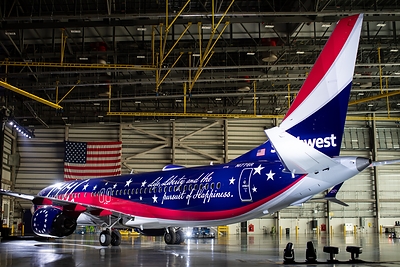

 iHub News
2週前
iHub News
2週前
 MrBean-4
4週前
MrBean-4
4週前
 BottomBounce
1年前
BottomBounce
1年前
 Lokotony
2年前
Lokotony
2年前
 Porterhouse10
3年前
Porterhouse10
3年前
 conix
4年前
conix
4年前
 FooBarAndGrill
4年前
FooBarAndGrill
4年前
 bar1080
5年前
bar1080
5年前





 メールアドレスで登録